В пакет налоговой реформы входит закон о налогообложении прироста капитала, согласно которому налоговая служба сможет заблокировать сделку о передаче права собственности на недвижимость, если у владельца или получателя есть задолженность по налогам. Что известно о деталях закона?
Это конкретное положение включено в пакет законов о налоговой реформе, который обсуждается в Финансовом комитете парламента. В частности, в Закон о налогообложении прироста капитала внесено положение, согласно которому Налоговый комиссар может не давать согласия на передачу недвижимости в случае, если собственник или получатель не в полной мере выполняют свои налоговые обязательства перед Налоговым департаментом, за исключением сделок купли-продажи.
Новое положение очень важно, поскольку в долгосрочной перспективе оно позволит сформировать налоговую культуру. То есть, все будут знать, что для передачи недвижимости необходимо соблюдать налоговое законодательство, поэтому, хотят они того или нет, им обязательно придется ежегодно подавать декларации о доходах и платить налоги.
Будут исключения
Налоговый департамент признает, что немедленное введение этого положения приведет к дерегулированию и дисфункциям на рынке недвижимости. Налоговый комиссар Сотирис Маркидис уже сообщил депутатам, что включит в законопроект меры контроля, чтобы защитить покупателей через поэтапное внедрение законодательства.
Исключения будут касаться случаев, когда одна из сторон сделки имеет налоговую задолженность, ожидающую рассмотрения в суде, или подала возражение в Налоговый совет. В таких случаях до рассмотрения дела компетентными органами задолженность будет считаться нулевой, а налогоплательщик – соблюдающим требования.
Кроме того, аналогичный режим будет применяться к налогоплательщику, находящемуся в процессе урегулирования задолженности, то есть выплачивающему ее в рассрочку в соответствии с согласованным графиком. В этих двух случаях передача имущества будет осуществляться в обычном режиме.
Постепенное внедрение
Будет добавлено еще одно положение, которое дополнительно защитит затронутых граждан. В частности, налогоплательщикам будет предоставлен год для погашения своих обязательств. Таким образом положение о предотвращении передачи имущества при задолженности вступит в силу с 1 января 2027 года. В течение 2026 года налогоплательщики смогут подать все просроченные декларации и погасить задолженность.
Поэтапное внедрение нового налогового регулирования коснется операций с недвижимостью на сумму свыше 100 000 евро и будет проходить следующим образом:
– С 1 января 2027 года Налоговый комиссар получит право приостановить передачу имущества налогоплательщика, в случае, если его задолженность перед Налоговым департаментом превышает 1 млн евро.
– С 1 января 2028 года будет приостановлена передача права собственности на недвижимость при наличии задолженности в размере до 500 000 евро.
– С 1 января 2029 года – 200 000 евро.
– С 1 января 2030 года – 50 000 евро.
– С 1 января 2031 года – 10 000 евро.
Во всех случаях основное жилье стоимостью до 500 000 евро будет освобождено от ограничений по передаче права собственности.
На данный момент законодательство предусматривает, что при наличии у продавца недвижимости задолженности, по решению суда на его недвижимость накладывается МЕМО (реальное обременение).
Текст подготовлен по материалам Phileleftheros.
Читайте также:

В любой развивающейся компании есть люди, которые превращают идеи в реальность. С опытом, охватывающим фармакологию, управление финансовыми рисками и противодействие финансовым преступлениям, Элени Иоанну, директор по комплаенсу (Chief Compliance Officer) в Kea, привносит в свою профессию редкое сочетание аналитического мышления и человеческого подхода. Воспитывая в одиночку троих сыновей, она доказывает, что лидерство и жизненная стойкость могут идти рука об руку.
Элени, Ваша карьера охватывает фармакологию, юридическую и финансовую сферы – редкое сочетание. Что побудило Вас выбрать такой путь и как это повлияло на Ваш взгляд на лидерство и решение задач?
Честно говоря, я никогда не видела себя классическим фармацевтом. Я всегда была человеком, в котором сочетаются аналитический склад ума и творческое начало. Мне нравилась наука, но я также стремилась к движению, поиску нового, к вызовам. Я думала, что моя дорога приведёт в исследовательскую деятельность, где можно соединить технические знания и креативность. Тогда я не понимала, что этот баланс между структурой и любопытством позже станет моей главной силой в совершенно других отраслях.
Я провела десять лет в фармацевтической сфере, побывав практически на всех позициях – от продаж до медицинского советника и фармаконадзора. Каждый этап давал мне всё больше понимания структуры, ответственности и управления рисками. Со временем я поняла: лидерство универсально. Оно не про иерархию и не про команды, а про личный пример. Люди следуют за вами не потому, что им велят, а потому что доверяют вашим решениям, видят последовательность и верят в результаты.
После многих лет работы в фармацевтике, включая опыт в GSK, Вы решились на переход в комплаенс. Что стало причиной такого шага и как Вы нашли себя в совершенно новой отрасли?
По натуре я человек беспокойный – мне постоянно нужно двигаться вперёд, проверять себя на прочность. После десяти лет в фармацевтике я почувствовала, что в этой сфере на Кипре уже некуда расти. Мне хотелось чего-то нового – того, что соответствовало бы темпу, с которым меняется современный мир.
По личным обстоятельствам я покинула фармацевтическую компанию и перешла в юридическую сферу. Это не было частью заранее спланированной стратегии, но довольно быстро я поняла, насколько мне это интересно. Я легко разобралась в структуре, увидела, как мои навыки применимы и здесь. Вскоре этот опыт привёл меня в финансовую отрасль – туда, где я действительно почувствовала себя на своём месте. Это динамичная среда, где логика сочетается с креативностью, где каждое решение имеет значение, а каждый день приносит что-то новое.
 Переход из системы здравоохранения в финансовую сферу наверняка принёс новые вызовы. Как Ваша научная подготовка повлияла на подход к управлению рисками и регуляторной работе на раннем этапе карьеры в комплаенсе?
Этот переход действительно был непростым – особенно в части понимания финансовых регуляций, рыночного поведения и скорости, с которой всё меняется. Но довольно быстро я поняла: мой научный опыт не ограничивает меня, а наоборот – даёт преимущество.
Наука учит мыслить критически и системно. Любое заключение должно опираться на доказательства, каждая переменная должна быть проверена, каждая гипотеза – обоснована. Этот подход идеально перекладывается на работу в комплаенсе, где внимание к деталям и структурное мышление обязательны. Опыт в фармакологии, например, уже научил меня точности, дисциплине и ответственности – всё это совпадает с требованиями финансового регулирования. И там, и там редко бывает полная информация. Нужно уметь принимать решения на основе данных, но также использовать здравое суждение, когда информации недостаточно. Баланс между аналитикой и интуицией стал моим ключевым навыком.
И, пожалуй, главный вывод – никакие знания не бывают лишними. Любопытство, дисциплина и способность решать задачи – качества, которые я развила в медицине, до сих пор определяют, как я строю систему рисков, принимаю решения и руковожу людьми.
Когда создавалась компания Kea, Вы сыграли ключевую роль в формировании её системы комплаенса. Какие принципы Вы заложили в основу построения культуры доверия, прозрачности и ответственности?
Прежде всего нужно было выстроить внутренний контроль и убедиться, что каждый понимает, зачем это нужно. Когда компания только начинает свой путь, у неё нет готовой культуры – её приходится создавать с нуля. Это начинается с подбора людей, которые разделяют твои ценности и готовы внедрять правильные практики с первого дня.
Мы разработали чёткую политику, систему мониторинга и отчётности. Но важнее документов было создание общего видения – понимания того, какой должна стать компания. Культуру нельзя навязать сверху, её можно только выстроить вместе, через постоянство и личный пример. Мне повезло оказаться в команде, которая разделяла этот подход и с самого начала поддерживала идею делать всё правильно.
В должности директора по комплаенсу Вы не только формируете внутренние стандарты, но и влияете на репутацию Kea. Как удаётся сделать так, чтобы комплаенс стал не ограничением, а конкурентным преимуществом компании?
Всё дело в балансе. Комплаенс часто воспринимают как нечто сдерживающее, но на деле он делает компанию устойчивой. По мере роста бизнеса увеличиваются и риски. Наша цель не в том, чтобы ограничить деятельность, а в том, чтобы управлять ею осознанно.
Комплаенс не приносит прямую прибыль, но он защищает репутацию и создаёт основу для уверенного роста. Моя главная задача – поддерживать соответствие требованиям, сохранять доверие регулятора и репутацию компании. Когда это обеспечено, остальные отделы могут работать спокойно и развиваться.
Если оглянуться назад, какое достижение или поворотный момент помог Вам почувствовать себя настоящим лидером в своей сфере?
Наверное, это произошло, когда я стала директором по комплаенсу. Не сам титул, а ответственность, которая с ним приходит. Когда осознаёшь, что каждое решение может повлиять на всю организацию, понимаешь, что такое лидерство на самом деле.
Если что-то идёт не так на нижнем уровне, это значит, что лидер что-то упустил. Это осознание меняет мышление. Перестаёшь сосредотачиваться только на задачах и начинаешь развивать людей. Помогаешь им расти, принимать решения, брать ответственность. Я люблю этот процесс – вкладываться в людей, видеть, как они становятся сильнее. Это похоже на создание чего-то живого, что никогда не стоит на месте.
Достичь уровня топ-менеджмента до сорока лет – впечатляющий результат. Какие ценности или привычки помогли Вам сохранить фокус и устойчивость на этом пути?
Трудолюбие, любознательность и, пожалуй, немного здорового перфекционизма. Я всегда стараюсь делать больше, чем от меня ждут – не ради должности или признания, а потому что хочу, чтобы всё работало лучше. Я задаю вопросы, ищу более эффективные решения, не принимаю неэффективность как норму.
Я научилась рисковать обдуманно – рост невозможен без выхода из зоны комфорта. Моими сильными сторонами всегда были гибкость и способность быстро адаптироваться. Я легко осваиваю новое, быстро вникаю и сразу начинаю действовать. Ошибки, конечно, случаются, но я воспринимаю их как возможность скорректировать курс. Всё, чего я добилась, – результат настойчивости и желания делать свою работу на максимум.
 Помимо профессиональных достижений, Вы – мама троих мальчиков и воспитываете их одна. Как удаётся совмещать требования руководящей должности и материнство?
Никакой универсальной формулы нет – всё сводится к адаптации и жертвам, которые мы все совершаем. Мы с сыновьями действуем как команда. Они выросли в атмосфере, где самостоятельность – это норма. Я научила их брать ответственность, принимать решения, решать проблемы. Это не значит, что я «меньше мама» – это значит, что я воспитываю людей, которые смогут постоять за себя. Думаю, это один из самых ценных подарков, которые я могу им дать.
Как Вы считаете, чему Ваши дети научились, наблюдая за Вами как за лидером, и как их присутствие повлияло на Ваш взгляд на успех и приоритеты?
Они точно научились уверенности и ответственности. Думаю, они видят во мне пример устойчивости – того, как можно справляться с нагрузкой, работать и при этом оставаться внимательной к людям. Они знают, что я всегда рядом, но понимают, что поддержка не означает вседозволенности.
Как их присутствие повлияло на мой взгляд на успех? Сложно сказать – я стала мамой в 25, и они были со мной на всём пути. Я не представляю свою карьеру без них – они часть моей жизни и моей силы.
Kea быстро заслужила репутацию компании, где ценятся профессионализм и человеческое отношение. На Ваш взгляд, что делает её местом, где люди растут, сохраняют мотивацию и ощущают общую цель?
Главное в Kea – это люди и культура, которую мы создали вместе. С самого начала мы хотели построить не просто финансовую организацию, а место, где сотрудники чувствуют поддержку и значимость. Сейчас это стало реальностью. У нас удивительная команда, которая искренне заботится не только о результатах, но и о людях рядом. Это не лозунг и не строчка в политике, это ощущается с первых минут.
Мы радуемся маленьким победам, поддерживаем друг друга в сложные моменты и всегда движемся вперёд вместе. Мы убеждены: когда человек чувствует себя счастливым и вовлечённым, успех приходит сам. Поэтому наша культура основана на эмпатии, сотрудничестве и смысле. Мы строим организацию, в которой человек всегда на первом месте, где решения принимаются с опорой на ценности, а профессиональный рост идёт рука об руку с внутренним благополучием. Для меня это и есть главное достижение – видеть, как доверие и уважение превращают рабочее место в сообщество.
И напоследок: какой совет Вы дали бы женщинам Кипра, стремящимся к лидерству в финансах и комплаенсе, и что компании могли бы сделать, чтобы поддерживать их рост и уверенность?
Прежде всего – работать. Трудолюбие ничто не заменит. Нужно постоянно учиться, развивать навыки и двигаться вперёд вместе с миром. Что бы вы ни делали, делайте это на сто процентов. Но при этом огромное значение имеет возможность. Талант ничего не значит, если человеку не дают шанс его проявить. Мне повезло – в ключевые моменты карьеры у меня были возможности, и я ими воспользовалась. Многие талантливые люди такого шанса не получают.
Компании должны замечать потенциал, а не только годы опыта или «идеальные» резюме. Нужно доверять людям, позволять им работать по-своему, а не подгонять под шаблоны. Когда человек может быть собой – он раскрывается.
Женщинам я бы сказала: верьте, что место лидера принадлежит и вам. Не ждите разрешения – занимайте пространство, доказывайте свою ценность и пусть за вас говорит ваша работа.
Беседовала Екатерина Белая
#SHELEADS

In every growing organisation, there are individuals who turn vision into structure. With a background spanning pharmacology, financial crime and risk, Eleni Ioannou, Chief Compliance Officer at Kea, brings rare versatility to her field – and as a single mother of three, she proves that leadership and resilience can go hand in hand.
Eleni, your career journey spans pharmacology, legal and finance – an exceptional combination. What first drew you to such a diverse academic path, and how did it shape the way you see leadership and problem-solving today?
To be honest, I never saw myself as a traditional pharmacist. I’ve always been both creative and analytical – someone who loves science but also thrives on movement, discovery, and challenge. I initially thought my path would lead to R&D, where I could combine technical understanding with innovation. What I didn’t realise at the time was that this mindset – the balance between structure and curiosity – would later become invaluable across completely different industries.
I spent a decade in the pharmaceutical field, taking on almost every role imaginable – from sales to medical advisor and eventually pharmacovigilance. Each step deepened my understanding of structure, responsibility, and risk. Over time, I learned that leadership is universal. It’s not about hierarchy or giving instructions; it’s about setting the standard. People don’t follow because they’re told to – they follow because they trust your judgment, see your consistency, and believe in the results you deliver.
After years in the pharmaceutical field, including your time in GSK, you made a bold transition into compliance. What motivated that change, and how did you find your place in an entirely new industry?
I’m a restless person by nature – I always want to push further, to test myself. After a decade in pharma, I felt that Cyprus couldn’t offer much more room to grow in that sector. I wanted something new, something that matched the pace of how the world was evolving.
At one point, personal circumstances led me to leave my job in pharmaceuticals and move into the legal industry. That transition wasn’t planned, but I quickly realised how much I enjoyed it. Very quickly I understood structure, and I could see how my skills could be applied into that industry too. Eventually, that experience led me to the financial sector, a place where I truly found my element. It’s a dynamic environment where creativity meets logic, decisions carry real impact, and every day brings an opportunity to learn, adapt, and grow.
Moving from global healthcare to financial services must have brought a new set of challenges. How did your scientific background influence the way you approached risk management and regulatory work in the early stages of your compliance career?
Moving from global healthcare into financial services definitely came with a steep learning curve, especially when it came to understanding complex regulations, market behaviour, and the pace of change within the financial sector. But I quickly realised that my scientific background was a real strength rather than a limitation.
In science, you learn to think critically and methodically. Every conclusion must be supported by evidence, every variable examined, and every assumption tested. That mindset translated seamlessly into compliance and risk management, where attention to detail and structured thinking are essential. My background in pharmacology, for instance, had already taught me the importance of precision, documentation, and accountability, principles that align perfectly with regulatory expectations in finance. In both science and compliance, you rarely have perfect information. You rely on data where possible, but ultimately, you need to make sound, reasoned judgments when gaps exist. That balance between analytical rigour and practical decision-making became one of my greatest assets in those early years.
Most importantly, the transition reinforced the idea that no knowledge is ever wasted. The curiosity, discipline, and problem-solving approach I developed in healthcare continue to shape the way I lead, assess risk, and build sustainable frameworks today.
When Kea was founded, you played a defining role in shaping its compliance structure. What were the first principles you introduced to build a culture of trust, transparency and accountability from the ground up?
The most important step was establishing strong internal controls and ensuring that everyone understood why they mattered. In a new organisation, there’s no existing culture to lean on, you have to build it from the ground up. That starts with surrounding yourself with people who share your values and are committed to embedding good practices from day one. We began by creating clear policies, monitoring frameworks, and reporting lines. But beyond the structure, it was essential to build a shared vision, a collective understanding of what kind of organisation Kea would become. Culture can’t be imposed from the top; it’s shaped through collaboration, consistency, and example. I was fortunate to work with a team that not only shared that belief but also supported doing things the right way from the start.
As Chief Compliance Officer, you’re not only setting internal standards but also contributing to Kea’s corporate reputation. How do you ensure that compliance becomes a source of competitive strength rather than just a regulatory requirement?
It’s all about balance. Compliance is often seen as restrictive, but in reality, it’s what keeps the organisation strong and sustainable. As the organisation grows, exposure to risk naturally increases. The goal isn’t to limit activity, but to manage it responsibly. While compliance may not drive business in the traditional sense, it enables it by protecting its credibility and ensuring stability. My focus is clear, to maintain compliance, preserve the company’s reputation, and keep the regulator’s trust. This allows the rest of the organisation to grow with confidence.
Looking back, what achievement or turning point in your career made you feel that you had truly established yourself as a leader in your field?
That moment came when I became Chief Compliance Officer. The title itself wasn’t what mattered – it was the level of responsibility that came with it. When you realise that every decision, every oversight, can affect the entire organisation, you understand what leadership really means.
If something goes wrong at the bottom, it’s usually a failure at the top. Accepting that accountability changes the way you lead. You stop focusing only on tasks and start developing people. You help them grow into professionals who can think, decide and take ownership. I love that process – shaping others, investing in them, watching them evolve. It’s like being part of a creative project that never truly ends.
Reaching senior executive level before the age of 40 is an extraordinary milestone. What values or daily habits helped you sustain focus and resilience on that journey?
Hard work, curiosity, and a touch of healthy perfectionism have always driven me. I consistently give more than what’s expected — not out of a desire for titles or recognition, but because I genuinely want to make things better. I challenge processes, look for smarter solutions, and never accept inefficiency as the norm. Over time, I’ve also learned the value of taking calculated risks. Growth doesn’t happen in comfort zones. My adaptability and my learning ability have been key strengths, to be able to move between industries, absorb new information quickly, and deliver results without long adjustment periods. That flexibility has kept me evolving. Of course, mistakes are part of the journey. I see them as opportunities to learn and refine my approach.
Beyond your professional success, you’re a single mother of three boys – a powerful example of balance and determination. How do you navigate the demands of leadership while staying present in family life?
There’s no magic formula – it’s about adaptation and sacrifice. We all make them. My sons and I have learned to function as a team. They’ve grown up in an environment where independence is natural. I’ve taught them to take responsibility for their own tasks, to make decisions, to solve problems. It’s not about being less of a mother – it’s about raising individuals who can stand on their own. And I believe that’s one of the best gifts I can give them.
What do you believe your children have learned from watching you lead – and how has their presence influenced your outlook on success and priorities?
They’ve definitely learned confidence and accountability. I think they also see resilience – how I can handle pressure, work hard, and still care deeply. They rely on me because they know I’ll be there, but they also understand that support doesn’t mean indulgence.
As for how they influence my outlook on success, it’s hard to separate. I became a mother at 25, so they’ve been part of my career from the start. I don’t know what my professional life would look like without them – their presence is simply part of who I am.
Kea has quickly built a reputation for professionalism and inclusion. From your perspective, what makes it a workplace where people grow, stay motivated, and share a sense of purpose?
What makes Kea truly special is its people, and the culture we’ve created together. From day one, we set out to build more than just a financial institution; we wanted to create a place where people feel seen, supported, and inspired to grow. Today, that vision has become our reality. We have a remarkable team that genuinely cares, not just about the work, but about each other. It’s not a slogan or a line in a policy; it’s something you can feel the moment you walk through the door. We celebrate small victories, lift each other up during challenging moments, and always find a way to keep moving forward together.
At Kea, we believe that when people are happy and fulfilled, excellence naturally follows. That’s why our culture is grounded in empathy, collaboration, and purpose. We’re building something lasting, a people-first organisation where integrity drives every decision, and where professional success and personal wellbeing go hand in hand. For me, that’s the most rewarding part of what we’ve achieved — seeing how trust, compassion, and shared values can transform a workplace into a community.
Finally, what message would you like to share with women in Cyprus who aspire to leadership roles in finance and compliance – and how can companies better support their growth and confidence along the way?
First of all, work hard. There’s no substitute for that. It’s crucial to keep learning, continuously cultivating skills, and evolving with the ever-changing landscapes. Whatever you choose to do, give it your full 100%. But beyond effort, what really makes a difference is opportunity. Talent means little if no one gives you the chance to show it. I was fortunate – I got opportunities at key moments in my career, and I made the most of them. Many talented people never get that break.
Companies need to recognise potential, not just years of experience or textbook profiles. They should trust people to perform in their own way, not force them into boxes. When you allow employees to be themselves, they bring out their best.
Women, especially, should believe that they belong in leadership roles. Don’t wait for permission – claim your space, prove your worth, and let your work speak for itself.
Interview by Kateryna Bila
#SHELEADS

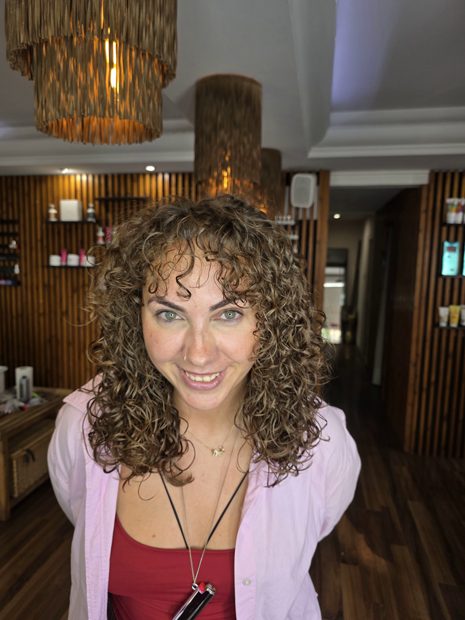
Curly hair has always required a little more care. It loses moisture quickly, reacts strongly to changes in weather and easily loses its definition. Under the Cypriot sun, this sensitivity intensifies even further: UV exposure, sea salt, coastal winds and mineral-rich water leave curls dry, coarse, frizzy and prone to breakage. Over time, the natural curl pattern weakens, turning hair care into a constant challenge that often benefits from professional support.
Curly Ginger Beauty Salon offers tailored treatments for all types of curly and wavy hair, taking into account both the local climate and the hair’s current condition. Each treatment begins with a detailed diagnosis, texture assessment and an individual plan designed to restore elasticity, definition and long-term hair health.
Stage One: Professional Diagnosis
The first step is a thorough assessment of the hair and scalp. The most common concerns include:
– dryness caused by prolonged sun exposure
– a weakened natural protective layer
– disrupted curl structure
– scalp sensitivity
– reduced density
– increased shedding and early signs of hair loss
Based on the diagnosis, a personalised restoration plan is developed. It may include curl-pattern revival, gentle reshaping, deep hydration, scalp detoxification and other targeted treatments.
Treatments for Curly and Wavy Hair
Cold Botox Treatment
A heat-free restorative treatment that rebuilds the cuticle and strengthens damaged hair.
Benefits: improved structure, reduced dryness, soothed scalp, enhanced softness and moisture retention, deeper colour penetration and protection from environmental stress.
Scalp Peeling
A deep exfoliation that removes impurities, mineral build-up and product residue.
Benefits: improved scalp comfort, better absorption of treatments and enhanced volume at the roots.
Hair Cryotherapy (Toxx)
A cold-restoration treatment using the Frozen Machine (–16°C) to drive hyaluronic acid and active ingredients deep into the hair.
Benefits: reinforced structure, reduced breakage, renewed shine and smoothness.
Healthy Curls
A natural, chemical-free treatment designed to enhance the health and definition of curls.
Includes curl activation, a haircut if needed and a hair-sauna treatment during the first visit.
Clients also receive guidance on everyday curl care and, if requested, a personalised at-home routine.
Afrolocs
A non-chemical technique in which natural hair is braided into a base and synthetic curls are attached using a crochet hook.
Lasts 8–12 weeks, requires at least 10 cm of natural hair, installation time 7–10 hours.
Japanese Extension
A glue-free, heat-free extension method using high-quality synthetic hair.
Designed to protect natural hair, provided the hair is not too fine.
A consultation is recommended to assess suitability and ensure a safe, healthy result.
Trichology Services
Comprehensive scalp and hair diagnostics, density assessment and tailored therapeutic protocols for shedding, sensitivity and disrupted growth cycles.
Particularly relevant for those adjusting to the Cypriot climate.
Wedding Styling (from January 2026
Whether your hair is naturally straight, wavy, or beautifully curly — your wedding look deserves to feel effortless, elegant, and uniquely you. Bridal styling service is tailored to every texture: from sleek, romantic waves to defined curl updos that celebrate natural movement. Each look is designed to stay flawless, soft, and camera-ready throughout your special day, even under the Mediterranean sun.
Kobido face massage, luxury manicures and pedicures, as well as a full range of holistic beauty services, are also available. Together, they transform a salon visit into a complete experience rather than just an appointment.
The Curly Ginger Beauty Salon Philosophy
The salon’s ethos is rooted in a deep understanding of natural textures and the challenges curls face in the Mediterranean climate. Every treatment is designed to support scalp health, reinforce the curl pattern and create natural, long-lasting volume and definition.
Bookings & Contact Details
Appointments and consultations can be arranged via the Curly Ginger Beauty Salon website:
https://curly-ginger.com/contact/
You can easily check and book the most convenient time and day for you directly through the Fresha app:
https://shorturl.at/adkPQ
Telephone:
+357 25 260760
Instagram:
https://www.instagram.com/curlygingersalon/
Materials provided by the Curly Ginger Beauty Salon







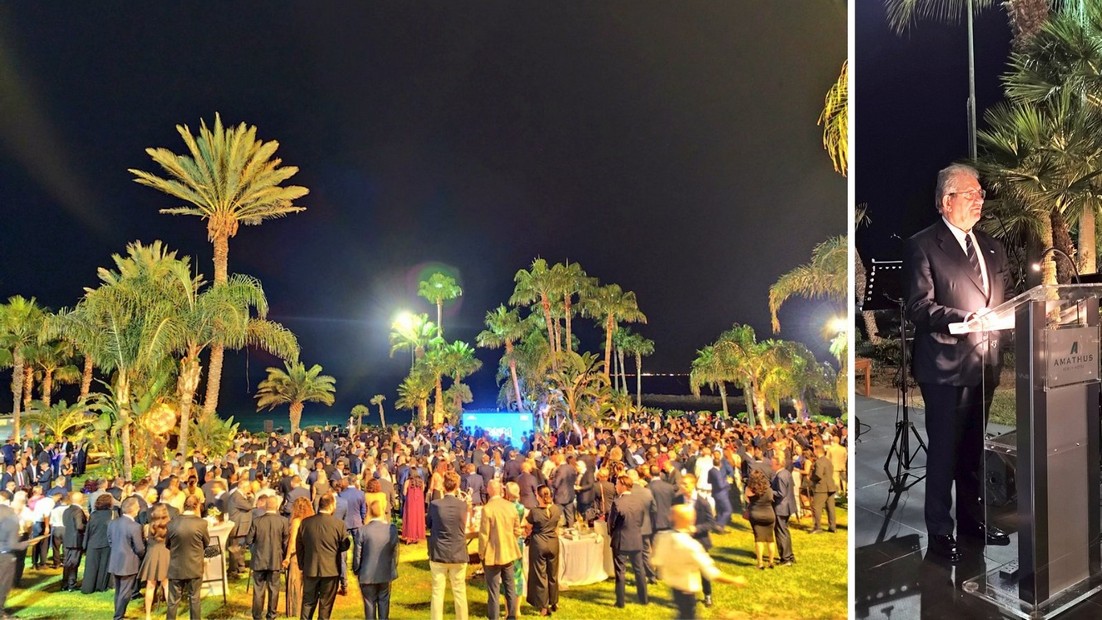
Кипрская шипинговая палата провела торжественный прием в честь открытия конференции Maritime Cyprus 2025. Мероприятие состоялось в воскресенье, 5 октября, в отеле Amathus Beach Hotel в Лимассоле.
На приеме собралось более 800 почетных гостей, среди которых министры, депутаты парламента, дипломаты, представители государственных органов, профессиональных организаций, а также руководители кипрской и международной судоходной индустрии. Такой масштаб участия подтвердил высокий авторитет и престиж Палаты как на Кипре, так и за его пределами.
В своем выступлении президент Палаты Андреас Неофиту подчеркнул ключевое значение судоходства для национальной экономики и мировой торговли. Он отметил: «Судоходная отрасль Кипра остается краеугольным камнем нашей экономики, обеспечивая торговлю, поддерживая другие секторы и гарантируя бесперебойные поставки жизненно важных товаров. Несмотря на глобальные вызовы, она продолжает развиваться, сохраняя сильный торговый флот и репутацию лидера в судовладении, управлении флотом и сопутствующих услугах. Кипр превратился в надежный международный судоходный центр: более 200 компаний, работающих в этой сфере, управляют и обслуживают свыше 2 800 судов, на борту которых работают около 80 000 моряков. Престиж и международное признание конференции Maritime Cyprus являются прямым доказательством этого доверия и успеха».
Первая конференция Maritime Cyprus прошла в 1989 году, тогда же была основана и Кипрская шипинговая палата.
Прием стал вступлением к насыщенной неделе, посвященной диалогу, сотрудничеству и обмену идеями в рамках конференции Maritime Cyprus, которая объединяет ведущих мировых экспертов и представителей отрасли, подчеркивая стратегическое значение Кипра на глобальной морской карте.
Материалы предоставлены организаторами мероприятия

Кипрские международные трасты (CIT) широко используются в различных сценариях благодаря их гибкости, налоговым преимуществам и защите активов. Вот четыре реальных примера их использования:
Защита семейного капитала
Глава состоятельной семьи из Восточной Европы создал кипрский международный траст для защиты своего состояния, включающего недвижимость и инвестиционные портфели. Активы переданы в траст, чтобы защитить их от потенциальных судебных исков или политической нестабильности в стране проживания. Траст структурирован так, чтобы обеспечить регулярные выплаты детям как бенефициарам и сохранить капитал для будущих поколений, минимизируя налоги на наследство.
Управление международным бизнесом
Предприниматель из Азии, владеющий холдинговой компанией с активами в нескольких странах, создал CIT для владения акциями этой компании. Траст позволяет уйти от «ручного управления», демонстрировать независимость холдинга от учредителя, защитить активы от кредиторов и оптимизировать налогообложение дивидендов. Например, доходы от иностранных дочерних компаний, поступающие в траст и выплачиваемые бенефициарам, не облагаются налогом на Кипре, что повышает эффективность структуры.
Планирование наследства для сложной семейной структуры
Глава семьи с несколькими наследниками из разных юрисдикций (родители в одной стране, дети в другой) создал кипрский траст для структурирования передачи активов, включая недвижимость, банковские счета и бизнес. Учредитель определяет условия распределения доходов и капитала, чтобы избежать споров между наследниками и упростить процесс наследования, избегая сложных процедур в разных странах.
Конфиденциальное владение активами
Известная публичная личность использует CIT для анонимного владения дорогостоящей недвижимостью за границей, чтобы избежать внимания СМИ и сохранить конфиденциальность. Траст управляется профессиональным трасти на Кипре, который действует в интересах бенефициара, а информация о владельце активов остаётся скрытой благодаря правилам о конфиденциальности.
Несколько этих примеров иллюстрируют, как кипрские трасты применяются для защиты активов, оптимизации налогов и упрощения управления сложными финансовыми структурами. Однако в каждом случае требуется тщательное юридическое сопровождение, чтобы обеспечить соответствие местным и международным законам, включая правила против отмывания денег и прозрачности.
3 сентября пройдет онлайн-семинар
«Траст: инструкция по применению для семьи и бизнеса»
Что вы узнаете:
- Как траст работает и в каких ситуациях он действительно нужен.
- Виды трастов и особенности их применения.
- Как с помощью траста обеспечить финансовое благополучие семьи и бизнеса, минимизировать налоги и защитить активы от рисков.
- Как правильно выбрать юрисдикцию и не допустить типичных ошибок при создании траста.Какие есть альтернативы, если траст не подходит.
Почему стоит присоединиться:
- Пошаговое объяснение сложной темы простыми словами.
- Практические советы от эксперта с многолетним опытом.
- Возможность задать свои вопросы заранее и получить разбор именно вашей ситуации.
- Ведущие: Михаил Соболев — специалист по структурированию бизнес-групп и управлению капиталом, Наталия Кардаш – гл.редактор журнала «Успешный бизнес», эксперт по Кипру.
Дата и время: 3 сентября, 15:00
Формат: онлайн-встреча
Регистрация: https://forms.gle/TxS71YCghYo39wzBA
Стоимость: 50 евро. Для членов уровня Vestnik Premium – 25 евро.
Важно: Михаил и Наталия не продают трасты, не предлагают свои услуги по их созданию. Они – консультанты, прожившие на Кипре по 30 и 26 лет, которые могут помочь спокойно и досконально разобраться в теме. Присоединяйтесь!
Continuing my story about Arctic wildlife, I want to tell you about those who live beneath the water’s surface – walruses, seals, narwhals, and whales. I will also talk about foxes and geese, which, as it turns out, are extremely important in the Arctic ecosystem. And I learned something striking – when the ice disappears, ringed seals will die out, and polar bears will decline even faster. I will explain why.
Walruses, Seals, Narwhals, and Whales: The Unseen Heroes of the Arctic Ocean
The Arctic is not only glaciers and rocky shores – it is also the vast expanse of the Arctic Ocean and surrounding seas. Here live marine animals that are hard to see in all their beauty. They may briefly appear at the surface, only to vanish again into the depths.
Take narwhals, for example – known as the “unicorns of the Arctic” for their long, spiral tusk. What makes them unique is that the tusk is not a weapon, but a sensor. It can detect the slightest changes in water temperature, pressure, and salinity. In essence, narwhals are nature’s own hydrological instruments.
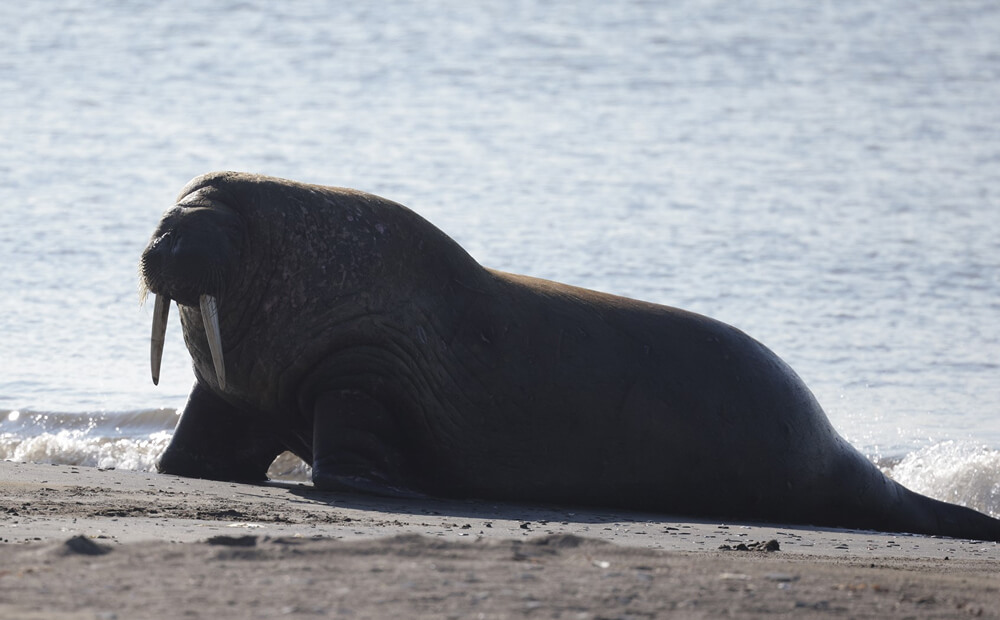
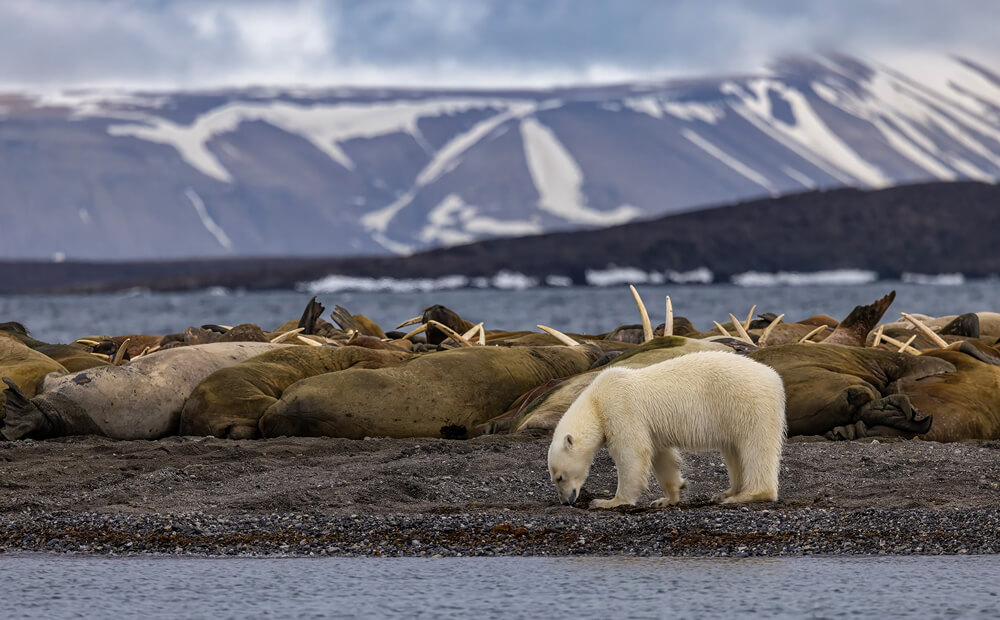
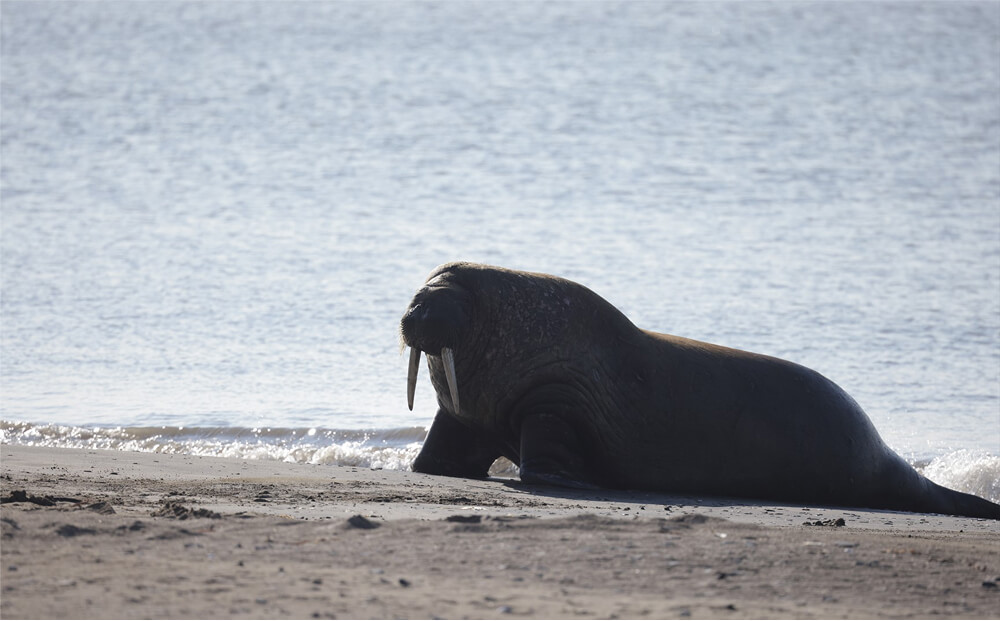
We saw many walruses. These massive animals may seem clumsy on land, but they are surprisingly graceful underwater. Their whiskers are sensitive sensors, helping them locate molluscs on the seabed. The sounds they produce are far from random noise – they are a means of communication in fog, under water, during courtship, or when threatened.

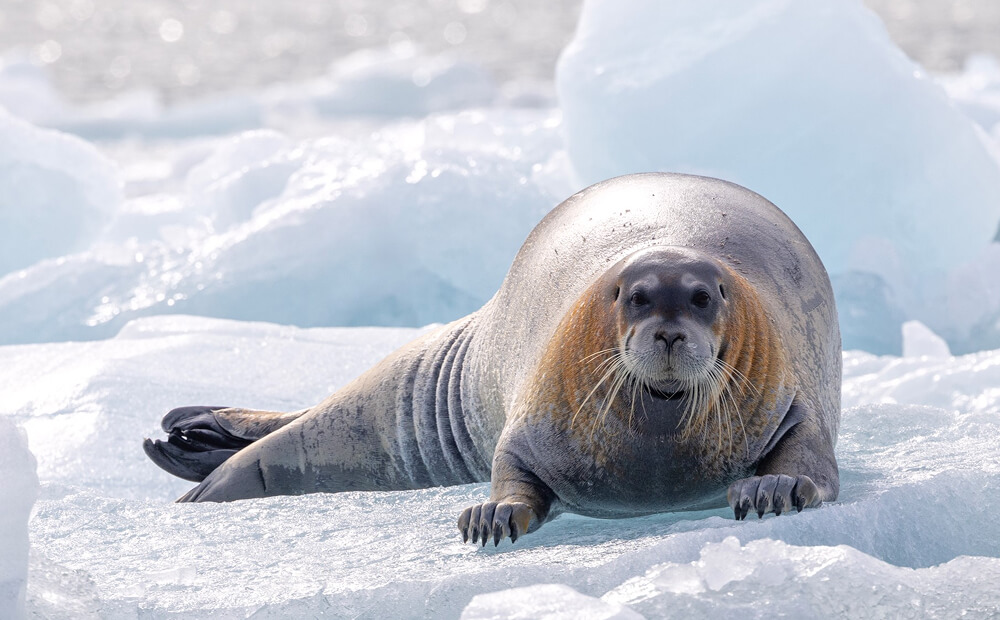
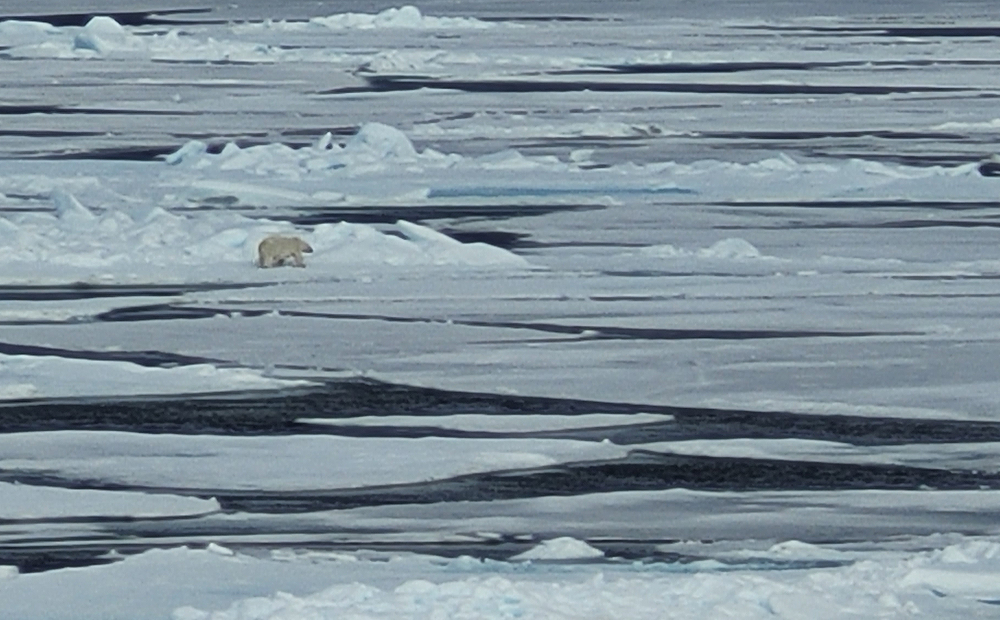
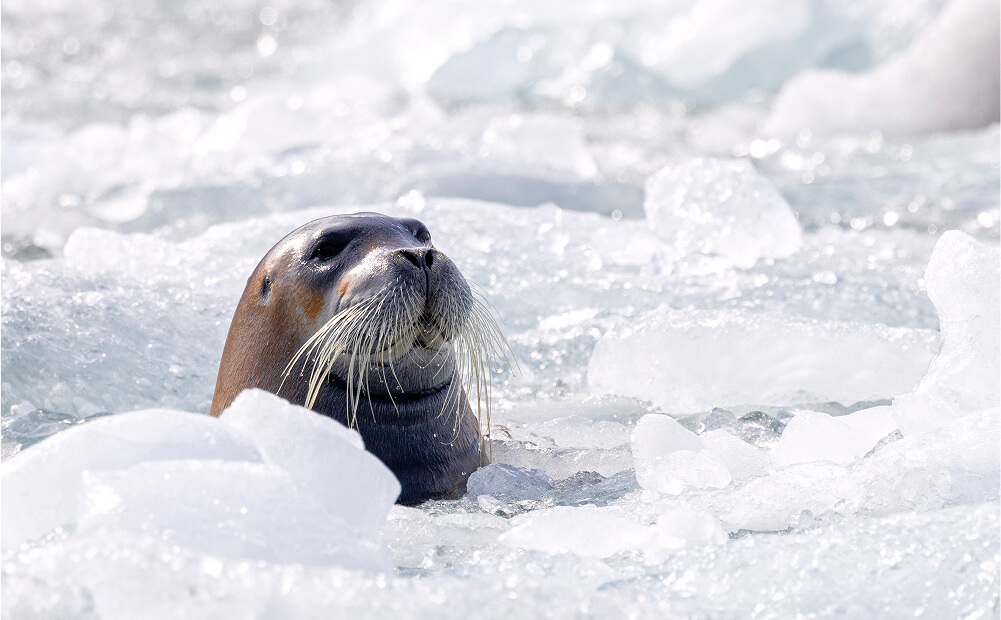
Arctic seals spend the winter under the ice, keeping breathing holes open so they can surface from time to time. They maintain these openings all winter, carefully scraping them with their claws to avoid suffocating. If a hole freezes over, the animal dies. From spring to autumn, they often haul themselves out entirely onto ice floes to bask in the sun. We once saw a polar bear hunting a seal: it caught the scent, slowly moved off to find its prey, lay down on the ice by a hole in the surface, watching, listening, and waiting.
Whales are the barometers of the climate. They are becoming increasingly rare in the latitudes frequented by sea vessels. Bowhead whales, belugas, and orcas all respond to changes in water temperature and ice cover. I interviewed zoologist Liya Pokrovskaya, who explained how a whale’s tail can identify an individual: tails are like fingerprints – unique. That is why Liya and other scientists photograph every whale they encounter, upload the images to the Happy Whale database, and in this way create a research log tracking the movements of each animal.
I too saw tail flukes and water spouts above the surface, but I couldn’t get a clear view – though I would have loved to. Whales truly are extraordinary creatures.
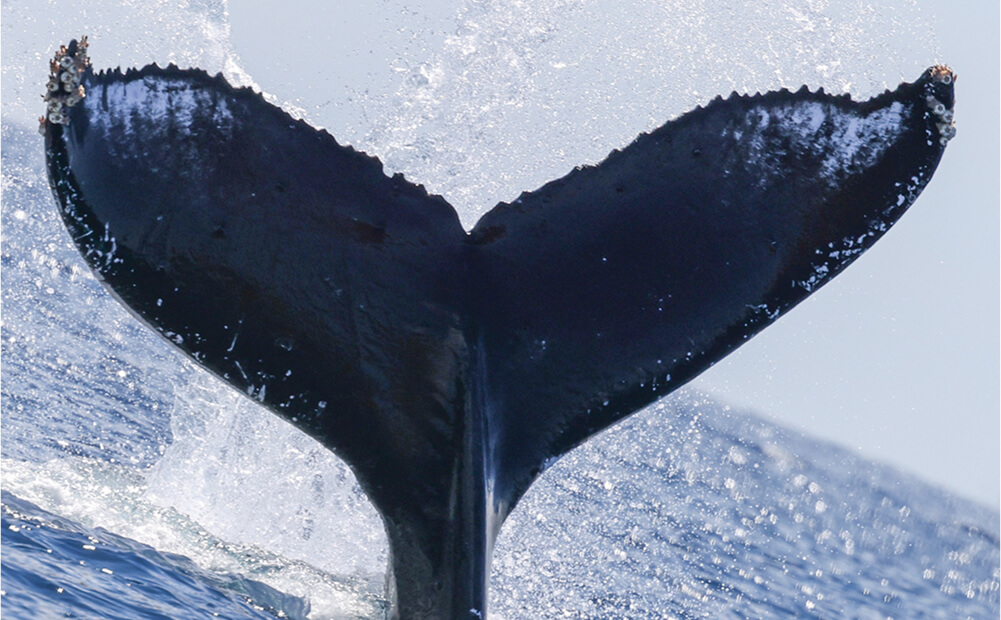
Photo: happywhale.com
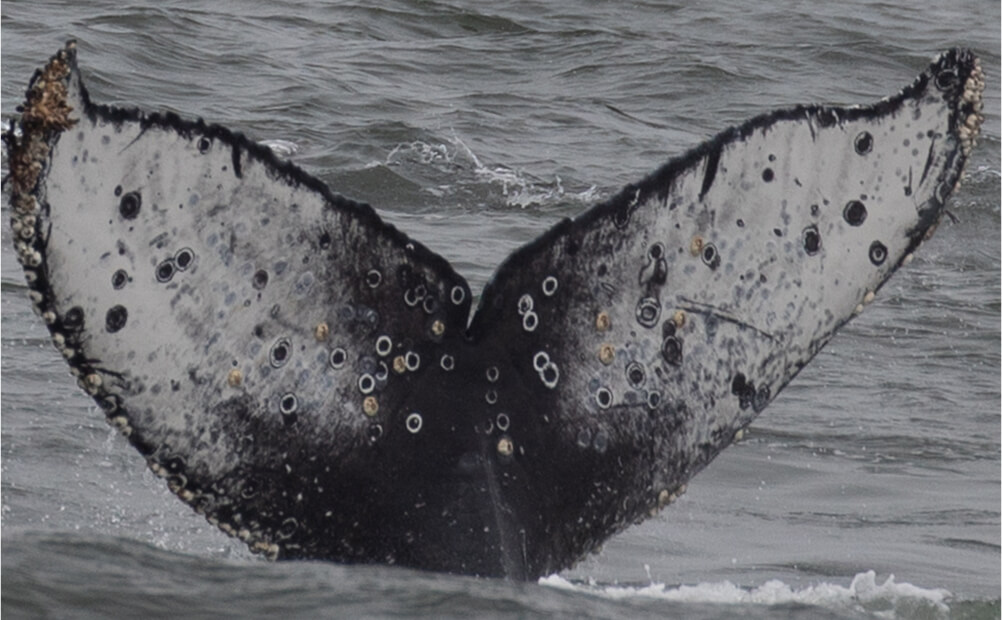
Photo: happywhale.com
Foxes and Geese – Vital Links in the Arctic Ecosystem
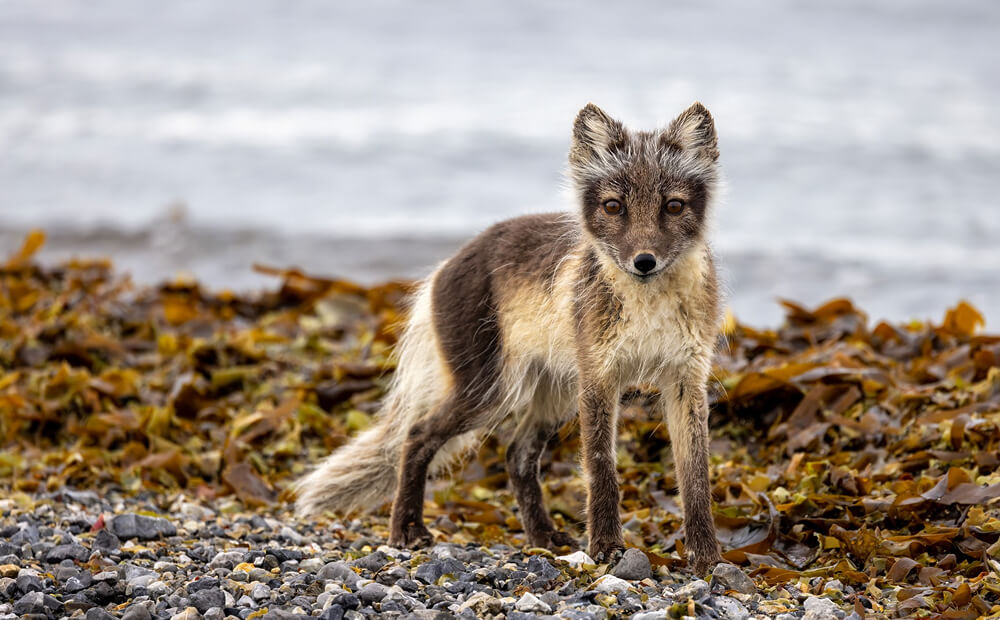
At first glance, the roles of foxes and geese in the ecosystem might seem secondary, but in reality, without them, the Arctic would not be the same. The Arctic fox is a scavenger, a hunter, and an opportunist, while geese are an important element of the food chain.
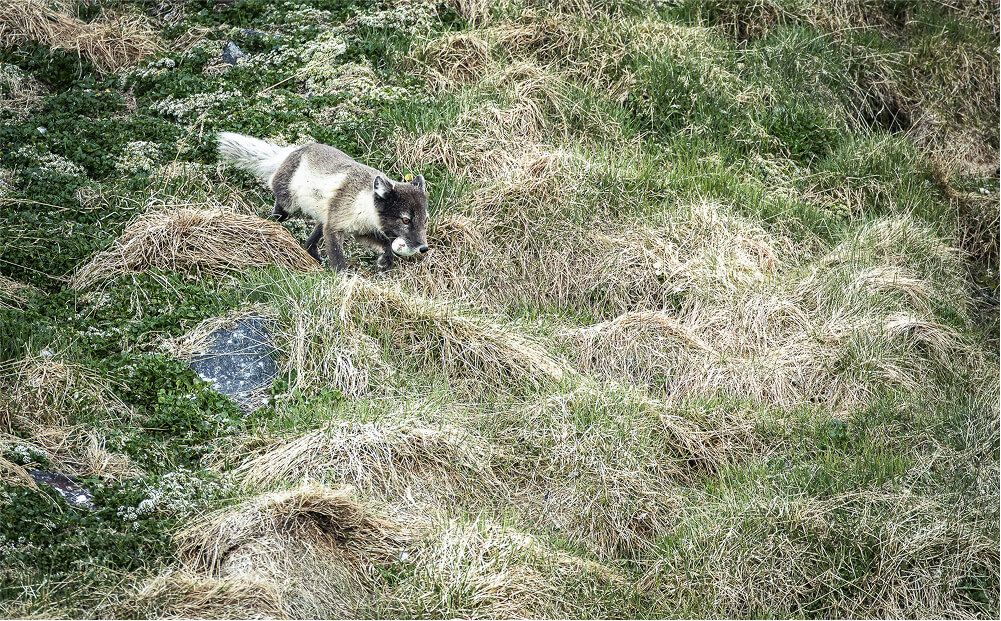
The fox regularly appears near bird colonies, looking for the right moment to snatch an egg or chick. It can be a dramatic sight – especially when gulls swoop at it, screaming to drive it away. We observed such a scene in the research settlement of Ny-Ålesund. In the photo I took, the birds are visible but the fox is hidden. Expedition leader Rayanm Elzein was luckier – he managed to capture a fox stealing an egg from a nest and watched as it hid its prize among the stones and moss before heading off to hunt again.
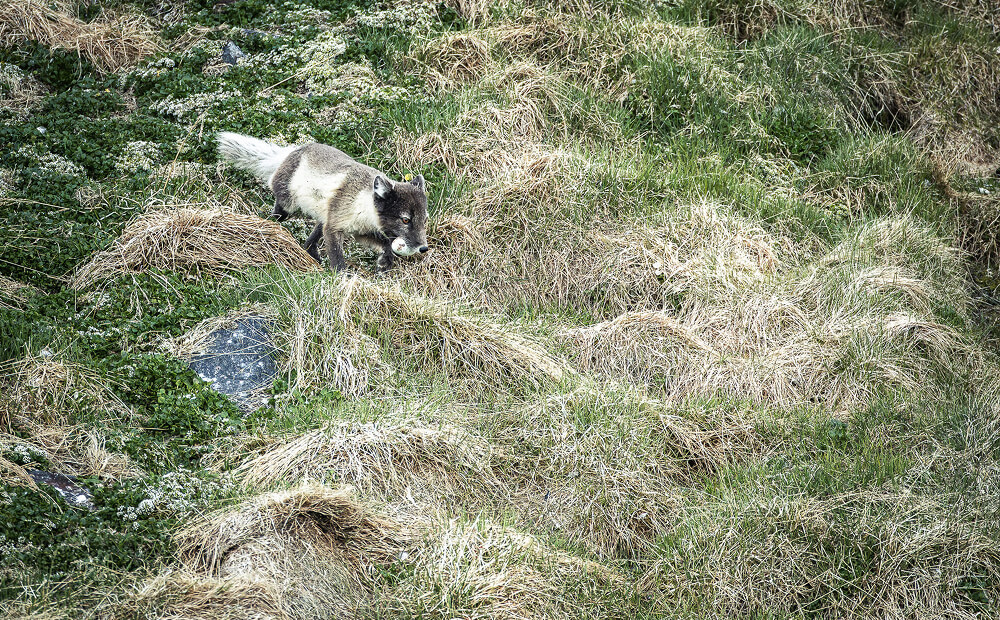
The fox is not just a hunter – it regulates bird colony numbers, catches the weak, eats the dead, and cleans up any leftover food.
Interestingly, foxes have seasonal dens: in spring, they prefer areas close to bird colonies, while in autumn they move towards the coast, where they can find washed-up fish and seals. We were also told that foxes are displacing the Arctic fox. This northern animal is well adapted to the extreme cold of the Arctic but is not good at competing. In the past, they had no such rivals. Red foxes are now moving further north – they are craftier and more intelligent, taking over Arctic fox dens, stealing their food, and even eating their young. As a result, Arctic foxes are gradually dying out. In some regions of Norway, red foxes are now deliberately culled to give the Arctic fox a chance of survival.

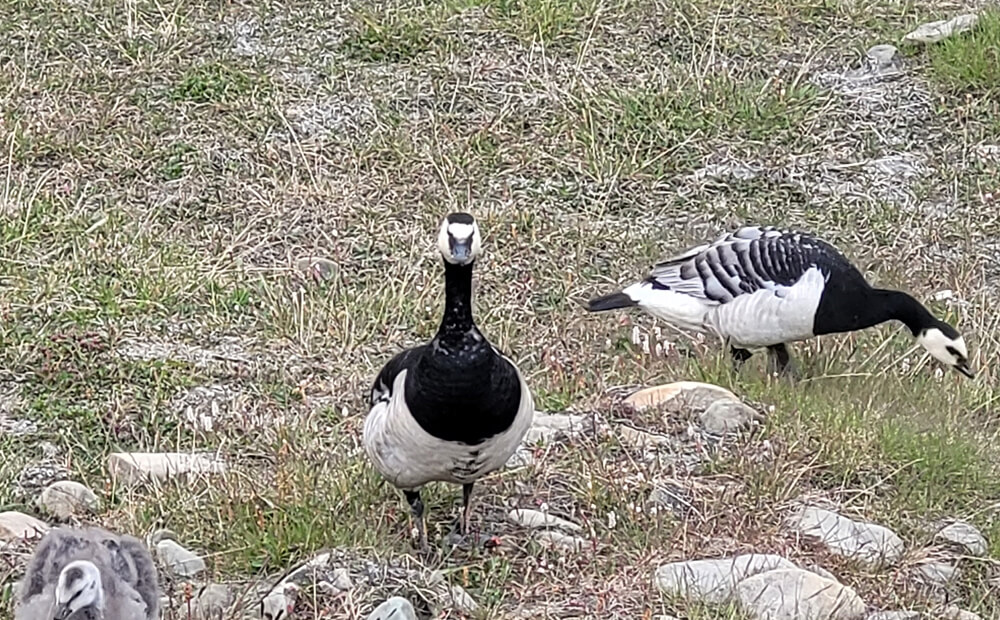
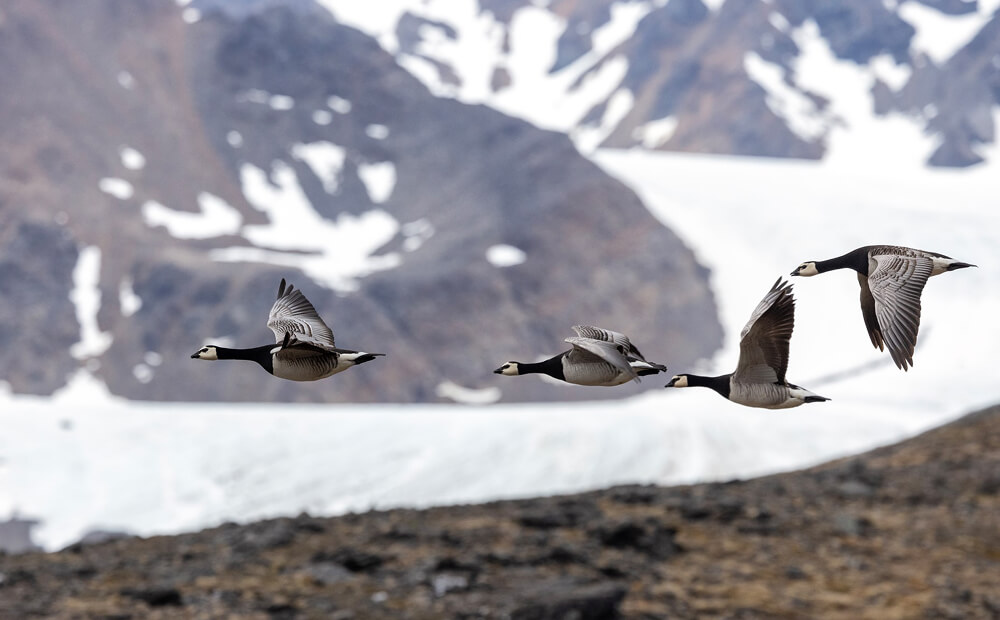
Geese are a seasonal food source for polar bears. In summer, when the ice is almost gone and hunting seals is impossible, goose colonies become a vital food supply for the bears. In the past, polar bears did not eat on land in summer, spending their time entirely on the ice. Now they are forced to feed on eggs and chicks. This is not their natural diet, but hunger dictates new strategies.
In Longyearbyen, the capital of the Svalbard archipelago, we saw geese strolling calmly through the streets – almost like pigeons in European cities. But outside the town, in the open tundra, they become part of the food chain.
Geese also play another important role – they fertilise the tundra. Their droppings are rich in nitrogen and phosphorus, which stimulate the growth of mosses, grasses, and dwarf plants. Where geese spend the summer, the tundra looks greener than in neighbouring areas.
The Arctic, then, is not held together by giants but by the connections between all living things. Every gull, every goose, every fox – all are parts of one system, in which there are no “important” or “secondary” players. There is only interdependence.
What Is Changing in the Arctic?
When we were told that in just five – at most ten – years it would be hard to find ice in the Arctic in summer, we were saddened. But it took us a while to grasp the full depth of the tragedy.
Walruses have become less vocal – and that is a bad sign. Vocal activity is an important indicator of a colony’s wellbeing, and its absence points to stress, illness, or a shortage of resources.
New, more southern bird species have appeared here – ones that previously never ventured this far north. On one hand, this is an expansion of their range. On the other, it means the displacement of native species that have nowhere else to go.
But the hardest hit are polar bears and seals.
One of the Arctic’s most vulnerable species is the ringed seal (Pusa hispida). This is the species that polar bears rely on most for food – the success of their hunts depends largely on it. But the future of these seals is becoming increasingly bleak.
The main threat is the disappearance of spring ice. Ringed seals don’t just live among the ice – they give birth to and nurse their pups in special “ice lairs” that they dig into snowdrifts on top of sea ice. These shelters protect the young from wind, cold, and predators.
To build a lair, a very specific structure is needed: thick and stable ice covered with a sufficient layer of snow. If the ice disappears too early in spring – which is happening more and more often – the lairs collapse, leaving the pups exposed on bare ice or in open water, where they are easily killed by predators or die from hypothermia.
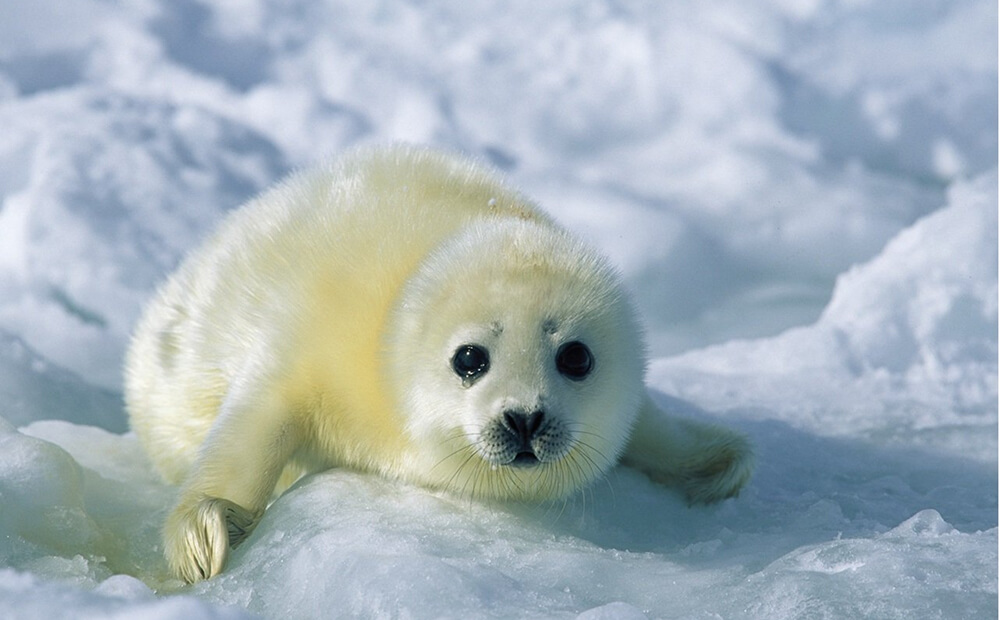
Photo: ornella.club
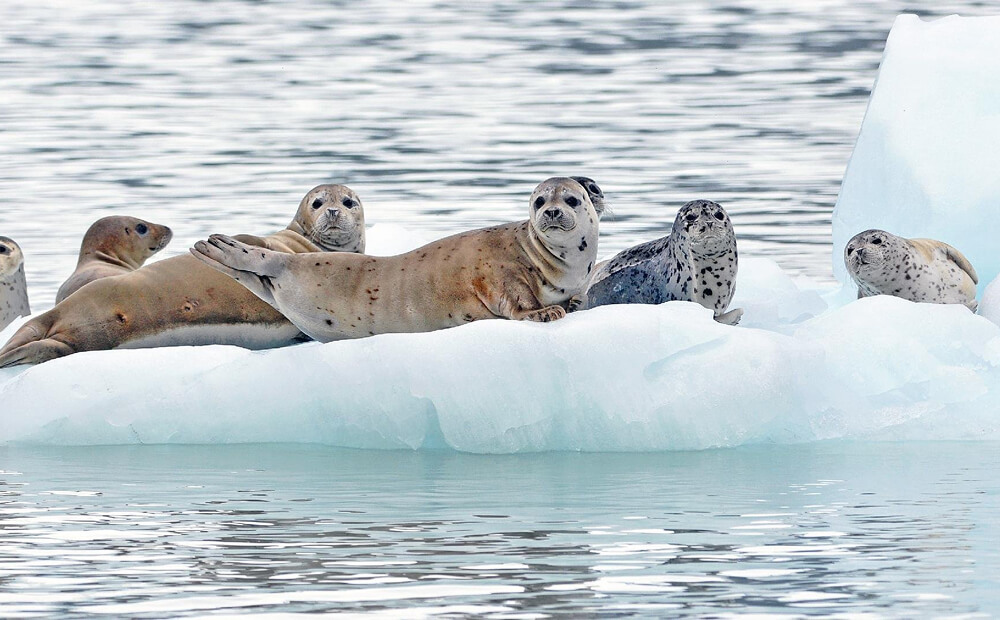
Photo: ornella.club
The problem lies in timing. In the past, a mother seal had around 6–8 weeks to nurse her pup and prepare it for independent life. Today, due to warming, this has been reduced to 3–4 weeks. The pups do not have time to gain the necessary weight and die even if they never encounter a predator.
This is what ecological extinction looks like: not sudden, but gradual – and all the more frightening for it. Scientific data confirms that in some areas of Spitsbergen, seal survival rates in recent years have dropped by 50%. And these animals are not some exotic rarity – they are the foundation of the food chain for bears, foxes, and even gulls.
What We Lose When the Ice Disappears
The Arctic is not simply “ice and cold.” It is a web of interconnected life forms, where a change in one element resonates throughout the system. The disappearance of ice is not only a change in the landscape – it is a rupture in the ecosystem.
1. When the ice vanishes, seals lose their lairs. Without stable spring ice, they cannot raise their pups.
2. Fewer seals mean less food for bears. They are forced to seek alternatives on land – eggs, birds, rubbish. They lose body mass, reproduce less often, and die more frequently.
3. Fewer seal pups mean less food for foxes and gulls. The diversity of feeding strategies drops sharply. Small predators begin to compete more, breaking out of their usual behavioural patterns.
4. Changing ice changes the sea’s acoustics. Walruses, narwhals, and belugas rely on sound to navigate and communicate. Thinner, melting ice and loose ice crystals create a new soundscape in which their echolocation becomes less accurate.
5. Shifts in temperature alter bird and whale migration routes. Some Arctic species lose their nesting grounds, while others face competition from southern species. The delicate balance between timing, location, and food availability is disrupted.
When the ice goes, the foundation of life in the Arctic goes with it. Birds, mammals, plants, and even microorganisms in this region are all tied to the rhythm of freezing and thawing. And when that rhythm is broken, the entire northern “orchestra” begins to play out of tune. I very much hope it will not fall silent forever.
For those who have never been to the Arctic but are planning to go, I will say this – there isn’t much time left. Try to make the journey soon, to witness the stark beauty of glaciers and the life of Arctic animals in their natural habitat.
Natalia Kardash
Articles from this series:
At the Edge of the World: Little-Known Facts About Arctic Animals and Birds
At the Edge of the World: The Arctic – A Place Where You Are Not Allowed to Die
In this article, I will share what I learned about Arctic wildlife from conversations with scientists, naturalists, and guides of the Swan Hellenic expedition. When you stand on the deck, gazing at the coastline, it may sometimes seem that there is no life there. But after spending even just a couple of days in the Arctic, you begin to realise that it has its own rules – very different from those we are used to.
Talking to zoologists, ornithologists, naturalists, and expedition members changed my perception of this place. This article is not an encyclopaedia – rather a collection of little-known facts that surprised me personally.
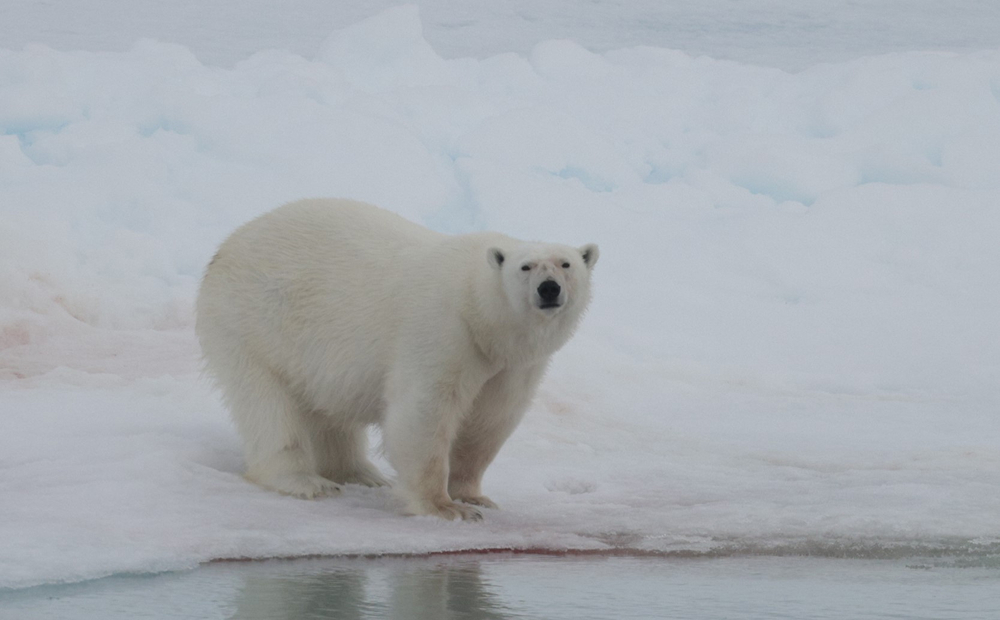
The Polar Bear – Symbol of the Arctic
When we think of the Arctic, the first image that comes to mind is the polar bear. Powerful and majestic, it has become the visual emblem of the North and the icon of the polar climate.
Speaking to me during an interview, guide Alena Antonova explained: the polar bear does not adapt to change – it suffers from it. This is an animal for which ice is not just a surface, but the foundation of its ecosystem, its hunting method, its survival strategy, even its migration routes. “It is born, hunts, and dies on the ice. Ice is vital for it,” she said.
Expedition leader Rayann Elzein confirmed: “We are seeing more and more encounters with bears in places where they shouldn’t be. These are the unlucky ones – those that have failed in hunting and have come closer to people. We don’t celebrate such encounters – we worry about them.”
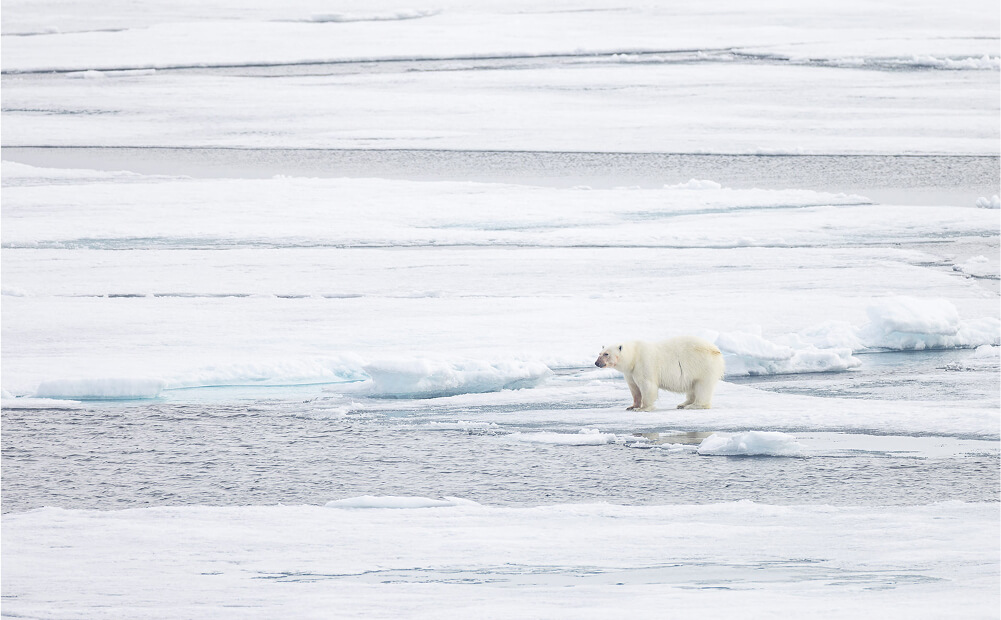
Another often-overlooked fact: the polar bear is silent. It does not make sounds or growl the way films suggest. It can watch for long periods and approach almost noiselessly. This is why strict safety rules apply on board an expedition ship: landings are only permitted with trained and armed bear guards.
The Arctic is not a zoo. And the polar bear is not a model for selfies.
The Arctic Is Noisy – You Just Have to Listen
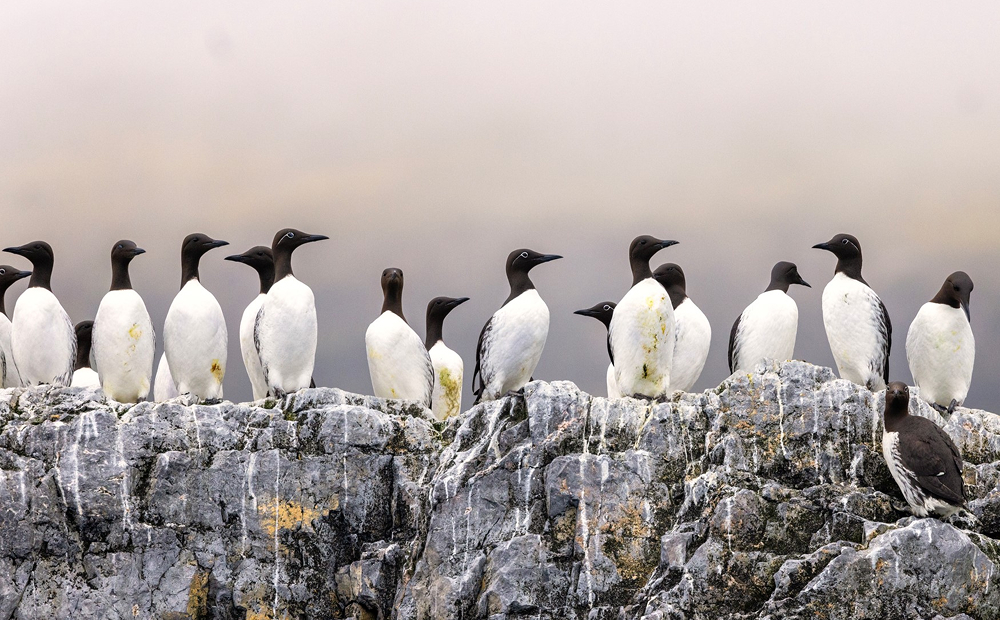
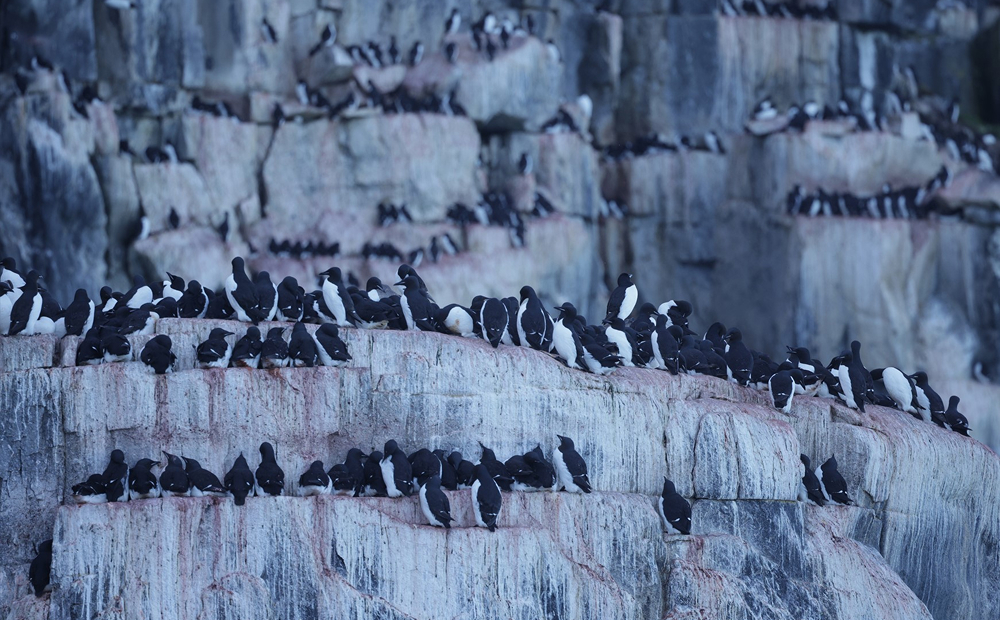
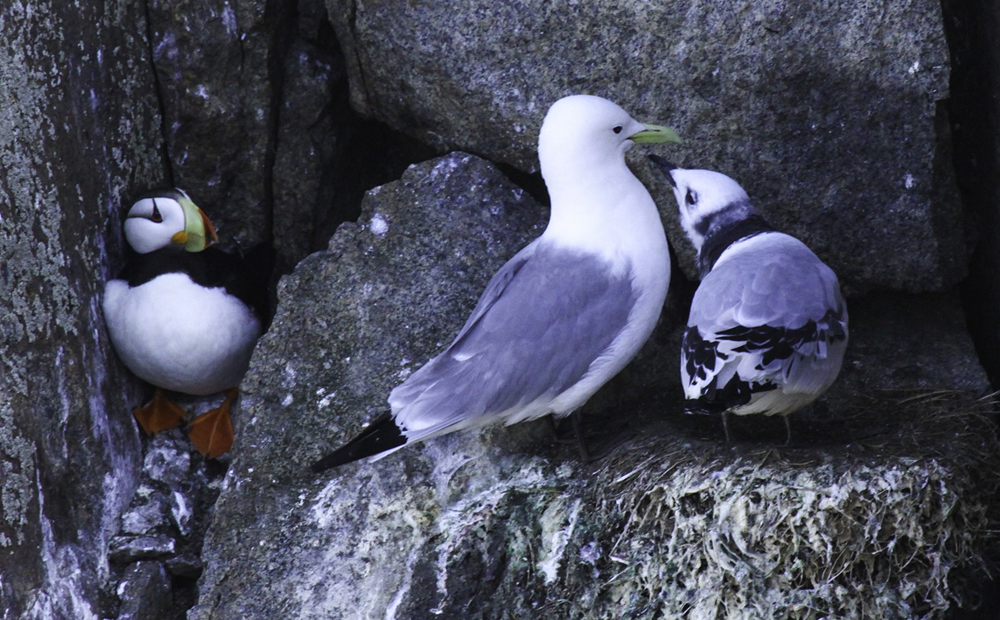
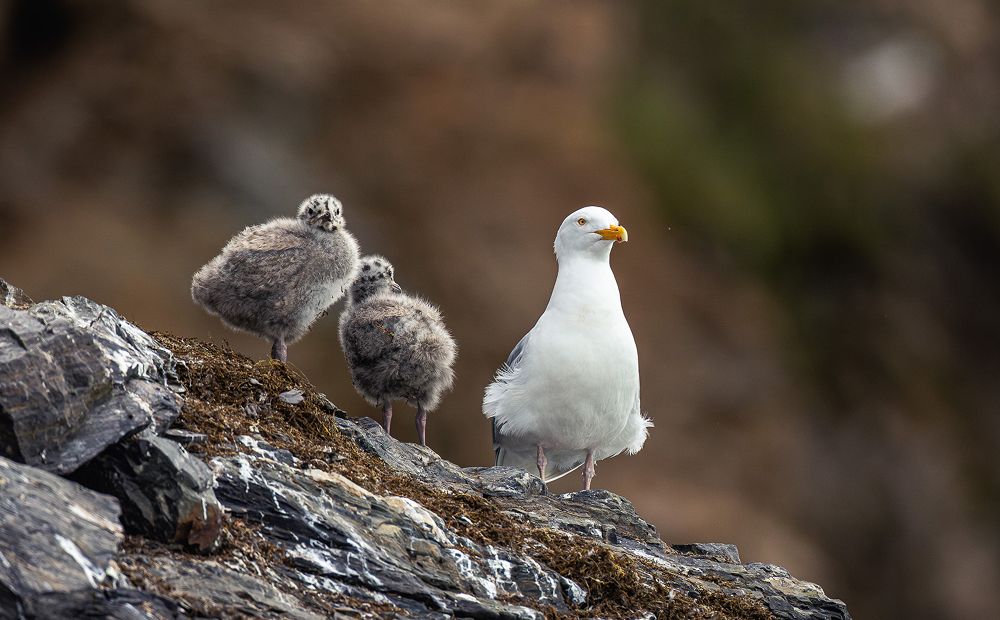
If the polar bear is the symbol of the Arctic, then in summer, the true masters of this region are the birds. As the ice melts, the cliffs become alive. In thousands of calls, the clap of wings, and swift arcs over the sea, an invisible order emerges – strict, noisy, and intricate.
I spoke with zoologist Liya Pokrovskaya, a field researcher with extensive experience. She spoke about birds with both excitement and concern. Many species of Arctic birds are extraordinarily finely tuned “instruments”. Even the slightest change in climate, food supply, or nesting conditions disrupts their populations like a wrong note in a symphony.
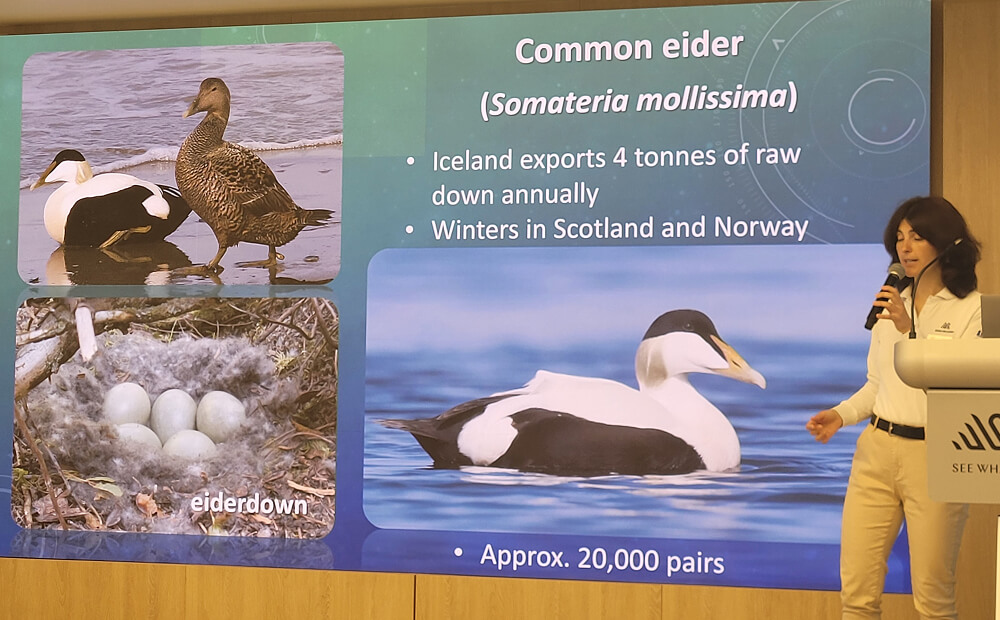
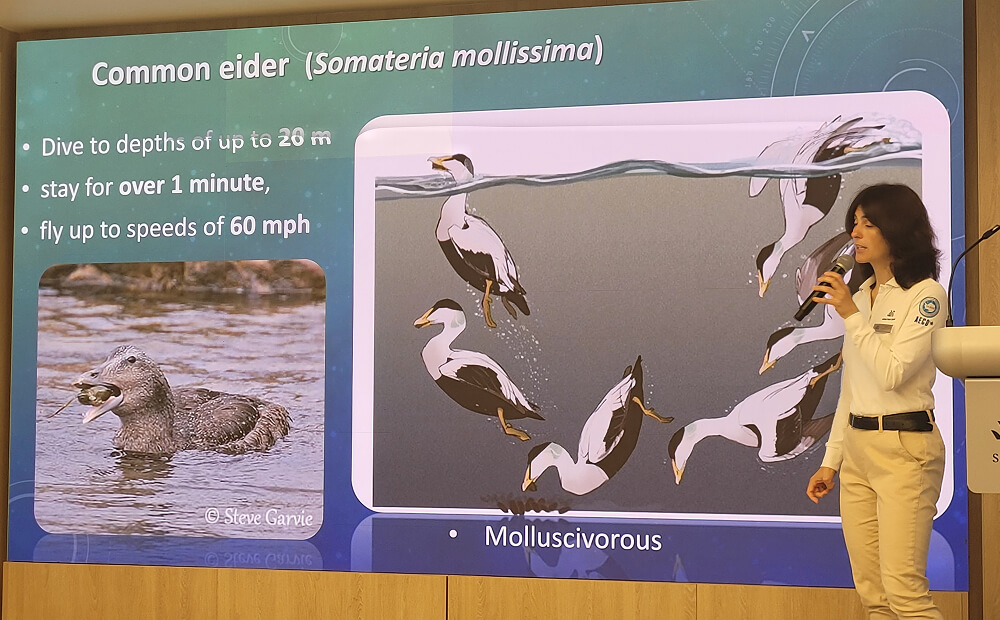
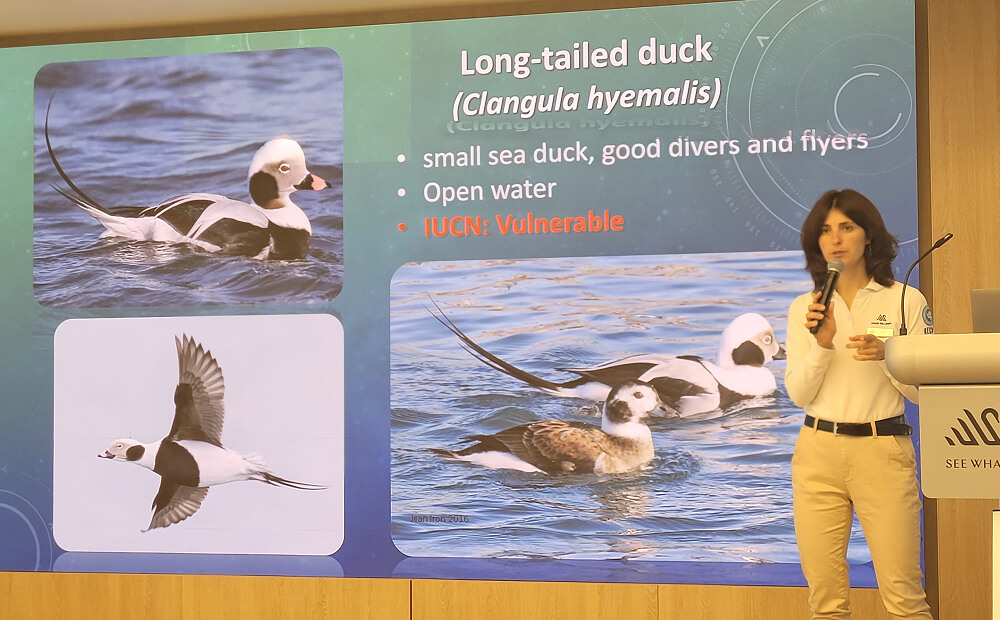
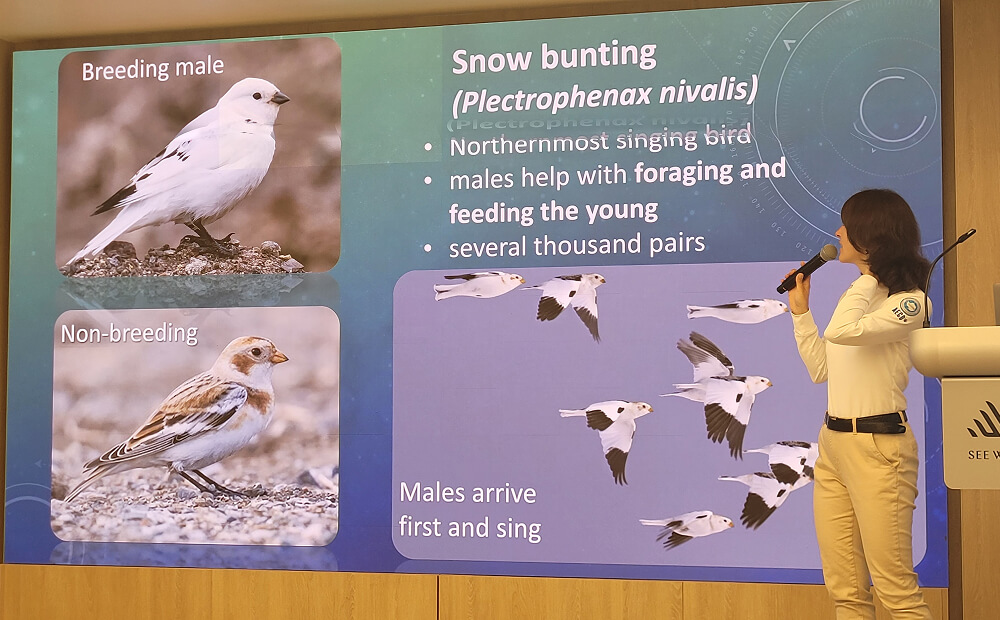
Here is what I learned from her – and what might surprise you:
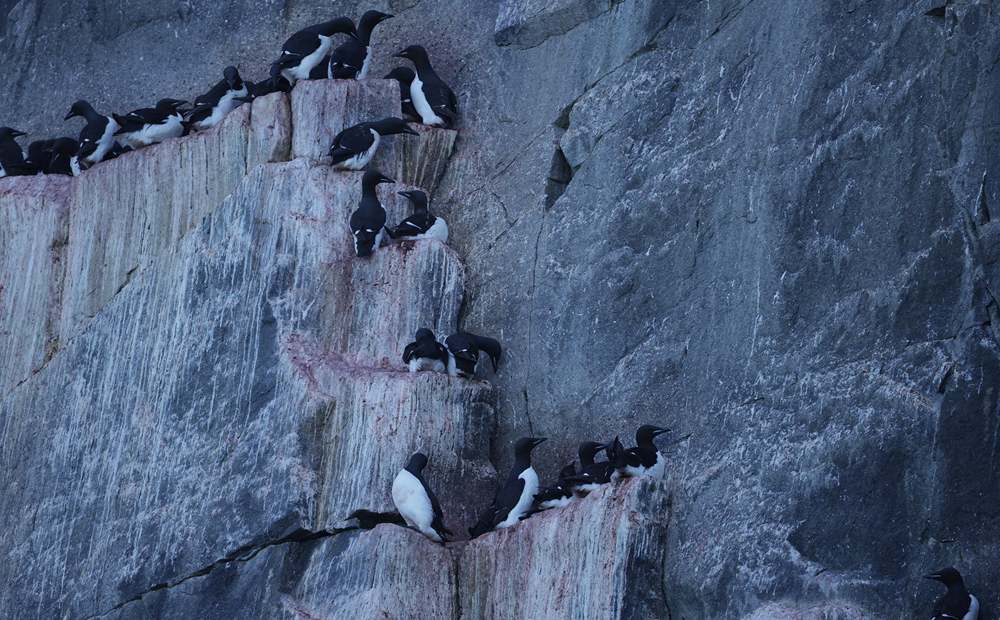
1. Guillemot chicks cannot fly – but they jump from 100-metre cliffs. Brünnich’s guillemots do not build traditional nests. They lay their eggs directly on rocky ledges. When the time comes, the chick simply… jumps down – sometimes from 80 to 120 metres height. This is not a mistake; it is a strategy. Its father is waiting below. He will care for the chick for another two months, teaching it how to survive.
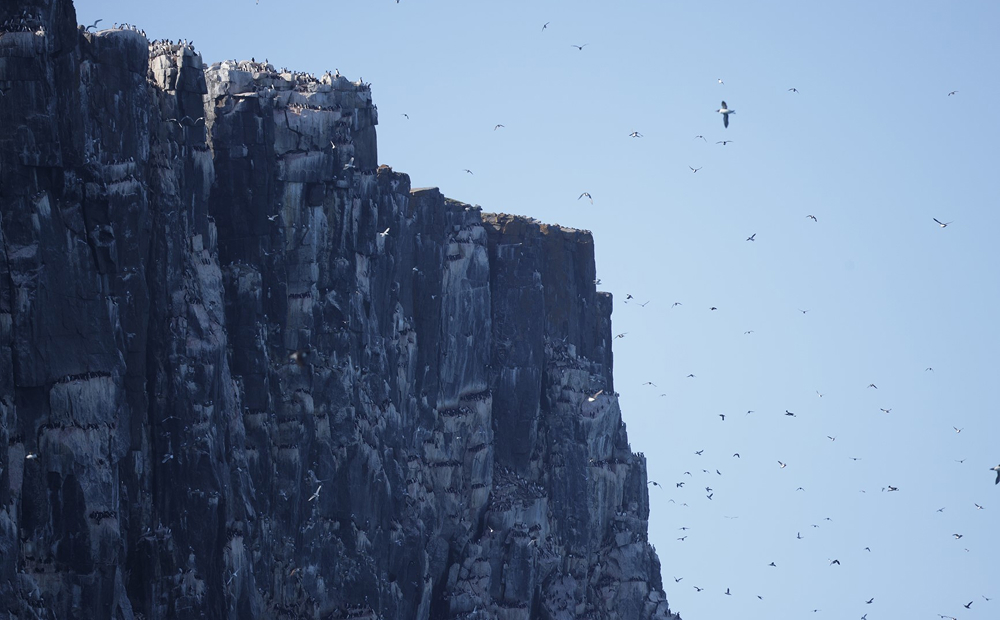
2. The noisiest place in the Arctic is not a city, but a cliff. The Alkefjellet cliff colony has more than 60,000 pairs of birds. They arrive for the short summer to raise their chicks. But this is not chaos – it is an orderly, time-tested system. Every pair has its own place.
3. Little auks fly – and dive – with equal skill. These unique birds move underwater almost like penguins, using their wings to “row”. They can dive up to 100 metres and spend more than 70% of their time at sea – even sleeping on the water.
4. Bird colonies are the main source of life for the entire ecosystem. While feeding their chicks, little auks bring in tonnes of fish from the sea. Fish scraps and guano are a vital nutrient source for Arctic vegetation, enriching the thin tundra soil with minerals that feed mosses and lichens. These attract insects, which in turn draw other birds and small mammals. It is, in a way, a biological pump transferring life from sea to land.
5. Eiders line their nests with their own down. Females pluck down from their own bodies to protect the eggs from the cold. This down is considered one of the warmest natural materials in the world and is used to make luxury duvets. It can only be collected by hand, and only when the birds leave their nests. In Norway, families have passed down this skill for generations, gathering it carefully without harming the birds.
6. Many Arctic birds are monogamous and return to the same nests year after year. Liya showed me photos of ringed birds she has seen on the same cliffs for over a decade. In a world where the ice melts, only the rock remains a constant point of return.
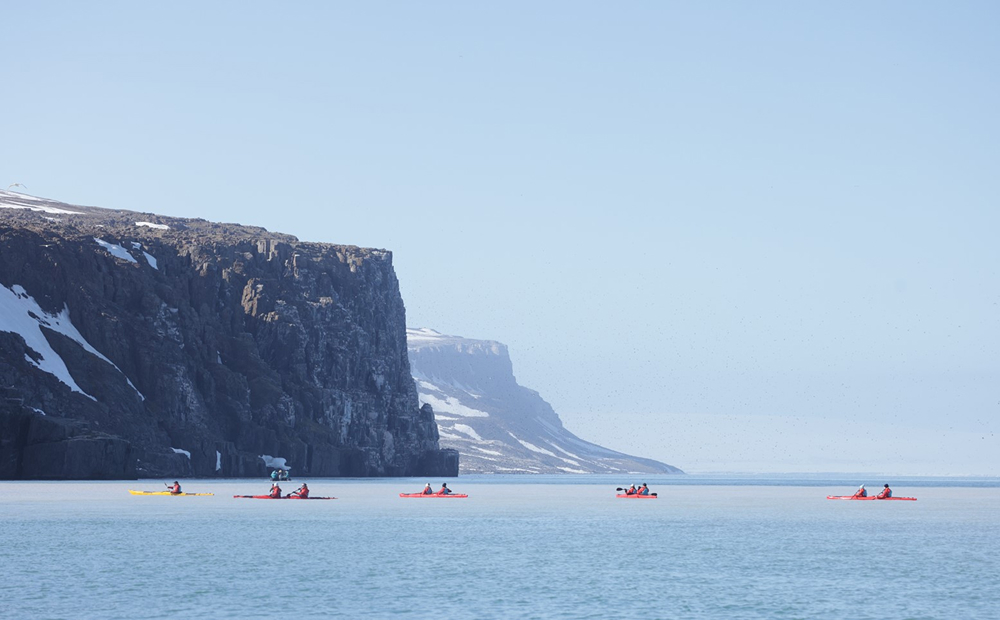
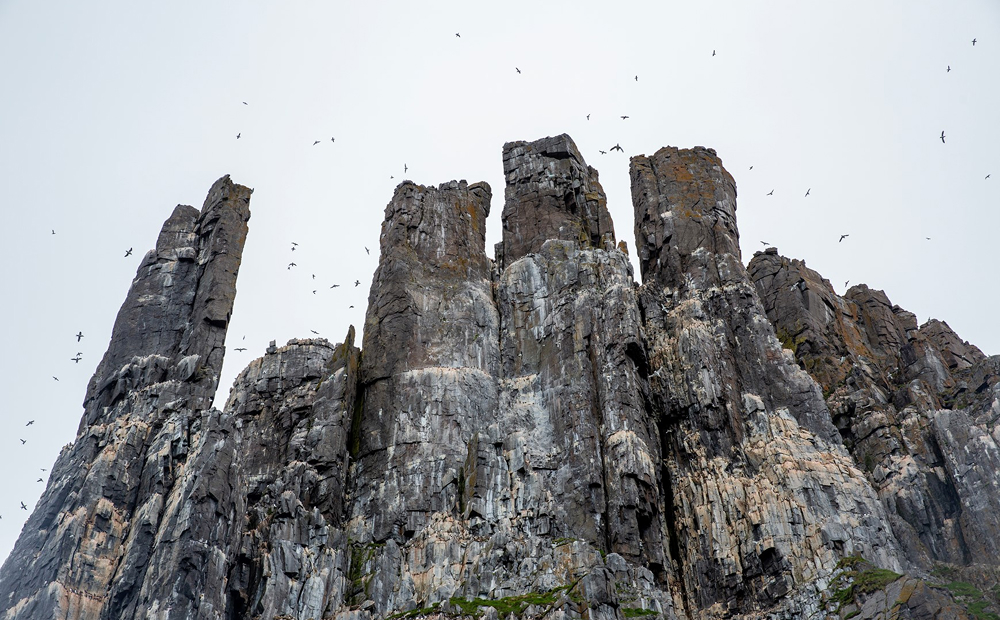
The Alkefjellet cliffs, which I was able to see up close from a kayak at water level, became for me the loudest place in the Arctic. Thousands of birds – calling, flying, and guarding their young – are a reminder that even at the edge of the world, life never stops; it is simply organised differently. I was lucky enough to get very close by kayak: in these parts, the birds are not afraid of people.
The article about Arctic animals and birds turned out to be quite long, and I have many photos. That is why I have divided it into two parts. In the next part, I will tell you about walruses, seals, and whales, as well as foxes and geese. Walruses, like humans, enjoy “chatting” – they have a complex vocal communication system. Arctic seals make breathing holes in the ice – a task that requires precision down to the centimetre. The Arctic fox is not just a hunter but also the “clean-up crew” of bird colonies. About this and other little-known facts – in the continuation.
Natalia Kardash

How life is organised on the island of Spitsbergen and why the Arctic is a unique place on our planet. This is the second article in the series about travelling to the Arctic aboard the expedition ship SH Diana of Swan Hellenic.
In the Arctic, everything is different – the rhythm of life, the laws of nature, the rules of conduct, and even the attitude towards life and death itself. Once you have been here, you begin to feel your inner compass shift.
The Arctic has no precise borders – unlike Antarctica, it is not a continent, but an immense area surrounding the North Pole. Geographically, it includes the northern parts of Canada, Russia, Greenland, Iceland, the USA (Alaska), as well as the Spitsbergen archipelago, which is now officially called Svalbard.
The Arctic in Summer Is Full of Life
For those who have never been to the Arctic, it may seem that there is only permafrost and endless drifting ice. I thought so too – until I set out by kayak to the cliffs of Alkefjellet in Spitsbergen. There, life was in full swing. I had never seen so many birds at once: more than 100,000. Just look at the photo. In this region, it is one of the largest bird colonies nesting on the cliffs during the brief northern summer.
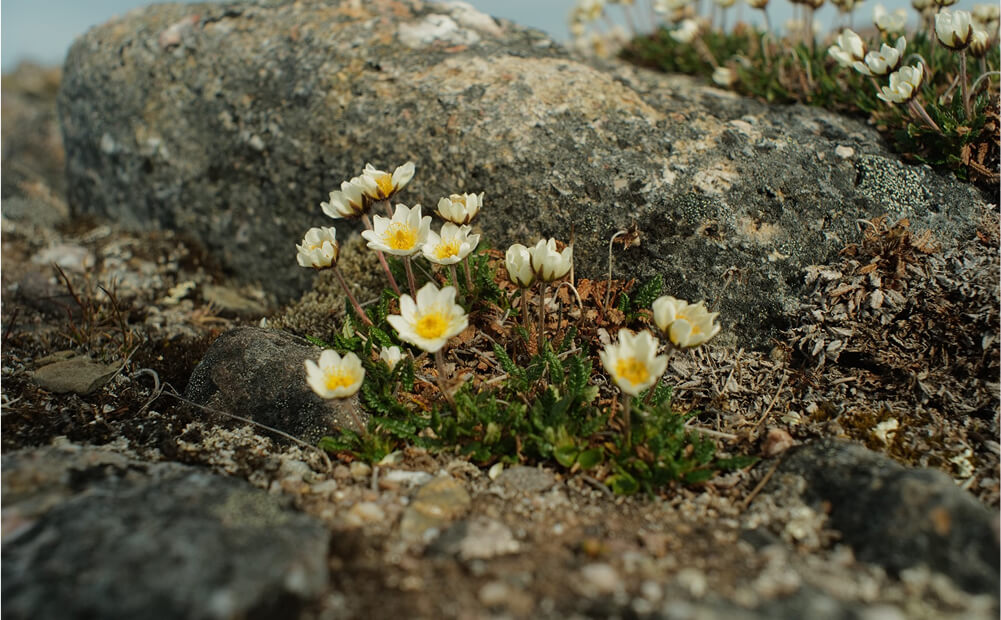
The Arctic is also home to polar bears, walruses, narwhals, loons, and Arctic foxes – all perfectly adapted to the extreme conditions of the North. As for flora, it is minimal – mosses, lichens, and dwarf shrubs.
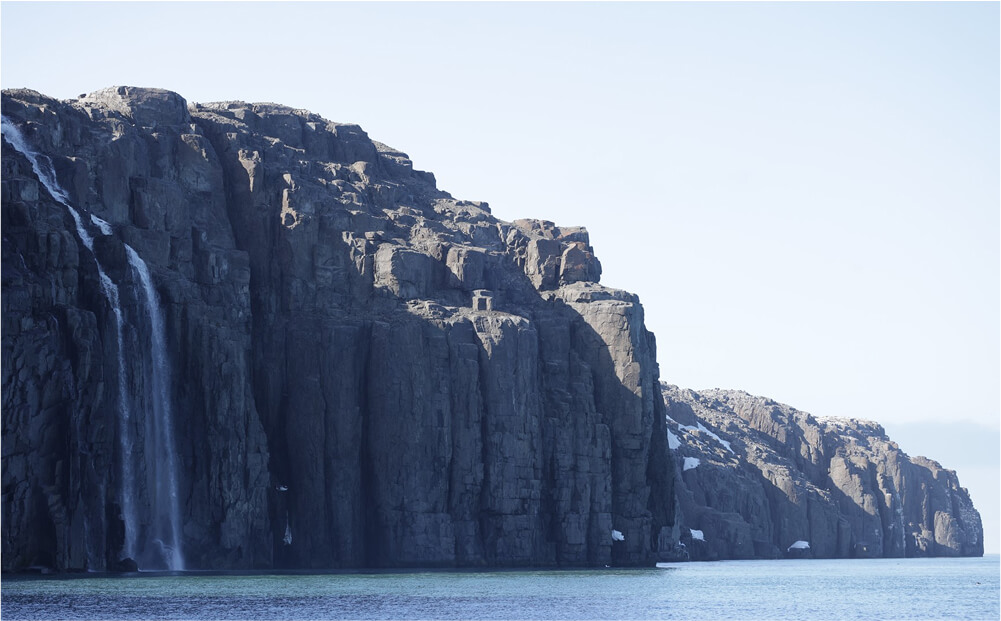
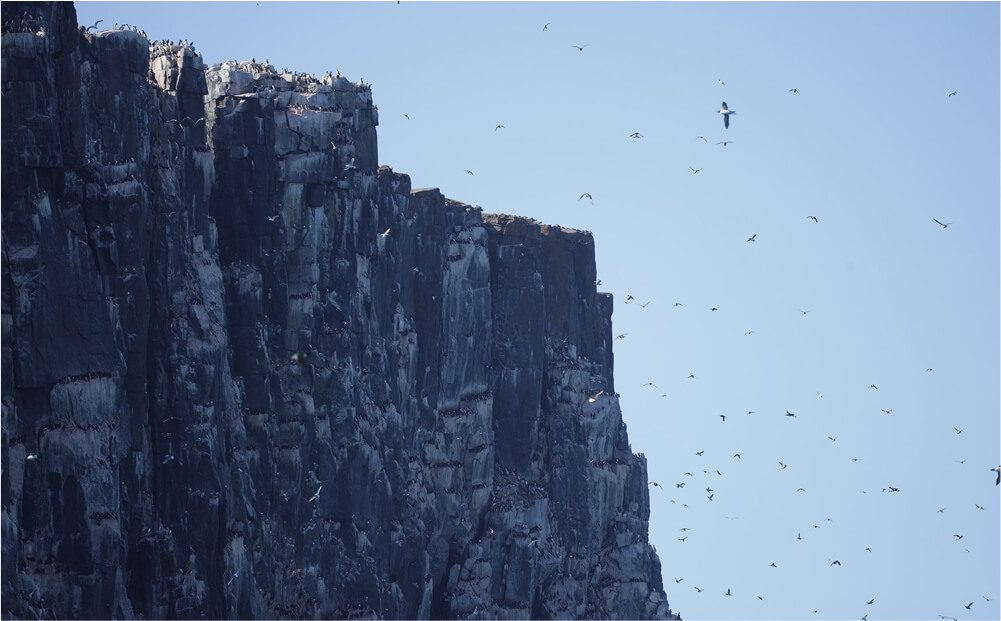
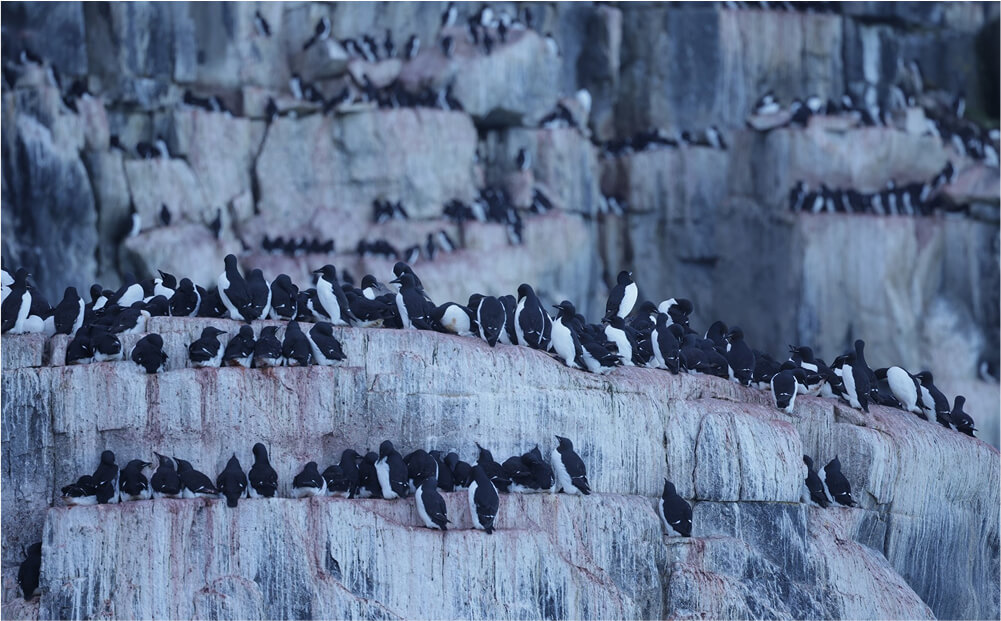
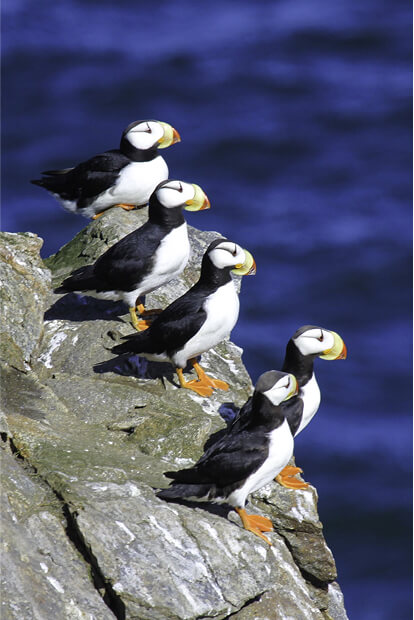
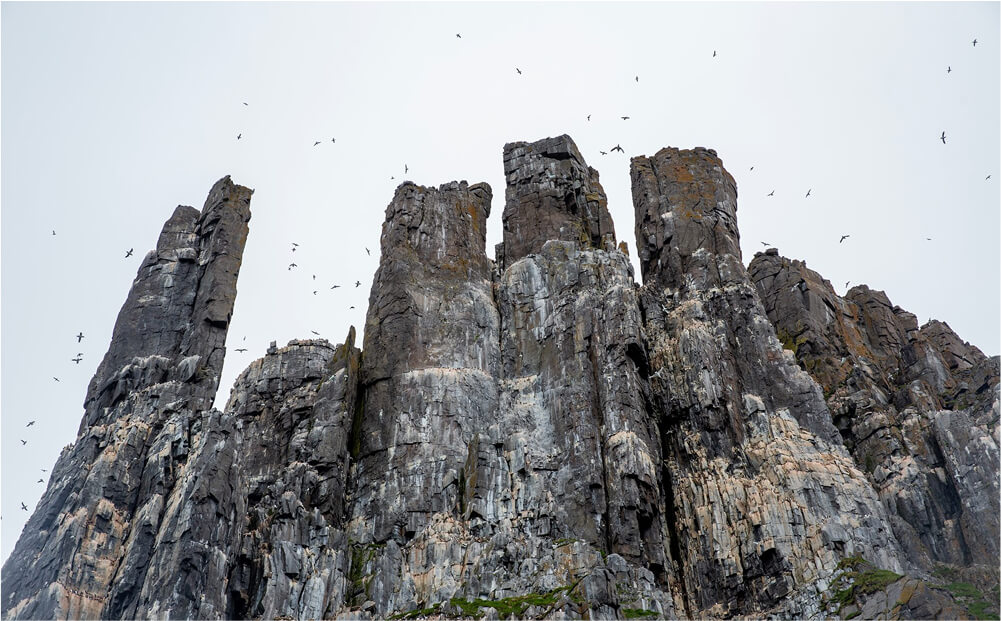
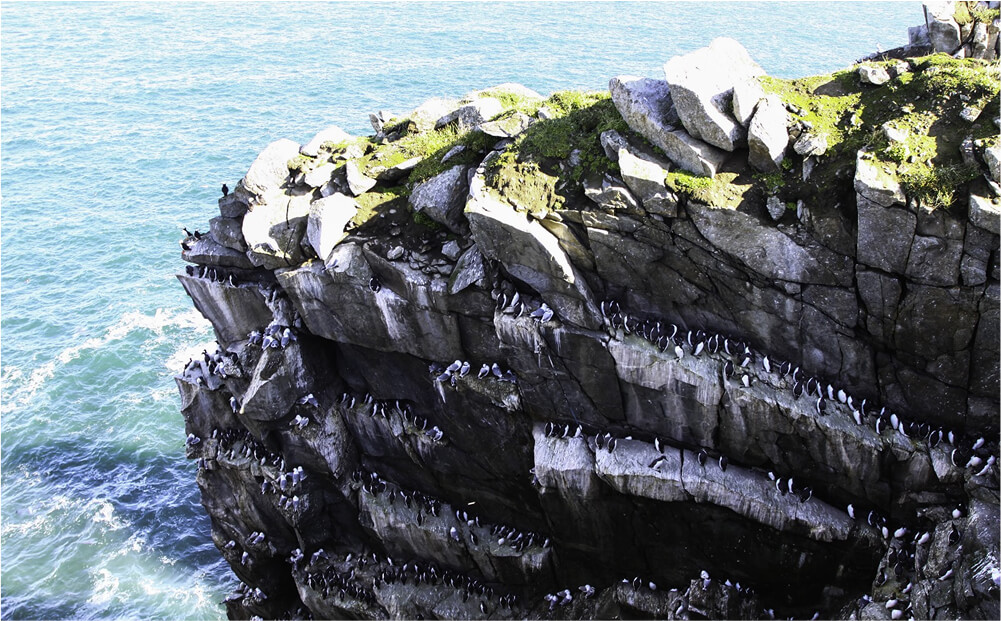
There are no trees at all on the Spitsbergen archipelago.
Where Do People Live?
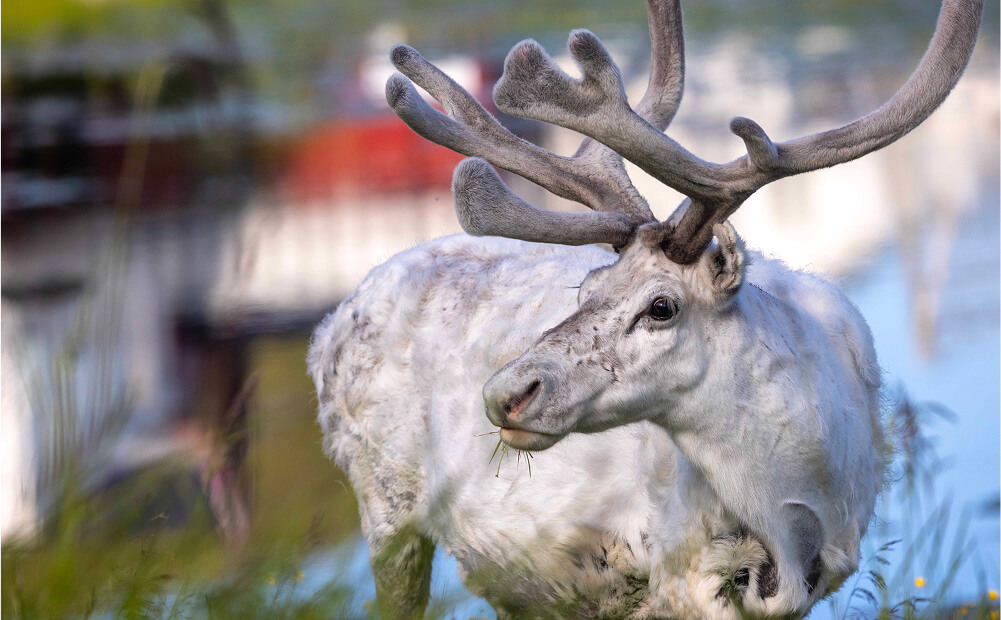
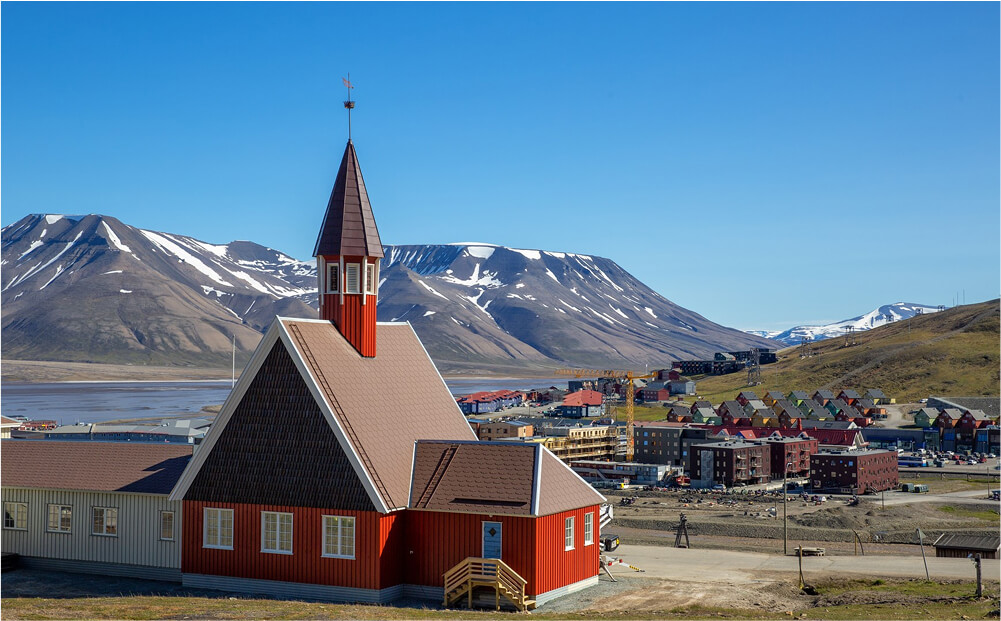
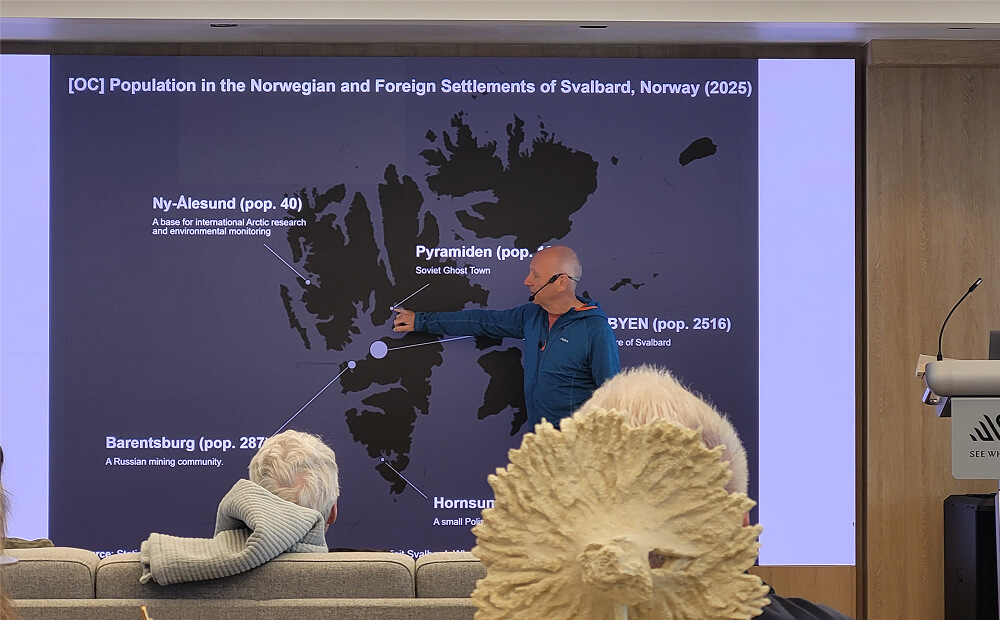
In the capital of the archipelago – Longyearbyen – about 2,400 people reside. It is the northernmost settlement in the world served by regular civilian flights. Here you can find shops, a school, a kindergarten, a university campus, and a museum. To my surprise, I saw children’s playgrounds near the houses (I had imagined there would be nothing for children to do here). But no – everything is just like in an ordinary little town, where residents know each other by name. The only difference is that the streets are sometimes crossed by reindeer, and leaving the town’s limits for the wilderness without a rifle is forbidden. While we were walking around Longyearbyen, we saw flocks of geese here and there. And in another town – Ny-Ålesund – we watched gulls dive-bombing a fox that was trying to snatch their chicks.
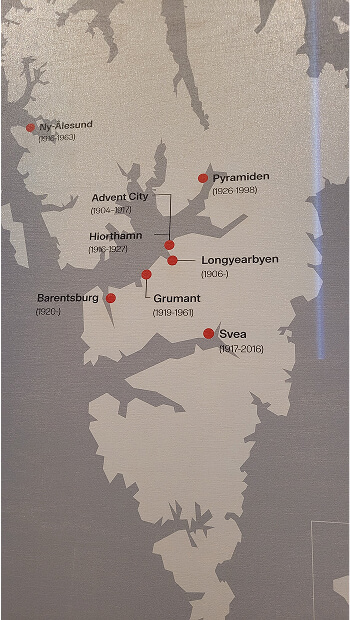
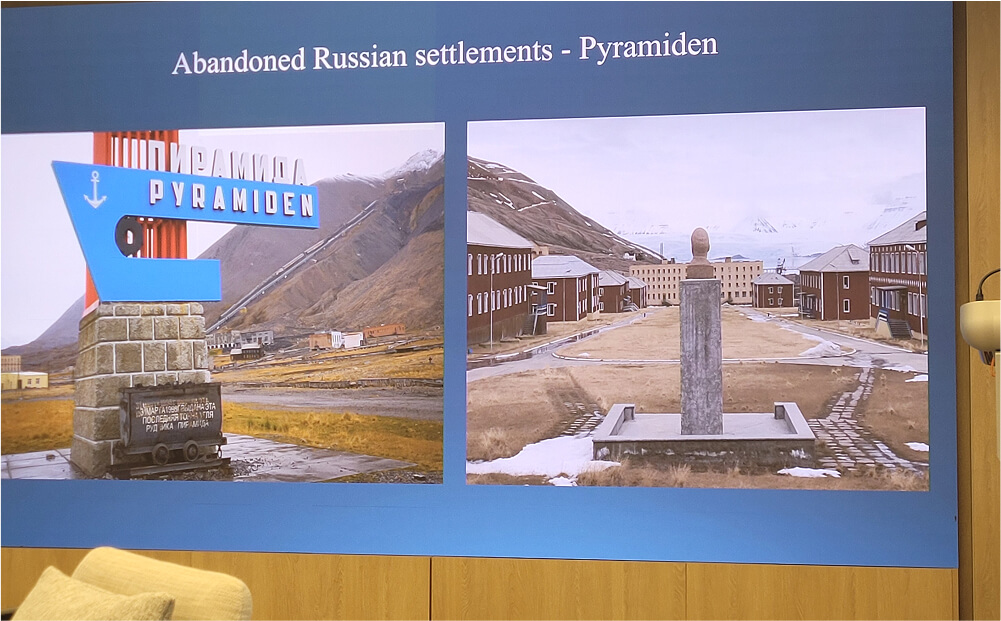
Other settlements have far fewer residents – for example, the abandoned Soviet settlement of Pyramiden has only 10 inhabitants, while Barentsburg is home to around 300 Russian-speakers. I will write separately another time about how it happened that there were towns on Spitsbergen founded by the USSR and what their status is today.
Why You Cannot Die Here
This is not a metaphor. In Longyearbyen, it is officially forbidden to die. The reason lies in the permafrost – bodies do not decompose. When a cemetery was established here in the early 20th century, it turned out that even decades later, the remains of the deceased were almost perfectly preserved. This became particularly evident during the Spanish flu epidemic – the virus continued to live in the frozen bodies.
Today, anyone who is terminally ill is transported from the archipelago to the “mainland” – to Norway. These are the rules.
To be continued.
Natalia Kardash
The first article in the series “At the Edge of the World: First Encounter with the Arctic” can be read at this link.

Трасты помогают превратить хаос в порядок, снизить риски и защитить то, что вы создавали годами. Но как разобраться в сложной системе, избежать ошибок и выбрать оптимальное решение именно для вас? На онлайн-семинаре «Вестника Кипра» вы сможете подробно рассмотреть один из самых эффективных инструментов управления капиталом, сохранения активов и уверенного планирования будущего семьи и бизнеса.
«Траст может сделать богатство инструментом добра, а не жадности»
Это цитата из начала ХХ века, слова принадлежат самому богатому человеку того времени Эндрю Карнеги. Использование траста для благотворительности – весьма распространённая практика. Учредитель благотворительного проекта получает гарантию того, что переданное имущество и деньги будут использоваться исключительно в тех целях и для тех бенефициаров (будь то, например, неимущие или животные), которых он определил в декларации траста. И что никто не сможет изъять имущество из траста ни под какими предлогами.
«Траст — это способ защитить активы от рисков и хаоса»
А это уже цитата нашего времени. Миллиардер Михаил Прохоров, как и большинство создателей современных бизнес-империй, подчеркивал, то актуальность и универсальность трастов не снизилась с годами. Законодательство о трастах развивается, опираясь на универсальные незыблемые принципы, как например: разделение юридического и бенефициарного права собственности, фидуциарная обязанность доверительного собственника, защита активов от претензий кредиторов или доверительного собственника, независимость от личных обстоятельств, гибкость управления.
«Трасты дают вам контроль сегодня и безопасность завтра»
Этими словами Ричарда Брэнсона, основателя Virgin Group, включающей около 400 компаний различного профиля, можно завершить статью и пригласить вас самим разобраться в том, как использовать трасты на благо ваших близких и бизнеса.
«Траст: инструкция по применению для семьи и бизнеса»
Онлайн-семинар с Михаилом Соболевым — специалистом по структурированию бизнес-групп и управлению капиталом. Модератор – Наталия Кардаш.
Что вы узнаете:
Почему стоит присоединиться:
Дата и время: 3 сентября, 15:00
Формат: онлайн-встреча
Регистрация: https://forms.gle/TxS71YCghYo39wzBA
Стоимость: 50 евро. Для членов уровня Vestnik Premium – 25 евро.
Важно: Михаил и Наталия не продают трасты, не предлагают свои услуги по их созданию. Они – консультанты, прожившие на Кипре по 26-30 лет, которые могут помочь спокойно и досконально разобраться в теме. Присоединяйтесь!