

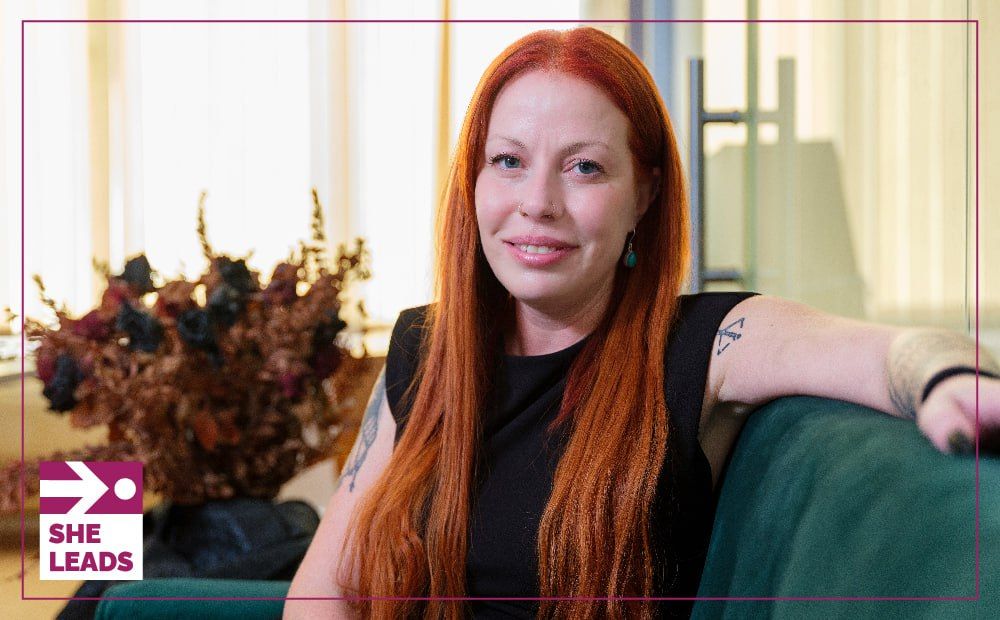
In every growing organisation, there are individuals who turn vision into structure. With a background spanning pharmacology, financial crime and risk, Eleni Ioannou, Chief Compliance Officer at Kea, brings rare versatility to her field – and as a single mother of three, she proves that leadership and resilience can go hand in hand.
Eleni, your career journey spans pharmacology, legal and finance – an exceptional combination. What first drew you to such a diverse academic path, and how did it shape the way you see leadership and problem-solving today?
To be honest, I never saw myself as a traditional pharmacist. I’ve always been both creative and analytical – someone who loves science but also thrives on movement, discovery, and challenge. I initially thought my path would lead to R&D, where I could combine technical understanding with innovation. What I didn’t realise at the time was that this mindset – the balance between structure and curiosity – would later become invaluable across completely different industries.
I spent a decade in the pharmaceutical field, taking on almost every role imaginable – from sales to medical advisor and eventually pharmacovigilance. Each step deepened my understanding of structure, responsibility, and risk. Over time, I learned that leadership is universal. It’s not about hierarchy or giving instructions; it’s about setting the standard. People don’t follow because they’re told to – they follow because they trust your judgment, see your consistency, and believe in the results you deliver.
After years in the pharmaceutical field, including your time in GSK, you made a bold transition into compliance. What motivated that change, and how did you find your place in an entirely new industry?
I’m a restless person by nature – I always want to push further, to test myself. After a decade in pharma, I felt that Cyprus couldn’t offer much more room to grow in that sector. I wanted something new, something that matched the pace of how the world was evolving.
At one point, personal circumstances led me to leave my job in pharmaceuticals and move into the legal industry. That transition wasn’t planned, but I quickly realised how much I enjoyed it. Very quickly I understood structure, and I could see how my skills could be applied into that industry too. Eventually, that experience led me to the financial sector, a place where I truly found my element. It’s a dynamic environment where creativity meets logic, decisions carry real impact, and every day brings an opportunity to learn, adapt, and grow.
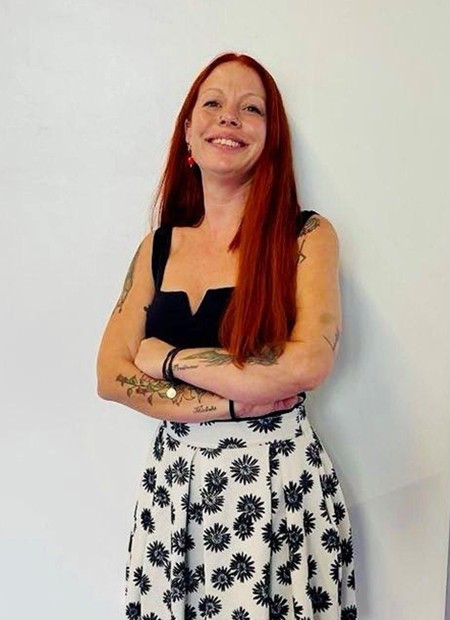 Moving from global healthcare to financial services must have brought a new set of challenges. How did your scientific background influence the way you approached risk management and regulatory work in the early stages of your compliance career?
Moving from global healthcare into financial services definitely came with a steep learning curve, especially when it came to understanding complex regulations, market behaviour, and the pace of change within the financial sector. But I quickly realised that my scientific background was a real strength rather than a limitation.
In science, you learn to think critically and methodically. Every conclusion must be supported by evidence, every variable examined, and every assumption tested. That mindset translated seamlessly into compliance and risk management, where attention to detail and structured thinking are essential. My background in pharmacology, for instance, had already taught me the importance of precision, documentation, and accountability, principles that align perfectly with regulatory expectations in finance. In both science and compliance, you rarely have perfect information. You rely on data where possible, but ultimately, you need to make sound, reasoned judgments when gaps exist. That balance between analytical rigour and practical decision-making became one of my greatest assets in those early years.
Most importantly, the transition reinforced the idea that no knowledge is ever wasted. The curiosity, discipline, and problem-solving approach I developed in healthcare continue to shape the way I lead, assess risk, and build sustainable frameworks today.
When Kea was founded, you played a defining role in shaping its compliance structure. What were the first principles you introduced to build a culture of trust, transparency and accountability from the ground up?
The most important step was establishing strong internal controls and ensuring that everyone understood why they mattered. In a new organisation, there’s no existing culture to lean on, you have to build it from the ground up. That starts with surrounding yourself with people who share your values and are committed to embedding good practices from day one. We began by creating clear policies, monitoring frameworks, and reporting lines. But beyond the structure, it was essential to build a shared vision, a collective understanding of what kind of organisation Kea would become. Culture can’t be imposed from the top; it’s shaped through collaboration, consistency, and example. I was fortunate to work with a team that not only shared that belief but also supported doing things the right way from the start.
As Chief Compliance Officer, you’re not only setting internal standards but also contributing to Kea’s corporate reputation. How do you ensure that compliance becomes a source of competitive strength rather than just a regulatory requirement?
It’s all about balance. Compliance is often seen as restrictive, but in reality, it’s what keeps the organisation strong and sustainable. As the organisation grows, exposure to risk naturally increases. The goal isn’t to limit activity, but to manage it responsibly. While compliance may not drive business in the traditional sense, it enables it by protecting its credibility and ensuring stability. My focus is clear, to maintain compliance, preserve the company’s reputation, and keep the regulator’s trust. This allows the rest of the organisation to grow with confidence.
Looking back, what achievement or turning point in your career made you feel that you had truly established yourself as a leader in your field?
That moment came when I became Chief Compliance Officer. The title itself wasn’t what mattered – it was the level of responsibility that came with it. When you realise that every decision, every oversight, can affect the entire organisation, you understand what leadership really means.
If something goes wrong at the bottom, it’s usually a failure at the top. Accepting that accountability changes the way you lead. You stop focusing only on tasks and start developing people. You help them grow into professionals who can think, decide and take ownership. I love that process – shaping others, investing in them, watching them evolve. It’s like being part of a creative project that never truly ends.
Reaching senior executive level before the age of 40 is an extraordinary milestone. What values or daily habits helped you sustain focus and resilience on that journey?
Hard work, curiosity, and a touch of healthy perfectionism have always driven me. I consistently give more than what’s expected — not out of a desire for titles or recognition, but because I genuinely want to make things better. I challenge processes, look for smarter solutions, and never accept inefficiency as the norm. Over time, I’ve also learned the value of taking calculated risks. Growth doesn’t happen in comfort zones. My adaptability and my learning ability have been key strengths, to be able to move between industries, absorb new information quickly, and deliver results without long adjustment periods. That flexibility has kept me evolving. Of course, mistakes are part of the journey. I see them as opportunities to learn and refine my approach.
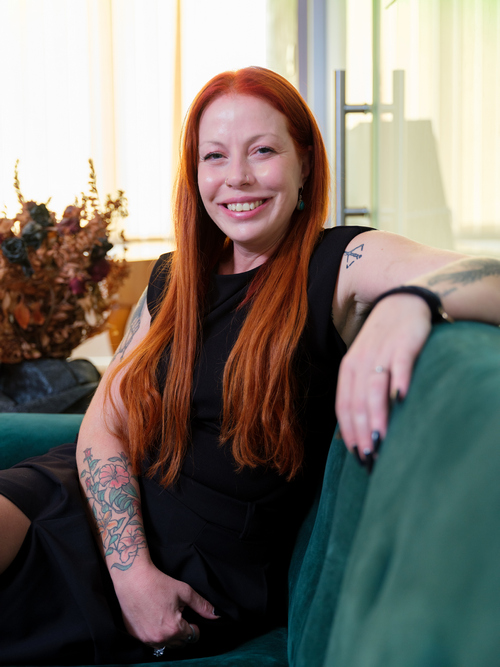 Beyond your professional success, you’re a single mother of three boys – a powerful example of balance and determination. How do you navigate the demands of leadership while staying present in family life?
There’s no magic formula – it’s about adaptation and sacrifice. We all make them. My sons and I have learned to function as a team. They’ve grown up in an environment where independence is natural. I’ve taught them to take responsibility for their own tasks, to make decisions, to solve problems. It’s not about being less of a mother – it’s about raising individuals who can stand on their own. And I believe that’s one of the best gifts I can give them.
What do you believe your children have learned from watching you lead – and how has their presence influenced your outlook on success and priorities?
They’ve definitely learned confidence and accountability. I think they also see resilience – how I can handle pressure, work hard, and still care deeply. They rely on me because they know I’ll be there, but they also understand that support doesn’t mean indulgence.
As for how they influence my outlook on success, it’s hard to separate. I became a mother at 25, so they’ve been part of my career from the start. I don’t know what my professional life would look like without them – their presence is simply part of who I am.
Kea has quickly built a reputation for professionalism and inclusion. From your perspective, what makes it a workplace where people grow, stay motivated, and share a sense of purpose?
What makes Kea truly special is its people, and the culture we’ve created together. From day one, we set out to build more than just a financial institution; we wanted to create a place where people feel seen, supported, and inspired to grow. Today, that vision has become our reality. We have a remarkable team that genuinely cares, not just about the work, but about each other. It’s not a slogan or a line in a policy; it’s something you can feel the moment you walk through the door. We celebrate small victories, lift each other up during challenging moments, and always find a way to keep moving forward together.
At Kea, we believe that when people are happy and fulfilled, excellence naturally follows. That’s why our culture is grounded in empathy, collaboration, and purpose. We’re building something lasting, a people-first organisation where integrity drives every decision, and where professional success and personal wellbeing go hand in hand. For me, that’s the most rewarding part of what we’ve achieved — seeing how trust, compassion, and shared values can transform a workplace into a community.
Finally, what message would you like to share with women in Cyprus who aspire to leadership roles in finance and compliance – and how can companies better support their growth and confidence along the way?
First of all, work hard. There’s no substitute for that. It’s crucial to keep learning, continuously cultivating skills, and evolving with the ever-changing landscapes. Whatever you choose to do, give it your full 100%. But beyond effort, what really makes a difference is opportunity. Talent means little if no one gives you the chance to show it. I was fortunate – I got opportunities at key moments in my career, and I made the most of them. Many talented people never get that break.
Companies need to recognise potential, not just years of experience or textbook profiles. They should trust people to perform in their own way, not force them into boxes. When you allow employees to be themselves, they bring out their best.
Women, especially, should believe that they belong in leadership roles. Don’t wait for permission – claim your space, prove your worth, and let your work speak for itself.
Interview by Kateryna Bila
#SHELEADS