

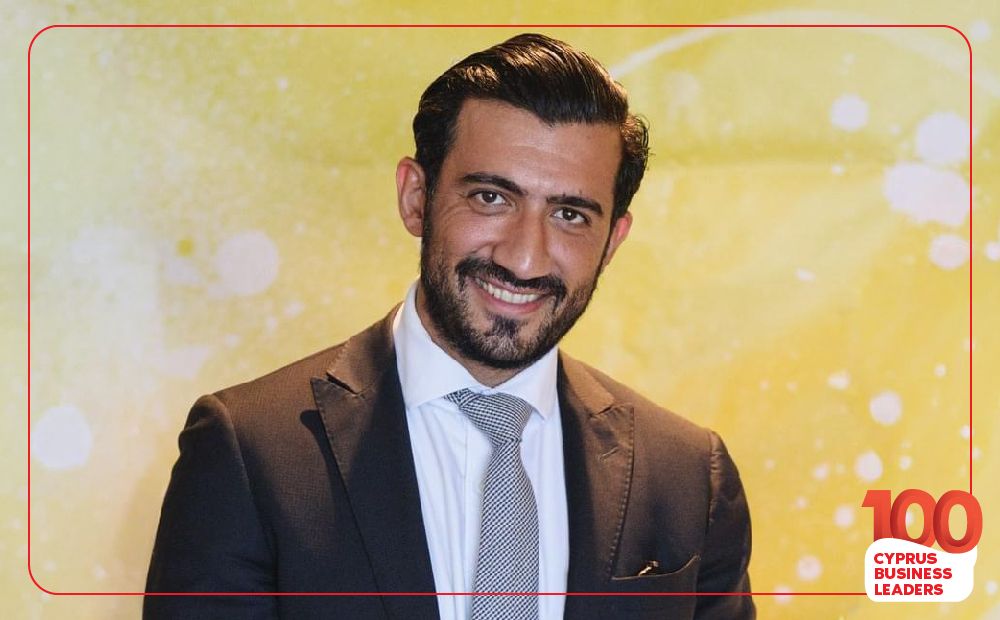
Demetris Demetriades is an advocate, compliance and safety management systems aviation specialist, and mentor who has built his career at the crossroads of law and pilot training. As Managing Partner of Demetris Ch. Demetriades LLC and Partner at Dento Group, he combines his legal expertise to ensure compliance and safety in the aviation industry. He is also the founder and driving force behind the Young Aviators Academy – a programme designed to guide and mentor teenagers aged 12 to 15 on their path to becoming future pilots through disciplines such as leadership, teamwork, situational awareness and multitasking. His story is one of purpose, resilience, and a belief that legacy is measured not in titles or money, but in the lives shaped along the way.
Your family’s Special Forces legacy is powerful. Beyond duty, what did that chapter awaken in you about responsibility, and what did walking away from that path cost you emotionally at the time?
Military service is compulsory in Cyprus, but for me it was more than an obligation. My grandfather was a renowned war hero selected to lead the initiative against the military oppression of the British and Turks; he was the leader of the Red Berets in Cyprus and helped pave the way for the first generation of Special Forces on the island. My father also served in the Special Forces, and joining was a way to honour them both. On the day of selection, I wanted to join the sniper division, but by the time my turn came, the positions were already filled. The army needed chefs, and as I already knew how to cook, I volunteered.
I was sent for professional training and then returned to base, where this experience turned into an unexpected school of leadership. I was 18 and responsible for feeding 170 soldiers daily, managing staff and planning every meal. At first it was overwhelming; then it became an exercise in planning, resilience and evolution. I even took the initiative to alter the menu and give the soldiers much-deserved, upgraded meals.
We all entered the Special Forces as boys and left as men. We were trained in all types of weapons, and although it was a hard period, I left with discipline, patience, structure and the conviction that if I set my mind to something, I could achieve it.
When you chose law over a pilot’s cockpit at 18, was it prudence, pressure, or purpose?
I started flight training while I was in the Special Forces. Aviation was my passion, as I was fortunate to be raised in that world. But at that time, both Cyprus airlines collapsed and local pilots were suddenly scattered across the globe looking for jobs. My father, who was in the industry and a captain, told me frankly: “I would recommend that you look for something more stable, as things look uncertain right now.”
It was a hard choice; I needed to rethink my future plans. I didn’t abandon aviation, but I promised myself I would come back to it one day, in one form or another. Law became my anchor – I was good at it, pragmatic and calculated. I studied in the UK, specialised in corporate law and commercial transactions, and built a solid career through the years. When the chance came to join the family aviation business, I stepped in with skills no one else in the industry had.
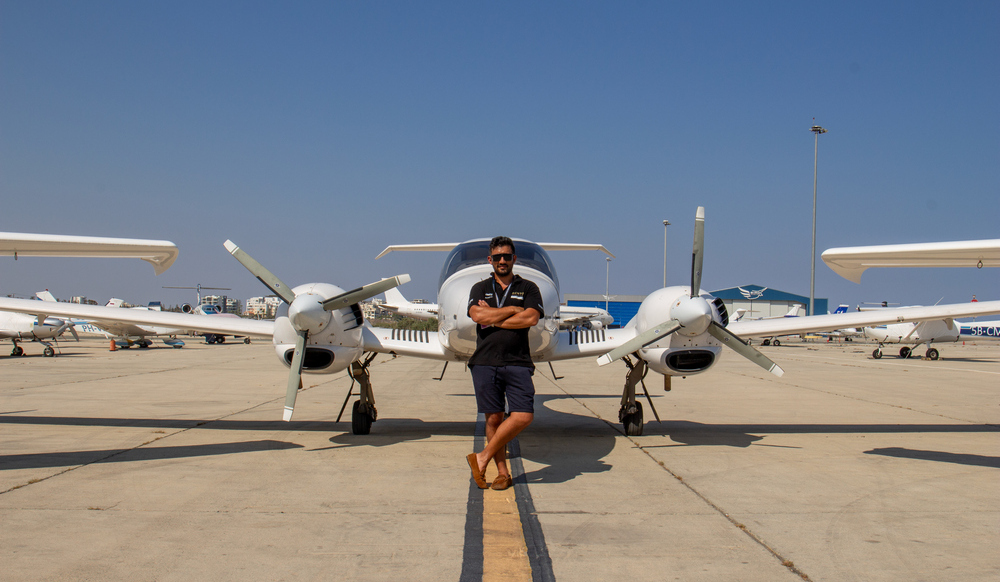
You say aviation became your ‘medium, not your end’. What was the moment you realised you cared less about planes and more about people – and who helped you see that?
Aviation’s most important pillar is safety, and safety is directly related to the human factor and performance. As part of my role as Compliance and Safety Manager, the root cause of all incidents and accidents led back to human factors. Teaching a pilot to fly is one thing, but that alone isn’t enough. To be a great pilot, you need competencies that are built over years. The tools we use – the aircraft and simulators – improve delivery, but what truly matters is the student sitting in that cockpit, because tomorrow that pilot will be responsible for many lives.
My father, Charalambos Demetriades, is considered one of the most qualified senior examiners in Europe. He gave me the direction I needed. Whilst observing training as part of my audit oversight, I began noticing character traits and competencies students were missing, regardless of age. The missing link was mentorship. They needed guidance, support and personal development. Parents began reaching out to us saying they had children passionate about aviation who wanted to become pilots and asked for guidance. That was the turning point – the missing link that would produce Olympic-level pilots.
Young Aviators Academy began as an idea and became a mission. What personal need or memory were you really answering when you decided to mentor teenagers from the age of 12?
I’m 37 now, and I often think about the hard lessons I had to learn in life with no mentor. I said to myself, “Imagine where I would be now if I had someone to teach me these competencies and be a role model growing up.” I believe I would have been twenty steps ahead.
That thought pushed me to act. I didn’t want the next generation to learn the hard way. The Academy is my way of giving children and teenagers the tools they don’t even realise they need – not only in aviation but in life. It’s my answer to the question: “What did I miss at that age, and how can I make sure they don’t?”
What has been one of the most powerful moments for you, seeing a young person transform under your mentorship?
I had a bright 12-year-old student – very capable but impatient, as they often are at that age. During a class, the student became visibly annoyed because others didn’t understand the equations as quickly. The look said it all: “Why are they so slow?”
I used the opportunity to ask the student to explain the solution to the rest of the group. At first, they were reluctant, but then they found a way to explain it confidently. Afterwards, when everyone had left, I told the student: “One day you’ll work in a company where not everyone will be as quick or as smart as you. You’ll still need to deliver, and that means learning how to adapt to your team and lift others up.”
The student listened quietly, feeling slightly embarrassed. Their father later thanked me for intervening rather than letting it slide. The next week the student came back different – more patient, grounded, and encouraging. What I saw in their eyes was a shift from frustration to understanding. Those are the moments that keep me going and remind me why mentorship matters.
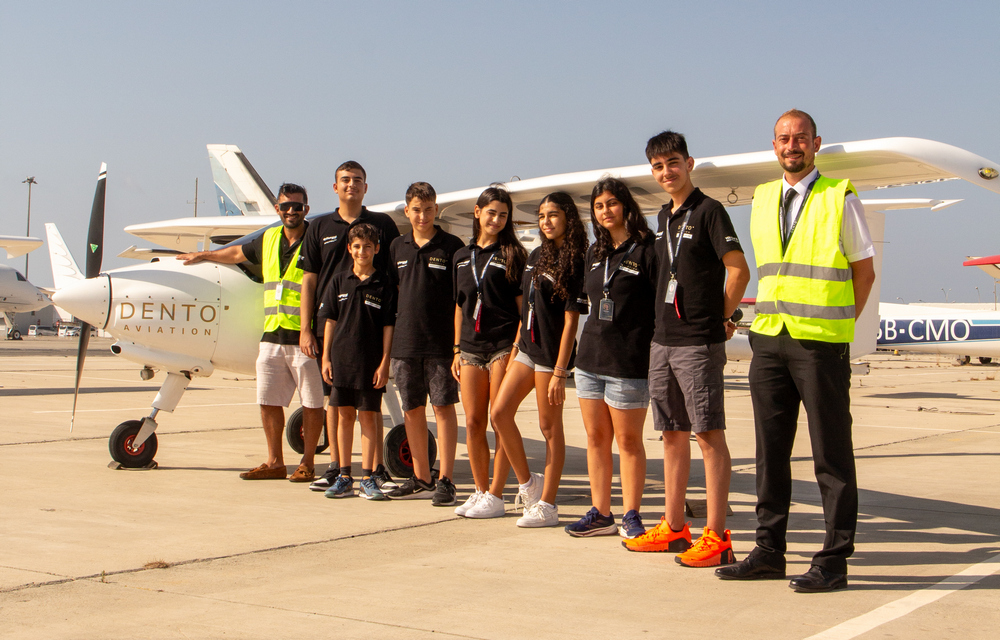
You rebuilt a business culture from chaos to clarity. What was the hardest day in that transformation – the day you questioned yourself – and what kept you from pulling back?
When I first took over as Compliance and Safety Manager, it took time to find my footing. Everything had been created for professionals who already knew what they were doing, and the system was chaotic. The manuals complied with regulations but were not easy to follow, so I began restructuring them through a legal lens. I went home exhausted most nights, wondering if I had taken on more than I could handle. My hair even started turning white from the stress of constantly trying to fix issues before they became problems.
What kept me going was responsibility – the need to deliver the highest quality with the lowest possible risk. Slowly, with persistence and the growing number of full-time staff, everything started to fall into place. We set up our own checklists and audits, updated manuals, and eventually built our own CRM to control and automate processes. Today, the system works, and those late nights have paid off.
You trained as a mediator, but rather than practising it, you use those skills to make contracts clearer and safer. What led you to this approach, and why does it feel right for you?
Early in my career, I was involved in litigation before shifting to corporate and commercial work. Cases dragged on for years, hearings were endlessly postponed, and clients were drained of money and patience. Even when we won, it didn’t feel like victory – everyone had lost something.
That’s when I decided I wanted no part of the courtroom treadmill. My role would be to prevent disputes, not fight them. As a trained mediator, I now use those skills to draft detailed, clear agreements that include alternative dispute-resolution clauses. Winning, for me, is when clients never need to see a judge and can resolve their issues amicably while continuing their commercial operations.
In moments of intense pressure, what inner reminder keeps you grounded and decisive?
In moments of intense pressure, the reminder that keeps me grounded is simple yet powerful: return to the basics. I focus on the facts, separating them from emotion or assumption. Once I have clarity on what is true, I apply the relevant knowledge – regulations, procedures, the law – and only then explore the available options. My guiding principle in those moments is to make decisions rooted in knowledge.
Over the years, I’ve realised that I perform best under pressure. When the situation is critical, my mind sharpens. I delegate more effectively, identify priorities with greater clarity, and make swift decisions without losing focus. It becomes almost automatic – like muscle memory honed through years of navigating high-stakes environments in law and aviation. Pressure, to me, is not an enemy but an ally that brings out my best performance.
Influence without over-familiarity is a fine line with young instructors and students. Where did you personally learn that boundary, and how do you hold it when it would be easier to be liked?
Ultimately, we all want to be liked, but being respected has far greater substance. I learned the importance of boundaries the hard way. I’ve seen young instructors become too familiar with students – sharing jokes, speaking as if they’re colleagues – and soon discipline begins to slip. When late arrivals are tolerated or procedures ignored, things unravel.
In aviation, procedures must always be followed. That’s why we have SOPs – Standard Operating Procedures – whether in training, compliance or safety. You don’t need to be distant, but you do need to be firm. Be approachable enough for students to share concerns, but never so familiar that they forget hierarchy and responsibility.
We remind our instructors: you’re not here to be liked; you’re here to train and shape professionals. Setting clear boundaries earns respect and ensures safety and excellence. It’s not always easy, but it’s essential.
Your pro bono work with abused women and your education work with teens are both forms of protection. What did these two worlds teach you about dignity – and about yourself?
I was truly privileged to be raised in a safe environment by loving parents whose ethics were deeply ingrained in me. Not everyone is that fortunate. When a foundation helping abused women reached out, I felt compelled to assist.
With teenagers, my goal is to prevent them from making the same mistakes many of us did simply because we lacked guidance. Their journey may be lighter, but its impact is deeper. Some struggle with confidence; others lack essential life skills. Helping them find their own direction and autonomy is what truly matters.
Both experiences have taught me that our role is to stand beside those at their most vulnerable and remind them: you are not alone.
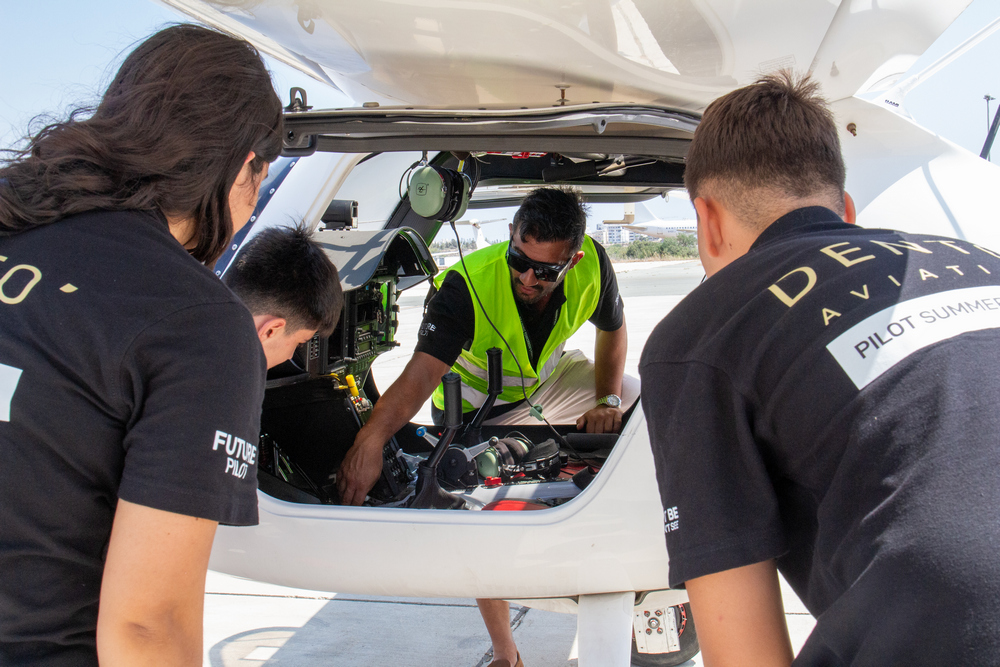
One of your guiding principles is, “You can’t be what you can’t see.” Who was your unseen champion – the person who believed in you before you did – and how do you try to repay that debt today?
My guiding principle is, “You can’t be what you can’t see,” and if I had to identify my unseen champion, it would be myself. Growing up as a shy child, I faced many moments of doubt. Around the age of 15, I told myself it was time to step up and change – that moment of self-awareness became a turning point.
Matthew McConaughey once said when asked who his hero was, “It’s me in ten years.” When I turned 25, that idea resonated deeply. A decade later, that future version of myself asked, “So, are you my hero?” I realised I wasn’t there yet and replied, “Not even close.” The future keeps moving forward, and that’s what drives me – the constant pursuit of a better self.
My hero is myself – the person I am today, always striving to become someone I can look back on and say, “Yes, I’m proud of who I’ve become.” That ongoing chase is what keeps me growing.
What would you like people to remember about the way you used your energy and talent in Cyprus?
My mother sometimes asks me, “When is it enough?” and my reply is always the same: never. There’s always more to build, more to give, more to improve. It’s not out of greed but out of passion. Success and financial freedom allow you to pursue your purpose and calling – if you’re lucky enough to discover it.
We’ve all made mistakes, personally and professionally, but I’d rather be remembered for my ethics, my word, and the people I helped along the way. What could be more meaningful than playing even the smallest role in changing someone’s life for the better?
I’ve found my true calling in mentoring children and teenagers, helping them develop their skills and guiding them towards practical success. I aim to instil discipline and respect, and to teach that leadership begins with listening before speaking. Legacy, for me, isn’t measured in monuments or titles – it’s about empowering another human being to soar higher because you showed them the way. If even one child finds their path because of something we created, that is the greatest achievement of all.
Interview by Kateryna Bila
#SB100Leaders