

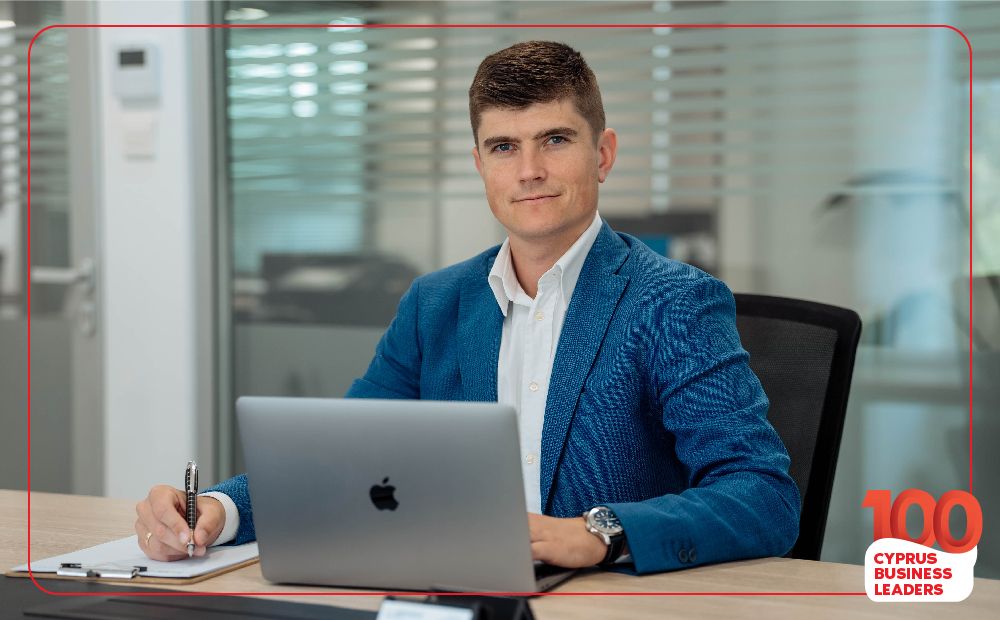
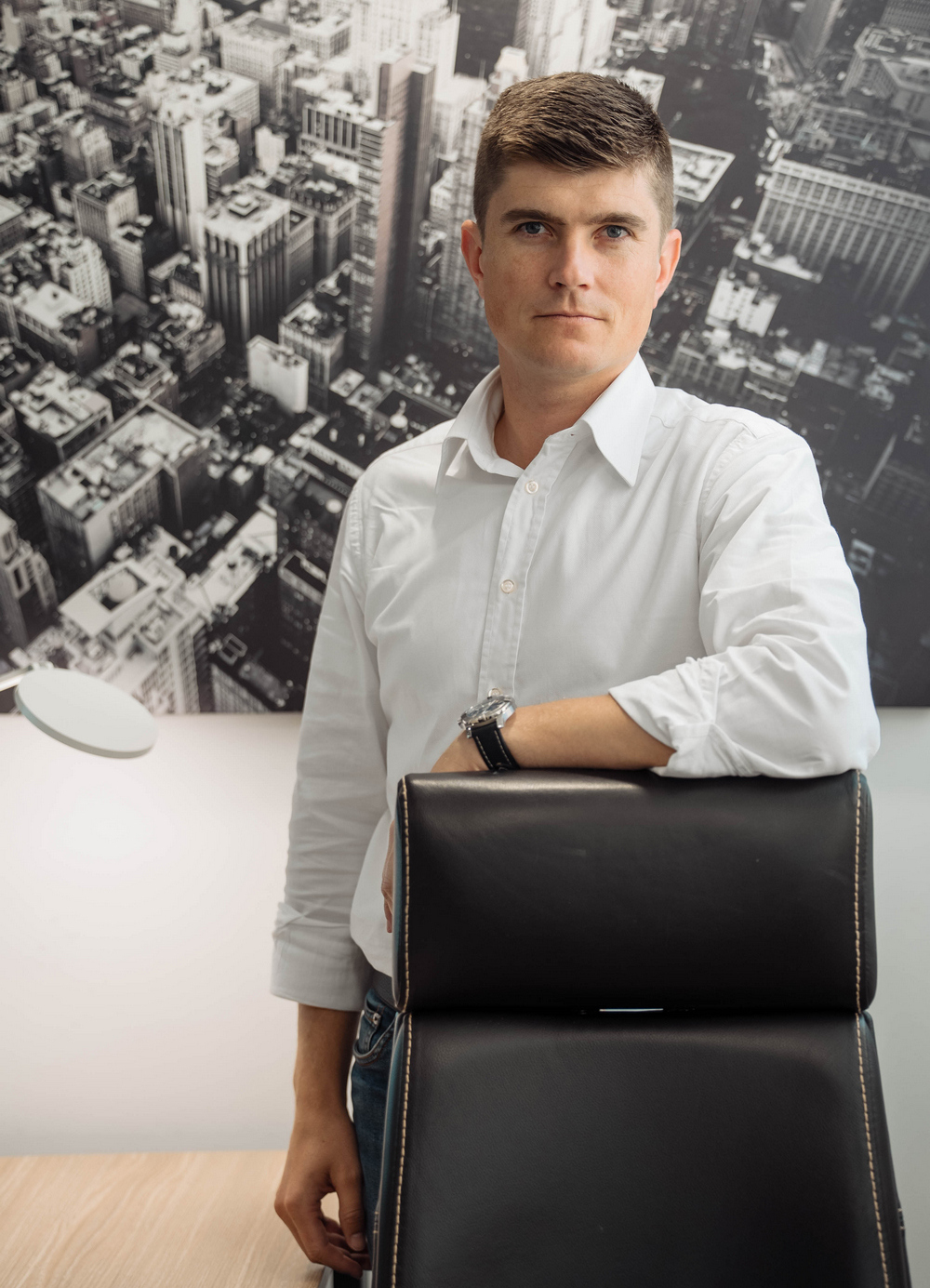
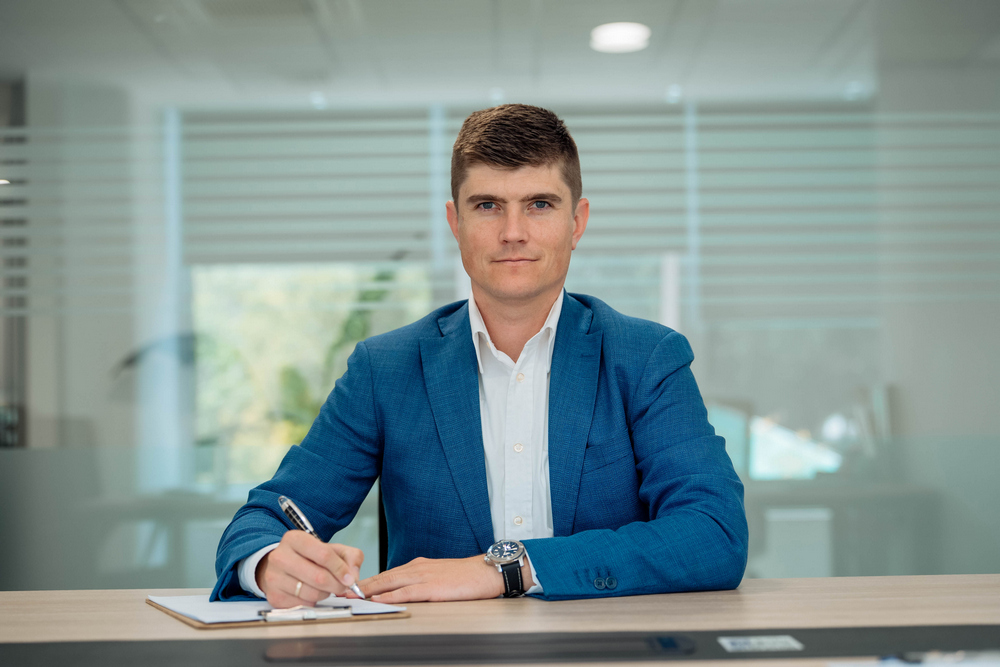
Alexey Rudenko is the Managing Partner and founder of A. RUDENKO & CO LLC, a boutique law firm specialising in corporate and commercial law, migration, real estate, and business advisory services in Cyprus. Transitioning from a career at a global corporation to establishing his own practice, he has demonstrated ambition, courage, and a strong sense of responsibility. Today, his firm is distinguished for its tailored services, meticulous attention to detail, and innovative problem-solving beyond conventional models.
What was the turning point for you in deciding to open your own law firm – a moment of inner courage, an awareness of new opportunities, or the result of years of accumulated experience?
My entrepreneurial spirit has always been part of me, but Deloitte Legal was truly the foundation of my career. Joining the firm straight after university was a defining stage – I was given an incredible opportunity to learn, grow, and work on demanding, high-level matters. The pace was intense, and I embraced it, dedicating long hours to absorb knowledge and develop professionally. More importantly, Deloitte Legal gave me exposure to diverse clients and complex challenges, shaping not only my technical expertise but also my ability to earn trust and build relationships.
A defining chapter in my journey came when a trusted contact invited me to help build a start-up from the ground up, providing legal guidance and strategic support. It was an opportunity that spoke directly to my entrepreneurial instincts, and I embraced it wholeheartedly. During the COVID-19 crisis, I resigned from my previous company and followed this path from idea to implementation. That experience not only deepened my expertise but also expanded my vision – it showed me the thrill of creating something new and the satisfaction of seeing tangible results from my contribution.
From this venture, fresh opportunities quickly began to emerge. I started to notice a distinct gap in the market: clients valued not only sound legal advice but also a personal, culturally attuned approach, especially when delivered in their native language. Over time, it became increasingly clear that this model – combining professionalism with a human, tailored touch – was where I could create the greatest impact. I realised that I could build something bigger: a firm grounded in experience, but with a new philosophy that puts people at the centre. This realisation gave me the conviction to take the next step and establish my own practice, building on everything I had learned while charting a path that reflected my vision and values.
You’ve gone from practising lawyer to Managing Partner. How has your understanding of leadership evolved along the way?
For me, leadership has always started with personal example. Early in my career, I watched closely how managers built relationships with their teams. In large international firms, I experienced first-hand the intensity of the work – the relentless pace, sky-high expectations, and weighty responsibilities. Those years taught me resilience and discipline, but they also exposed the risks of burnout and the ease with which individual contributions can go unnoticed in such high-pressure environments.
When I founded my own firm, I was determined to do things differently: to create a culture that truly puts people at the centre. Respect, recognition, and the understanding that every achievement rests on an individual became our guiding principles. Over time, I learned that leadership is a delicate balancing act – too much softness can erode accountability, while too much rigidity can sap motivation.
Today, with a team of seven, my goal is to foster cohesion – each person excelling in their role, yet all of us bound by shared objectives and the collective pride of what we achieve together.
 In the legal profession, precision and compliance are everything. Have there been moments where you deliberately stepped away from standard frameworks for the sake of principle or in the client’s best interests?
There’s a saying: “pushing against the tide rarely gets you anywhere”. Cyprus has its own unique rules and ecosystem, but that doesn’t mean we need blindly to follow every standard formula. Sometimes the “usual way” simply doesn’t serve the client’s best interests, and that’s when lawful flexibility and creative problem-solving become essential.
Take a common example: application for a Visitor Visa. The law might require a nine-month examination period. During that time, a person might face difficulties operating their bank account, registering important documents, or enrolling their children in school. Technically, an appeal could be filed – but in many cases, that only adds delays.
Instead, I focus on navigating the system efficiently while staying fully within legal boundaries. This means understanding the law deeply, identifying lawful procedures that can accelerate processes, and working collaboratively with the appropriate authorities and official associations. We carefully prepare documents, communicate directly with the right institutions, and ensure everything is done cleanly and correctly. By leveraging formal channels, clear documentation, and procedural options, we can often achieve results faster without compromising compliance.
The outcome benefits everyone: clients receive timely solutions, authorities see more efficient processes, and we operate entirely within the framework of the law. Lawful flexibility, careful planning, and thorough knowledge of regulations are key to turning bureaucratic challenges into manageable, fair solutions.
Your clients trust you with their businesses and often with matters involving real estate and personal circumstances. What does this trust mean to you, and how do you maintain it day after day?
Trust is a tremendous responsibility, and I approach it with the seriousness it deserves. Behind every document we file and every signature we collect is a client’s life, their business, or their personal future. Take permanent residency applications, for instance. To an outside observer, it might appear as just a file – but for the client, it often represents a major life transition: relocating a family, restructuring a business, or securing protection from political or personal risks.
Maintaining that trust requires creating processes that allow clients to feel confident and reassured. Once they sign what is required, we take full responsibility for managing the legal and administrative complexities, ensuring they can focus on running their business or their life without unnecessary distractions.
In my view, trust must be earned and reinforced every day. That means meticulous attention to detail, prompt responsiveness, and a readiness to act in urgent situations – even if that occasionally requires meeting a client at the airport hours before a flight. Consistency, professionalism, and a genuine commitment to client welfare are what sustain trust over time.
The legal business rarely seems associated with “dreams”, but surely you had them when creating your firm. What were they, and how have they evolved over time?
Early on, my goal was straightforward: to build a firm where clients would feel genuinely at home. I imagined a small boutique practice, serving a select group of ten to fifteen clients with personalised attention. But already within the first year, thanks to referrals and word-of-mouth, the number of clients grew several times over. It became clear that remaining “small” was no longer feasible.
Today, I focus on clearly defined professional goals rather than dreams. One is to achieve recognition in the international Legal 500 rankings – a widely respected benchmark of quality and excellence in the legal profession. Another is to implement process automation wherever possible, enabling the firm to deliver faster, more efficient, and seamless services to our clients.
Above all, my overriding objective remains consistent: ensuring that every client leaves satisfied. While that may sound simple, delivering it consistently demands rigorous attention to detail, strategic planning, and a sustained commitment to client service. Maintaining that standard is the foundation of our growth and reputation.
Every leader faces moments of doubt. Can you recall a situation where making a decision was particularly difficult, and what helped you take it?
Every leader faces moments of doubt, particularly when it comes to making decisions that impact the operation and direction of a business. One of the most difficult decisions I encountered was restructuring our internal processes to scale the firm effectively. At the time, it meant shifting responsibilities, redefining roles, and introducing new systems that would change how the team had been working for years.
I spent considerable time analysing workflows, projecting outcomes, and consulting with colleagues, but what helped me move forward was focusing on the bigger picture – the long-term sustainability and efficiency of the firm. I realised that effective leadership often requires balancing empathy for the team with the discipline to make tough operational choices.
That experience taught me the importance of planning, clear communication, and adaptability. Decisive, well-considered operational decisions not only strengthen the business but also create an environment where the team – and ultimately the clients – can thrive.
In your work, what matters more: delivering a flawless result or the way your team gets there?
For me, both the outcome and the process are equally critical – especially from a client’s perspective. Achieving the desired result is, of course, essential. But if the client experiences confusion, miscommunication, or disorganisation along the way, it undermines their confidence in us and the value of our work. Conversely, a flawless process means little if we fail to deliver the results the client expects.
That’s why we constantly refine how we work internally. Everything in the company is structured to minimise mistakes, ensure predictability, and maintain quality control at each stage. We constantly refine how we collaborate internally, so clients experience seamless service, feel reassured, and can trust that their matters are in expert hands. Ultimately, it’s about delivering results and ensuring the client feels supported, informed, and confident every step of the way.
You work with clients from different countries and cultures. How has that shaped your view of what a modern lawyer should be?
Working with clients from different countries and cultures has reinforced that a modern lawyer must be highly adaptable, while never compromising on professional integrity. Each client has unique expectations – some want to be involved in every detail, while others focus solely on outcomes. Our role is to translate legal reality into a language the client understands, while earning their trust and making them feel in control of the process.
At the same time, being a modern lawyer requires setting clear boundaries. There are situations where clients may assume that paying for services means anything is possible. It’s essential to be able to say “no”, to operate strictly within the law, and to maintain mutual respect. There have been instances where I’ve had to refuse collaboration with a client whose behaviour didn’t align with our firm’s values. That’s not easy, but it’s absolutely necessary.
Ultimately, modern legal practice is about combining flexibility, clarity, and strong ethical standards to deliver results while earning the client’s trust across cultures.
Your firm has built a reputation for being boutique and strategic. What values form the foundation of your brand, and what would you never compromise on?
At the core of our boutique and strategic approach are a few values we would never compromise on.
First is loyalty. Loyalty to our clients means always putting their interests first, aiming to solve the root problem rather than just addressing symptoms. Loyalty to our partners and colleagues is equally important: if a client is introduced by another partner, we will never try to “take over” that relationship for short-term gain. This creates trust both internally and externally.
Second is confidentiality. Our clients rely on us to handle sensitive information with absolute discretion. There’s simply no place for gossip or carelessness – trust is everything in our relationships.
Third is expertise. We focus on the areas where we excel – corporate and commercial law, migration, and real estate – delivering clear, actionable advice quickly. When litigation or highly specialised matters arise, we collaborate with trusted experts, ensuring clients receive the right advice from the right professionals.
Fourth is efficiency. Today’s clients value not only the result but also the pace of delivery. That’s why we prioritise clear timelines, transparent workflows, and active oversight.
These values – loyalty, confidentiality, targeted expertise, and efficiency – ensure our clients experience transparency, reliability, and consistent results. They define not just how we work but why clients come back and refer others.
Do you feel that legal practice has grown into something bigger than just a profession – a way of influencing the business environment in Cyprus?
Absolutely. Legal practice today extends far beyond traditional advice – it’s a way to shape and influence the broader business environment. Lawyers occupy a unique position at the intersection of business and government: we not only help companies navigate the rules, manage risk, and seize opportunities, but we also act as a bridge, ensuring policymakers understand the practical realities businesses face.
Personally, I participate in professional associations that provide direct feedback to government ministries about what works and what creates unnecessary obstacles. This work is voluntary, but I see it as a long-term investment in the business environment’s stability. When the system operates more efficiently, everyone benefits – clients gain clarity and certainty, businesses thrive, and the wider community enjoys stronger economic outcomes.
For a client, this means they’re not only receiving legal support, but working with a team that helps shape the very ecosystem in which their business evolves.
If someone were to describe your firm’s legacy ten years from now, what would you want them to say?
Ten years from now, I would want our firm’s legacy to be defined by consistency and trust. The principles that guide us – loyalty, confidentiality, speed, and expertise – are the pillars upon which we’ve built everything. As long as these remain intact, our firm will continue to deliver exceptional results and client experiences, even as our team evolves over time. Remove any one of these pillars, and the whole structure becomes unstable.
Ultimately, I want clients, peers, and the wider business community to say: “They chose their path – and they stayed true to it.” That means consistently putting client interests first, handling sensitive matters with absolute discretion, delivering expert advice efficiently, and maintaining the highest standards in everything we do. For our clients, that legacy means one thing: confidence, reliability, and the assurance that we will always act in their best interest – no matter how the market changes.
Finally, outside of the legal field, what excites you personally right now – new business ventures, community initiatives, or personal challenges on the horizon?
Right now, two areas excite me personally, both of which have a direct impact on how we serve our clients.
First is technology. I’m exploring artificial intelligence, collaborating with IT providers, and developing platforms that function as “legal assistants” to automate parts of our workflow. Some say it’s unrealistic, but I see real opportunity here: to deliver legal services faster, more accurately, and more accessibly. Clients shouldn’t have to wait, be confused by unnecessary details, or feel stuck – they should receive precise results at the right moment.
Second is my involvement in professional associations and community initiatives. I dedicate time to improving processes in Cyprus – from migration and property transactions to the way businesses engage with government authorities. And the impact is visible – clients face fewer barriers, and the system itself becomes clearer and more transparent.
In essence, both technology and systemic improvement serve the same goal: to provide clients with reliable, clear, and high-quality service – not only today but long into the future.
Interview by Kateryna Bila
#SB100Leaders