Бюджет на этот год, который стал настоящим камнем преткновения, сформирован и скоро будет обсуждаться в парламенте. Он увеличился на 339 912 290 евро, из которых 220 млн - средства на борьбу с пандемией.
Об этом в своем официальном послании председателю парламента сообщил министр финансов Константинос Петридис. В нем он передал парламенту просьбу главы государства принять бюджет и среднесрочную финансово-экономическую рамочную стратегию на 2021-2023 года как можно скорее. «Это позволит государству работать в особенно сложных условиях, созданных пандемией, а также поддержать трудящихся и компании», — пишет Петридис. Глава Минфина подчеркнул, что в бюджет внесены поправки на основании предложений политических партий.
Что касается мер по борьбе с пандемией, то из 220 млн, прописанных в бюджете, 200 млн пойдут на поддержку предприятий и самозанятых, 20 млн необходимы для стимуляции экономики. Среди предложений политических партий, внесенных в бюджет, глава Минфина назвал помощь соседнему Ливану в размере 4,25 млн евро и сокращение на 10%, то есть на 21 374 265 евро, расходов на услуги консультантов, операционные расходы министерств и повышение квалификации.
Работники жду своих пособий с ноября
Тем временем, сотрудники торговых центров обратились к кипрским СМИ с жалобами. Они утверждают, что до сих пор не получили пособие за ноябрь, поэтому их семьи остались без средств к существованию.
Генеральный секретарь Кипрской ассоциации розничной торговли Мариос Антониу подтвердил, что проблема существует. Есть довольно большая группа сотрудников, которые не получили пособия за ноябрь и декабрь. По словам Антониу, это происходит из-за того, что до сих пор не принят бюджет на 2021 год. «С того момента, как бюджет был отклонен, все пособия задерживаются», — говорит он, добавляя, что, согласно принятой схеме, Минтруда перечисляет средства на пособия работодателям, а те распределяют их между сотрудниками. Антониу призвал парламент и политические партии осознать всю сложность ситуации. «У нас есть случаи, когда работодатели вынуждены брать кредит в банке, чтобы расплатиться с работниками накануне Рождества», — рассказывает глава ассоциации. То же самое касается и принятых правительством планов финансовой помощи на январь. Чтобы деньги были выплачены, необходимо, чтобы был принят бюджет. Более того, в сложившихся обстоятельствах вполне может возникнуть ситуация, когда просто некому будет помогать, так как множество компаний находятся на грани закрытия. «Мы постоянно говорим о том, что необходимы целевые меры финансовой поддержки компаний, чтобы они могли покрыть свои расходы, будь то аренда или операционные затраты», — говорит Антониу.
Скидки на аренду и мораторий на кредитные выплаты
В ответ на вопрос о том, готовы ли арендодатели идти навстречу арендаторам и снижать плату, Антониу отвечает, что такое случается, но очень редко. «Мы не сталкивались с тем, чтобы арендодатели снижали арендную плату или чтобы они пользовались теми налоговыми льготами, которые были им предоставлены в прошлом году. Единственное, что происходит, это увеличение периода выплаты задолженности и, в некоторых случаях, небольшие кратковременные снижения аренды, как это было в период первого карантина», — говорит Антониу. Такой же критике он подверг продление моратория на кредитные выплаты, так как право на него имеют только те, кто не полностью воспользовался мораторием в 2020 году, то есть вместо девяти месяцев не платил по кредиту меньший период времени. «Подавляющее большинство компаний розничной торговли пользовалось мораторием на протяжении всех девяти месяцев, поэтому с января они должны начать выплачивать займы. Как это смогут делать закрытые предприятия без оборота?», — задается вопросом глава ассоциации.
As the first international IT company to come to Cyprus, NCR has offered technological solutions to local companies and the Government of Cyprus for the last 65 years. Successful Business Magazine discusses today’s challenges and future changes in the IT world with Kyriakos Kyriakou, NCR’s general manager.
NCR is one of the oldest Cyprus companies with the newest technologies. What was the initial reason to create the regional Cyprus office in 1955?
When NCR decided to open operations in Cyprus, Cyprus did not have any IT companies. Everything was on paper – we did not have any computers. This is why we feel proud as a company to have been the ones who created the ICT business in Cyprus. The interest of NCR was to target the local market. NCR was expanding in other regions and Cyprus came to its trajectory. Do not forget that in 1955 Cyprus was under British command as a British colony. Therefore, one can say that NCR in Cyprus is older than the Republic of Cyprus itself, as the island gained its independence in 1960.
We are used to thinking that IT is something modern. What could NCR have sold as its services or products 60 years ago?
At first, NCR started selling cash registers for retailers. This was our main business at the time. As mentioned before, we did not have computers back then, so retail cash registers were mechanical machines. Cash registers had been the product that founded NCR as a business. This is what our name stands for – National Cash Registers. Gradually it evolved and has been known for many decades now as NCR. We had many innovations and inventions through the years, one of which is the first receipt printer. NCR was the first company to promote and sell such a solution. In fact, today this is mandatory in the retail sector around the globe. The first NCR printer did not have ink, it was still a mechanical machine punching on paper to produce the printout. Nothing similar to what we know today with the evolution of technology and digitalisation.
That is amazing. Soon you will be able to create a museum celebrating the achievements of NCR!
NCR has plenty of museums around the globe in its own premises. We also have one in our new headquarters in Atlanta, Georgia. Many customers have their own museums and NCR holds its own place in them. Whether this is an old cash register, a server, or PC we used to manufacture, and a series of other technologies that served thousands of customers and consumers around the globe. They all belong to the global history of the ICT industry today. You should know that NCR was founded by John Patterson in 1884. Many of the leading global IT firms that we know today were founded by people who used to work for NCR. Thomas Watson for example was the Sales Manager of NCR, close partner to John Patterson, who later left NCR and founded International Business Machines, what we know today as IBM. Our contribution in shaping the global IT market, and also helping create local IT markets like Cyprus, is something we are really proud of at NCR.
Not only in Cyprus. The NCR Cyprus headquarters is responsible for 60 countries.
That is true. In Cyprus, we have two legal entities. One is responsible for the business in the Middle East and Africa, and the other one for operations in Cyprus. Back in 1986 our office in Cyprus was established as a regional office for the whole of the Middle East and Africa. Cyprus used to be under MEA, but since Cyprus became a European country, it reports to the European regional office, despite the fact that the Cyprus office is also the regional office for Middle East and Africa.
In Cyprus, who are your main clients?
All the banks, the government and administration departments. When I say government, I mean the public sector in general. We also have clients in the retail sector, mainly the big retailers and grocery stores.
I know that when it comes to your clientele, banks play an important role. Is it true that they account for at least half of your clients?
This varies from year to year, but as a general comment I would say banking used to be bigger as a business in the past as a percentage to the rest of the lines of business. Today the situation has changed, with government growing faster for us compared to the rest. Both, however, are equally important to us, including the retail sector which is the smallest between the three.
If we put government aside, then the banking sector is the biggest, isn't it? NCR is number one in the world when it comes to ATM. What is your share in Cyprus?
We have about 91% market share in the local ATM market, taking into account the local ATM network from all the banks operating here in Cyprus, so yes, we are quite successful. I would not say we are the lowest cost vendor in the market. But we believe we are the vendor who combines a good quality of service with relevant reasonable pricing. In other words, partnering with NCR, customers have more value to gain from us than the price they have to pay to partner with us. Overall we are still the best offer out there, and we believe this is the reason for our success.
Other than that, in recent years we have seen NCR gaining an advantage in terms of the design of its products, the quality of the materials used to produce those products, more advanced reliabilityserviceability-maintainability features of the ATMs, but more importantly investments made from acquisitions and in human capital to ensure our leading position in the industry for many years to come. Of course, not just in Cyprus, but around the globe.
To conclude on the topic of banking, I would like to touch on the concept of assisted-service and selfservice technologies. Today, more and more people prefer to interact with their banks using technology, i.e. computers, mobile phones, or ATMs. Is it possible that in the future tellers at branches might not be needed anymore, with customers completely relying on technology?
No, the tellers will not disappear. Let me explain why.
There are three types of customers: the digital natives, the digital immigrants, and the traditional type.
Digital natives are the customers who have been born during the digital age. Their preference is always self-service. In their majority, they are the younger generation who are most likely to choose the digital channels to communicate and interact with the bank.
Digital immigrants are the older generations that, although they have not been born in the digital age, have managed to migrate from the analogue age to the digital one. They are keen to use the self-service channels of a bank. They share similar characteristics as the digital natives, however their origin is what differentiates them.
And finally, we have the traditional type of customers, those who firmly believe they deserve to be served by a person, not a machine. Interestingly, we do not have just one age group in this type. There are young, middle-aged, and older people who fall into this category. As time passes, we do see less of them, but to suggest that such customer type disappears is a bit risky.
Only time can tell what will happen. Today, there is no evidence whatsoever that the traditional type of customers is going to vanish. Banks will need to maintain their branches and tellers for as long as they exist.
What other trends do you see?
Having a look at the retail sector for example, so that banking does not monopolise the discussion, we see a big rise of self-checkout technologies, especially in grocery stores in Europe. If you go to Tesco or Sainsbury's, you will see a line of self-checkout machines that customers can go to, check out all the items in their basket much faster, without having to wait in long queues to pay, and conclude their shopping at the terminal, with no assistance from any employee of the supermarket.
Please don't get the wrong impression. What we are saying is that retail is entering the transformation phase that banks went through decades ago with their digital channels. You can think of self-checkout as the ATM of the banking industry. It is very similar, only in a different industry. They will still not replace the cashiers of the store, but they will give more options to the store’s customers to choose from.
We see the same happening in Cyprus these days, with one of the big grocery stores installing such machines in their stores. We will see how it goes and the success it will have in a market like Cyprus, but overall, in Europe we see a big move towards self-checkout.
Going back to the public sector, what projects have you implemented that facilitate the life of regular people by providing new technology?
NCR has implemented and maintained many government systems through the years. The Treasury department of the government, the Tax Authority system of Cyprus, the Government Payroll System, the Regulator of Insurance Companies, the system for the implementation of the National Health System of Cyprus, and more.
For the second part of the question question, let me give you some examples. Today, every financial transaction that happens within the government goes through systems that NCR has implemented. For the Health System of Cyprus, whether it is a person being treated by a doctor, or a pharmacy dispensing a drug, or a patient seeking help from the call centre, NCR is behind to provide that service and an NCR system executes the transaction. Same goes for the tax systems we implemented for people paying taxes, declaring income, and so on.
At the end of our interview, I would like to ask about technology in general. The 4th Industrial Revolution, what does it mean to you? What progress do you see happening in the next five years?
I come from a company that specialises in self-service. I think that the world and all industries are becoming more selfservice oriented. If you go to a hotel in Europe, you have to register online, get your key through a self-service kiosk, and do much more in self-service. Self-service is increasingly becoming part of our lives. These self-intuitive technologies that we have today in our mobile phones or tablets can be applied in every industry. Let us take Cyprus as an example. Cyprus is the only country that implemented a national health insurance system that is completely paperless. There is not a single paper sent anywhere to process a health care service in Cyprus. Everything is being done electronically. Doctors with limited training could use this system from day one. They could go online, log in, and although they did not know everything they needed to know from day one, they could still find their way in the system to do their job. A week from that first day, they are experts in using this system and would not remember how they operated prior to the system being in place, helping them do their job in a much more organised and structured way.
So, I would say self-service is the future applicable to all industries, having a positive outcome and forcing all industries to transform themselves to survive the demands of the Digital Age; such demands are being prescribed by the end-customers themselves.

NCR Corporation (NYSE: NCR) is the global leader in consumer transaction technologies, turning everyday interactions with businesses into exceptional experiences.
It is headquartered in Duluth, Georgia, Unites States, with approximately 33,000 employees and does business in 170 countries.
With its software, hardware, and portfolio of services, NCR enables more than 485 million transactions daily across retail, financial, travel, hospitality, telecom, and technology industries, and small business.
With its view of more than 485 million transactions around the world each day, NCR is helping its customers respond to the demand for fast, easy and convenient transactions with intuitive self-service and assisted-service options.
What we do goes beyond niche technologies or markets; our solutions run the everyday transactions that make life easier and help businesses around the world increase revenue, build loyalty, reach new customers, and lower their costs of operations.
By continually learning about – and thereafter pioneering means – of how the world interacts and transacts, we help companies not only reach their goals but also change the way all of us shop, eat, travel, bank, and connect.

In May 2020, PwC issued its first set of transformative proposals, addressed to the government, the business community, and the society at large, towards creating a stronger and more competitive economy. The Successful Business Magazine is publishing a renewed set of propositions (released in December 2020), calling for immediate action to Restart Cyprus: Now. We have prepared a summary of the report. You may find the full version on www.pwc.com.cy.
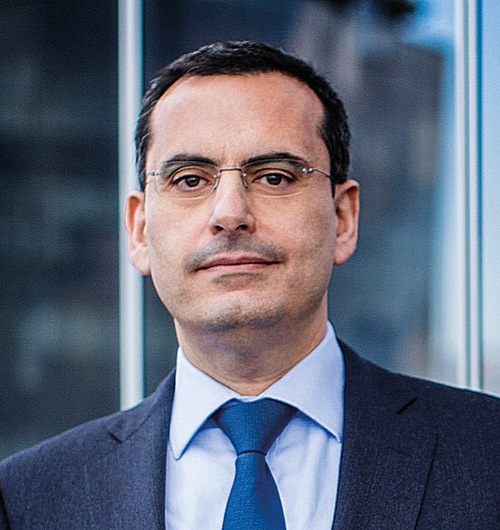 Evgenios Evgeniou
CEO, PwC Cyprus
"...In Cyprus as we repair the damage caused by this crisis we also need to rethink and reconfigure our economy and business models so as to be fit for the future. This is not the time for quick and easy solutions. This is the time to transform the Cyprus economy to be fit for the 21st century, in line with the EU priorities of a Digital and Green economy. The key to achieving this is a clear vision and an action plan embraced by all the stakeholders and implemented on the basis of effective cooperation between the public and private sectors.
We believe that Cyprus can transform into a competitive, innovative and more diversified economy with sustainable growth and job creation. An economy that is attractive to productive investments. A country providing quality living conditions and opportunities for all to realise their aspirations. In the context of this transformation traditional economic sectors will adopt more sustainable business models and new sectors will develop and flourish..."
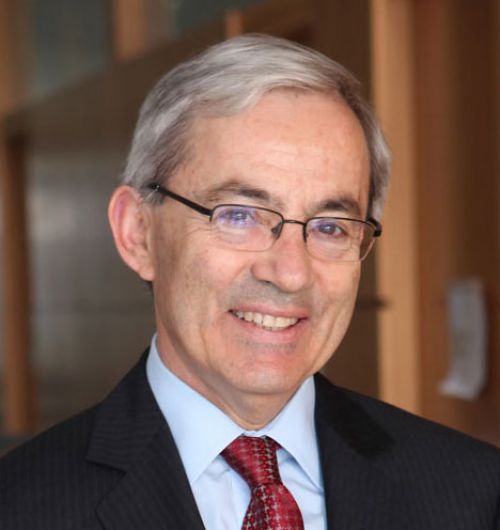 Sir Christopher Pissarides
Regius Professor, London School of Economics. Professor of European Studies, University of Cyprus. Nobel Laureate in Economic Sciences.
"...We have a beautiful island, unrivalled cultural heritage, and a socially liberal and sophisticated population, at least when we set our minds to it. When Cypriots go abroad to work, they excel. Why can’t we create the conditions to help them excel at home? I believe that we can do it.
Perhaps the most worrisome aspect of Cyprus society currently is the idea that 'we are different'. The expression 'this is Cyprus, my friend' is heard too often. It has to be banned from the language. We are not different. We are just like any other small European country, with a good quality of life, which needs to fight to compete and progress. The reforms begin with one that will probably surprise readers, but it is right at the heart of modern ideas about economic progress: cultural development. We need to change our way of thinking and realise that we are a modern nation with high educational standards, that know how to enjoy our European cultural heritage and think positively about the future and our capabilities. Government needs to take the lead to guide us in that direction. More conventional governance and economic reforms include a modernisation of the public sector, from the courts and the administration of justice to ministries and local municipalities. The public sector needs to provide a good example to follow and facilitate the development and smooth functioning of the private sector and the population at large..."
"...Education, health, the business environment, and support for struggling sections of the population are all in need of urgent reform to raise our living standards. Technology, the nature of the corporation and its role in society, and the social contract are in a constant state of flux. We need to be alert and never stop the modernisation of our country through reform. It is a process, not a one-off shot, which needs constant stimulation with ideas and action."

2021 is the year to expect the unexpected. While many trends of the previous years will continue, their path may deviate pressured by unpredicted developments that Covid-19 is causing on the global markets. Let’s have a look at what role vaccine rollouts will be playing in the year ahead, how technology will keep on evolving, and why the new ‘remote’ life will be driving the changes.
VACCINE ECONOMY
The key factor defining how life will be through 2021 is the vaccination against Covid-19. Mass inoculation is, for the time being, the only realistic mean to reduce the need for job- and businessdestroying lockdowns. Led by the UK, the US, Russia and China, the countries around the world are gradually starting their vaccination programmes, but the logistics and distribution remain challenging, especially in remote areas and in low- and middle-income settings.
According to a World Bank Group survey in June 2020, most Cypriot companies did not expect to be hiring their full staff back in the next nine months; now this prospect has been pushed even further into the future. Since the start of a vaccination programme, Cyprus, as well as the majority of the European countries, will need at least six months to see some signs of recovery. The forecasts are that industry will lead the growth, followed by the financial sector. Consumption, on the other hand, will be picking up slower than other sectors, which may inhibit overcoming the economic slowdown.
The EU is likely to have vaccinated 50% of the population no earlier than by May, and may have reached the 70% mark by autumn – assuming that people en masse are convinced about vaccines’ effectiveness and safety, and agree to a jab. This dynamics is important for Cyprus, as a large part of its economy depends on tourism. The country needs people coming from abroad, especially from the EU and the UK, to support local business, but it also needs to protect its population from the disease.
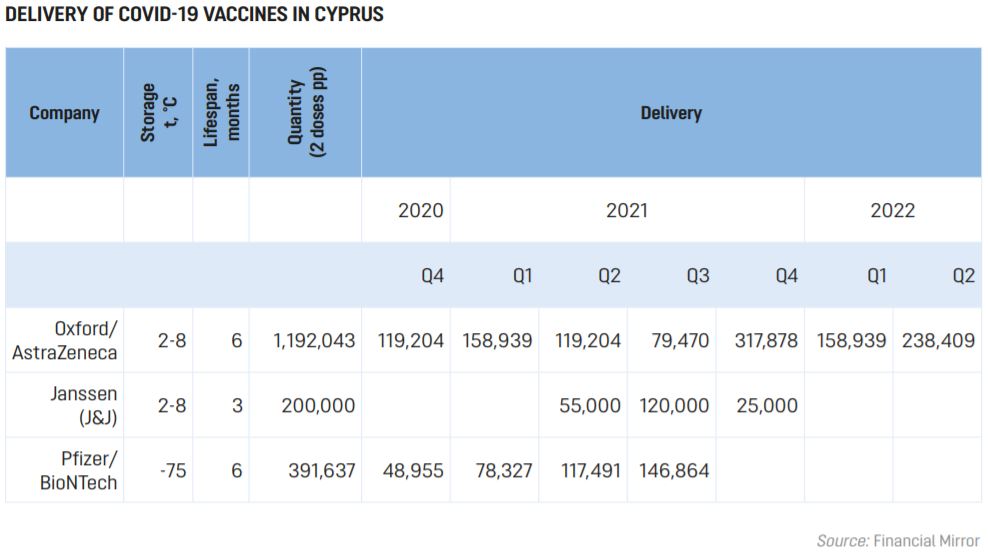
For Cyprus, there is a vaccination programme in place since the end of 2020. As of December 2020, the country ordered around 1.8 million doses, from Oxford/ AstraZeneca, Pfizer/BioNTech and Johnson & Johnson’s Janssen. Negotiations are underway with Sanofi/GSK, Curevac and Moderna. While securing the delivery of the vaccines is an important step, managing the programme will be a challenge for the government in terms of organising the locations for administration, preparing medical staff, launching the necessary IT infrastructure, etc.
According to OECD, if a vaccine is deployed fast, this would boost confidence, spending, and the global GDP growth in 2022. If vaccination proves challenging, the containment measures would be prolonged and uncertainty would deepen. This would further raise the risk of bankruptcies and job losses, limit consumer spending and business investment. Substantial repricing could occur in financial markets, reflecting greater risk aversion. This would weaken global growth, particularly in 2021.
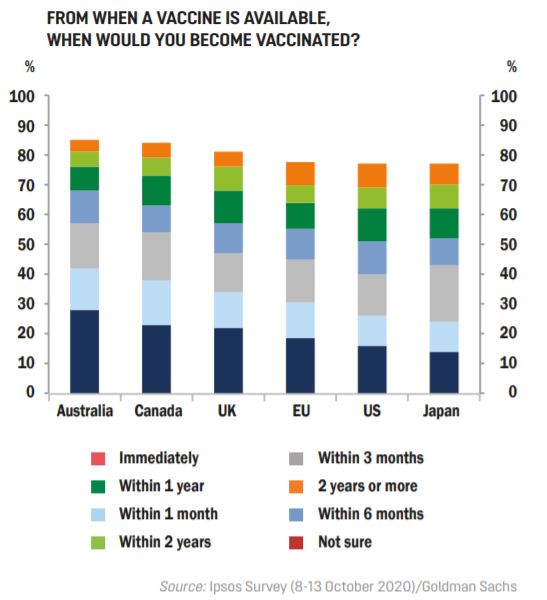
A vaccine has never arrived in the middle of a pandemic before, so there is no historical data for solid predictions. One can be sure, however, that any economic indicators as well as asset prices are tightly linked with either success or failure of the vaccination programme. Any kind of deviation or setback poses a risk of a quick downside for stock markets and house prices.
To be continued
Sources: forbes.com, hrtrendinstitute.com, gtm-plus.com, cyprus-mail.com, bloombergquint.com, financialmirror.com, finch.com, nnip.com, unctad.org, oecd-ilibrary.org, globalwebindex.com, contactpigeon.com, virtualreality-news.net, eiu.com, statcdn.com, ec.europa.eu, www3.weforum.org, www.pwc.com.cy, zdnet.com, financesonline.com, rise.org.cy, dgepcd.gov.cy, bbc.com, enterprisesurveys.org, classeditori.it

AI is at the centre of the 2021 "new normal", of automated, robotic and contactless processes that will be aimed at protecting the world from future outbreaks. This new reality will as well further increase the speed of its adoption in various fields.
To succeed, AI needs to be democratised, i.e. made usable by a wider set of users. This will ensure expansion of the talent base able to service and use AI-driven ecosystems.
To facilitate the performance, scalability, interpretability, and reliability of AI models, a robust AI engineering strategy will be needed, making the technology a part of the mainstream IT process rather than a set of specialised and isolated projects.
Ability of AI-based systems to structure unstructured data will boost the implementation of robotics systems across all sectors. In manufacturing, AI will allow companies that design and build products to aggregate, intelligently transform, and contextually present product and process data from manufacturing lines throughout their supply chains.
It might well be that in 2021 quantum computing will find its first compelling AI application, which will allow for the commercialisation of the quantum AI segment.
The increase in remote work will drive the adoption of automated speech recognition capabilities, particularly in customer contact centres. Also, applications of face recognition technology will see an explosion in 2021 for strong authentication in a growing range of internal and customerfacing applications. The regulatory sensitivity of this technology, however, as well as the legal risks, will only grow for the foreseeable future. Due to this, responsible AI is emerging to deal with trust, transparency, ethics, fairness, interpretability, and compliance issues.
Despite some advanced AI-related projects being realised in Cypriot universities, as a state Cyprus is only making its first steps in the field. The government approved the National Artificial Intelligence strategy in January 2020. The priority areas of the strategy are the following:
• Cultivating talent, skills, and lifelong learning
• Increasing the competitiveness of businesses through support initiatives towards research and innovation and maximising opportunities for networking and partnerships
• Improving the quality of public services through the use of digital and AIrelated applications
• Creating national data areas
• Developing ethical and reliable AI. The document is an important first step, as was the establishment of the Deputy Ministry of Research, Innovation and Digital Strategy in March 2020. Unfortunately, in practical terms little has been done for AI-related innovation in 2020. Will Cyprus start walking the talk in 2021?
Source: gartner.com, weforum.org, financesonline.com, zdnet.com, knowledge4policy.ec.europa.eu

There has been only limited progress made in countries that have implemented a partial lockdown this winter. This means that unless the widespread distribution of the vaccine begins, we do not forecast an appreciable decline in new cases without a full lockdown.
FORECAST FOR 2021
1. The vaccines being developed and now deployed by Pfizer/BioNTech, Moderna, and Astra Zeneca/Oxford appear to be the best hope of combatting the pandemic in the short term. We cannot say for certain if there are longer-term adverse impacts from the vaccine, or whether the virus will mutate or not. But as a public health response, this is presently the only rational hope for a return-to-normal scenario.
2. We do not believe enough of the vaccines will be distributed within 2021 to make a significant difference in terms of returning to “normality”. Still, this is the first step to a recovery, assuming the vaccine works and the virus does not mutate.
3. We know that the virus spreads through aerosol and liquid distribution. Therefore, we can understand that prudent policy measures against its spread include personal distancing; using face masks and possibly gloves; avoiding crowded spaces and spaces such as restaurants where being without a mask is impossible. We can infer that cities which are more congested in terms of public transport, large building blocks, frequently-used elevators and escalators, and enclosed spaces with poor fresh air circulation are all environments where the virus can spread rapidly.
4. Given (2) and (3), we believe that the first 5 months of 2021 will see high incidents of new cases, absent a real lockdown. We do not believe the partial lockdowns are effective because the rate of
5. New hope will return around MayJune as the summer season kicks in again. However, the continuing problems seen mean that tourism destination countries such as Cyprus or Greece will be lucky to receive more than 35-40% of 2019 arrivals. This is still well below break-even capacity. Nevertheless, the summer of 2021 offers the first hope of a resumption of normal life, at least for a limited time.
6. The long disruption in normal business operations means that many more enterprises will close in the first half of 2021. The only mitigation against this will be further public spending.
7. Operations in October – December 2021 will depend on the progress of vaccine distribution and public health measures still in place. We do believe that maintaining strict measures will be politically impossible given population fatigue. We will probably hit a Fourth Wave then.
8. From the summer of 2021 onwards, the focus will increasingly return to public debt and macroeconomic stability, and the economic progress of at-risk countries such as the United States, Greece, Italy, France, and others will be re-assessed with a new eye. There should be, hopefully, a strong growth resurgence in Q2 and Q3 2021 to avoid threats of a serious public debt meltdown. The long-term trends, however, are unpalatable.
Philipp Ammerman
Financial consultant, Director Navigator Consulting Group Ltd
Этот адрес электронной почты защищён от спам-ботов. У вас должен быть включен JavaScript для просмотра.
In January 2020, one year ago, we met the first six members of our Club in the beautiful Artima restaurant in Limassol. The innovative idea of the Club was to have private lunches and dinners in order to introduce to each other 6 people from 6 different industries each time. We also made sure that people at the table were of at least three different nationalities as we wanted to create a truly international spirit. Since that first lunch, the Business Club has had many other meetings, formal and informal.
In January 2021 we celebrate our first anniversary. This is an important milestone in the life of any organisation. The first year shows whether the concept was designed well, whether the action plan was correct, whether the members of this organisation are happy with its activities and leadership.
THE CLUB
This entity is served to be a private club with the aim to provide a platform for leaders of the international business community of Cyprus to meet on a regular basis, arrange events, workshops, presentations, get-togethers, seminars, conferences. Together, we brainstorm innovative ideas and solutions, discuss inventions and progress on current and forthcoming developments, gain insight about the business community and news both about Cyprus and internationally.
MEMBERS
Each member is invited to join personally by the President of the Club. The Club accepts 6 members per month from 6 different spheres of business. Only owners, founders, chairpersons, or CEOs are accepted as members of the Club.
ACTIVITIES
• Business and social events.
• Networking with local and international business leaders.
• Presentations on current research and developments as well as on any “hot” subjects which are of concern to the business community.
• Q&A sessions with key people such as ministers and mayors, representatives of the public and business sectors, experts in different areas, municipal and local organisations, tax and economic advisors.
• Get-together breakfasts, lunches, and dinners.
• Speeches by renowned speakers.
• Workshops and seminars.
• Leadership and entrepreneurship inspirational meetings.
• Gourmet or “evening-with-style” events, with outstanding guests.
THE CLUB’S BODIES
ECONOMIC DIPLOMACY COUNCIL
The Council aims to discuss the strategic and priority directions of the Cyprus economic foreign and local policy, on the improvement of the system of representation of Cyprus economic interests abroad and communication with thousands of successful businesspeople who reside and do business in Cyprus. Both Cyprus state authorities and local businesspeople participate in the Council’s meetings to ensure a constructive dialogue, better coordination and implementation of the economic state policy. The Economic Diplomacy Council members join forces to analyse and reduce market access obstacles, open up new opportunities, have fruitful dialogue on all relevant issues.
ENTREPRENEURS COMMITTEE
This committee brings together private business owners, investors, startup founders in order to exchange experience, brainstorm on new ideas and projects, offer constant support on developments of new and existing businesses. The Entrepreneurs Committee focuses on consulting and supporting smaller businesses and startups so they have more scope for professional growth.
WOMEN-IN-BUSINESS PARTNERSHIP
This International Association of Female Business Leaders will support and encourage businesswomen, as well as create opportunities for cooperation through the Club’s networking events.
HOW TO BECOME A MEMBER
If you know the Club’s founder Natalia Kardash personally, email her directly on: Этот адрес электронной почты защищён от спам-ботов. У вас должен быть включен JavaScript для просмотра.. Otherwise please request more information and membership options from Veronica Kyriakou, the Club’s Director of Strategic Communications, on: Этот адрес электронной почты защищён от спам-ботов. У вас должен быть включен JavaScript для просмотра..

According to the Financial Mirror there are three industries that could revitalise the Cypriot economy in 2021 and beyond.
ECOMMERCE AND ONLINE SERVICES
In Cyprus, over 79% of the population now use the internet, but only 31% of Cypriots made online purchases in 2019 according to the latest data. As a result, web-based trading remains a relatively small industry in Cyprus, but this means the sector is prime for growth. In 2021, expect businesses to embrace eCommerce, this can help them attract new customers, enter business in new markets, and cut costs.
MANUFACTURING
Manufacturing now accounts for over 5% of Cyprus’ GDP. But, although the manufacturing industry is already a key driver of the Cypriot economy, its impact is only set to increase over the next decade, with experts believing that manufacturing could account for 15% of the economy by 2030. Now the government has put incentives in place for investments and provided state funding for research-oriented products. So, expect huge investments in the manufacturing sector in 2021.
INFORMATION AND COMMUNICATIONS TECHNOLOGY (ICT)
The Cypriot government believes that ICT could be incredibly useful for increasing productivity and fuelling economic growth in the country. As a result, the government is investing huge sums of money in tech startups as part of the 2019-2023 national strategy on Research and Innovation known as "Innovate Cyprus". The fintech market in particular is vibrant in Cyprus, with cloud solutions particularly gaining traction. Recently, Cyta, epic, Primetel and Cablenet all began to offer cloud computing services. Although 2020 was a tough year for the Cypriot economy, there are plenty of reasons why investors and business owners should be optimistic for 2021 and beyond.

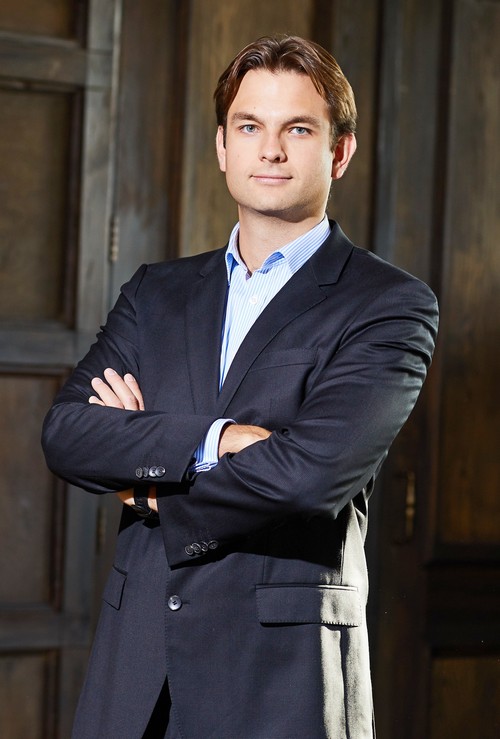 Cryptocurrencies will likely continue to settle into stable products, niches and uses, becoming a viable alternative to many fiat currencies. Successful Business spoke to Vladimir Vishnevskiy, the Director and co-founder of St. Gotthard Fund Management that specialises in asset management including cryptocurrency investments, for his thoughts and forecasts on the future of this market.
Why is cryptocurrency market capitalisation growing? Why do most people underestimate the importance of cryptocurrencies?
I think what we see today is a result of several factors that are currently present. One factor I would highlight is the macroeconomic situation in the world right now. With low rates and trust in government institutions arguably at an all-time low, as a result of unprecedented money printing that we have seen since the pandemic started in the US and Europe, I think the world is beginning to prepare for inflation in the longer term. This will inevitably be reflected in the price of real assets, not just classic ones like gold and real estate but also in cryptocurrencies.
It is a question of supply and demand. The fiat currencies, the ones that are issued by the central banks by just pressing a button, may soon be in oversupply. We believe that the whole monetary system that we went through in the past 40 years since the inflationary era in the 1970s, was the result of central bank independence. Whenever inflation went up, central banks raised interest rates in order to contain it. Since the global financial crisis, the supply of fiat currencies has been growing by approximately 12% per annum for more than 12 years. This is why alternative stores of value (gold, real estate, and bitcoin) are now being looked at.
On top of this, another factor that we consider key is the intergenerational wealth transfer. Just recently, there has been a survey showing that the younger generation in their 40s and 50s, who are now inheriting a lot of wealth from the Baby Boomer generation, are much more likely to invest part of their portfolio into this asset class because they see more value in it than in traditional assets like gold.
Lastly, the supply and demand relationship within the crypto sector itself has changed. This year we witnessed the “halvening” that happened in May: since then, every time a bitcoin is mined, the miner gets only half the reward compared to the period before. That obviously changes the supply significantly. At the same time, we have seen a large increase in demand because traditional on-ramps such as PayPal have embraced cryptocurrencies, and now close to 350 million of PayPal users have easy access to bitcoin through their mobiles. All of this leads to upward pressure on prices.
Why have you created the fund, and how can people benefit from participating in your activities?
The fund itself was created because our Cyprus investment office recognised a problem. Due to the negative interest rates in the Eurozone right now, we see that there are not enough investable instruments available to investors looking for a decent yield. Bank deposits do not yield anything. If one wants to invest EUR and receive a yield of 5-6%, then CCC-rated bonds (high-risk) would need to be purchased. Our company has been investing in cryptocurrencies for a while and we recognised that there was a solution within the space. From our viewpoint, investing in junk bonds is not that dissimilar a risk profile to crypto projects. Of course, the latter are riskier, but you have more upside if the project works out, and at the end of the day both are just businesses run by people. People who invested in digital projects like Facebook at an early stage did very well. The risk/ reward ratio of investing in those projects is better. So, what we wanted to provide is a simple and traditional way where people can safely invest in cryptocurrencies. Our fund only accepts euros and you do not need to buy and store cryptocurrencies, as we take care of that. More than 80% of the assets in our fund are held in secure custody which means that we not only offer a nice return and yield in terms of dividends that we may have but it is done with security in mind. Moreover, the risk is insured by a top insurance institution.
How can we make money? We have two main drivers we focus on. First is yield, so we only look at assets where a passive income-generating strategy can be implemented so that we can pay out dividends twice a year. Second is valuation; we rely on a team of highly experienced industry professionals to select projects with solid growth potential. Our investors believe in the cryptocurrency asset class as a longterm investment. They are also interested in receiving passive income as they cannot obtain it from other traditional assets anymore. Crypto assets can offer a big upside from what we have been seeing during the last 2-3 months. Gains of 100% or 200% are very much possible. This is impossible for fixed-income investments. In real terms, that is, after adjusting for inflation, if you have your money in fixed income, then most likely you are going to lose money. Assets going up in price and at the same time offering a yield are tempting for investors because they offer a less volatile risk profile than pure crypto exposure. Through the distribution of dividends every six months, in effect we are reducing the volatility of the investment. The fund will pay out its first dividend in January 2021. It has just reached an all-year high, by the way.
What is the minimum amount of investment in the fund?
€100,000.
Is there any guaranteed income? What percentage would you pay as a minimum guarantee?
There is no guarantee. Our aim is to pay out above 5% per annum (in EUR!) as a dividend, while offering our investors full participation in the growth of the crypto market capitalisation. Our fee structure is the classic 2/20, meaning a 2% management fee and a 20% performance fee with a 5% hurdle and a high watermark.
What is the investment horizon needed for an investor to invest their money, and when can they withdraw their funds if required?
The recommended investment horizon is 3 years and longer because the cryptocurrency ecosystem is still very young. The difference between our fund and many other funds is that it is liquid. Every month the investors can buy in and sell out.
Looking ahead, what is your forecast regarding cryptocurrencies over the next 12 months?
In the past two years, there has been a great deal of behind-the-scenes investment into this space from the corporate world, such as big U.S., European and Asian venture funds, especially into industry infrastructure and security. The result has been that in 2020, companies such as Square and PayPal now offer bitcoin to their customers. At the same time, big asset managers like Fidelity and smaller hedge fund managers have been supporting and buying bitcoin because they are now comfortable with the industry infrastructure available. We think that over the next 12 months, this trend will likely continue.
Calendar-based forecasts are difficult, but it would suffice to say we are very positive on the whole cryptocurrency complex. As we speak, the market capitalisation of crypto is $700 billion, and bitcoin makes up more than 60% of that. This is a very small number in relative terms. The biggest stocks from developed markets are worth considerably more. If you compare cryptocurrencies to gold, about $11 trillion worth of gold has been mined to date. This shows you the proportions that we’re talking about. The value of cryptocurrencies could rise fivefold from where we stand right now, and it would still be worth less than half that of gold.
St. Gotthard Global Fund SPC – Digital Asset Income & Growth SP
The investment objective of the Fund is to provide investors with a regular cashflow by investing predominantly in a portfolio of worldwide income-generating digital assets, with a portfolio target yield above that of traditional financial assets.

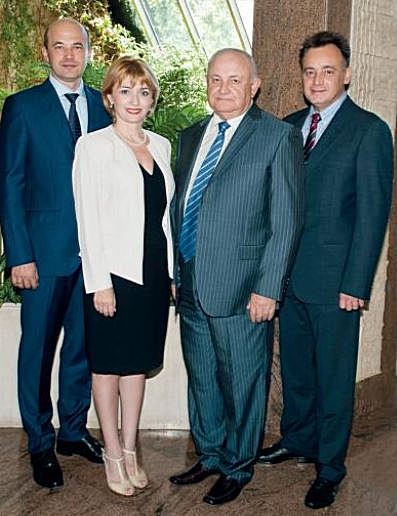 We bring to your attention an editorial article published in January issue of SUCCESSFUL BUSINESS magazine. The magazine is published on a quarterly basis since 2011.
This year is special for our magazine. We will celebrate our 10th anniversary in April. This issue is also special: for the first time in the publication's history we publish an issue in English only. It is addressed not only to the Russian business community, but to the wider expat business community of Cyprus.
VESTNIK KIPRA is known as a bridge between Russians and Cypriots. 25 years ago the first Russian-language newspaper was launched on the island: the Russian words “Vestnik Kipra” mean “Cyprus Messenger”. Our www.vkcyprus.com is the only Russian-language daily publication in Cyprus; together with our online platform, we have also kept a newspaper as a digest of the most important and interesting news and articles that we publish online on a daily basis.
The SUCCESSFUL BUSINESS Magazine was created to help the Russian-speaking businesspeople learn more about conducting business in Cyprus, new laws and regulations, analytics, forecasts, opinions, and professional analysis. Time has shown that this magazine has played an important role in the life of the business community.
We decided to publish an issue in English for two reasons. First, the issue is devoted to new technologies. In Cyprus, people of different nationalities are engaged in this sphere. We aimed to provide an opportunity to each of them to read our articles and interviews. The second reason is to expand our readership in our landmark year: we are celebrating our 10th anniversary in 2021 and we wanted to deliver a copy of our magazine that can be read by any business person on this island: Cypriot, Russian, German, Lebanese, British… anyone who lives and works here.
There is as well a digital edition of SUCCESSFUL BUSINESS. You may visit www.sb-cyprus.com to read all the articles we have in this issue. The website used to be “Russian-only”; as of January 2021, there is also a dedicated section in English.
In 2021, we also celebrate the first anniversary of the SUCCESSFUL BUSINESS Leaders’ Club. The first meeting of this club that unites business owners of different nationalities was organised in January 2020. Last year was difficult, that is why the Club’s online and offline activities were even more important for building new partnerships and extension of our members’ business network. You may read more about this club at the end of the magazine and get in touch if you share our values and goals and would like to be part of the Leaders’ Club activities.
On behalf of the entire Successful Business Magazine team, I would like to wish you all a productive and successful year 2021 and to share the following quote by Michael Jordan: “Obstacles don’t have to stop you. If you run into a wall, don’t turn around and give up. Figure out how to climb it, go through it, or work around it.”
I would like to conclude this editorial with an ancient wisdom, one of many by Epictetus: “The greater the difficulty, the more glory in surmounting it. Skillful pilots gain their reputation from storms and tempests.”
Editorial Board:
Andrey Pavelko
Natalia Kardash
Igor Nossonov
Andrey Korneev